Transit Tech Lab unveils proof-of-concept results from 2026 cohort focused on infrastructure modernization
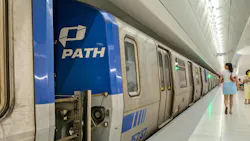
The Transit Tech Lab (TTL)—a public-private initiative created by the Metropolitan Transportation Authority (MTA) and the Partnership Fund for New York City—issued a new report with results from its latest cohort of companies’ projects that have gone through the proof-of-concept phase.
Over the course of eight weeks, 17 early- and growth-stage companies tested their technology in collaboration with the MTA and the Port Authority of New York and New Jersey (PANYNJ), including the PATH commuter rail, to address infrastructure and data challenges. The lab says that results from the proofs-of-concept exhibit how the participating companies tested solutions that could improve the condition of transit infrastructure and improve how agencies manage data, documents and daily operations with more modern processes.
“These collaborations showcased valuable ways technology can help solve complex challenges across New York’s transit network. By connecting technologists with experienced transit professionals, the Transit Tech Lab keeps producing solutions that have real potential to improve the system in the near-term and for years to come,” said Partnership Fund for New York City President and CEO Maria Gotsch.
Two challenge areas were explored:
- Advanced infrastructure
- Data and workflow modernization
The challenges were announced in January and generated 138 applications from around the world, according to the lab.
The full report outlines each company’s solution, how it was applied and the potential it holds to improve the public transportation experience. To date, the Transit Tech Lab has supported 126 proofs of concept, 64 pilots and 23 commercially scaled technologies.
“The Transit Tech Lab allows us to explore ways of using private-sector technology to solve public-sector challenges,” said MTA Chief of Strategic Initiatives Jon Kaufman. “These innovative concepts provide new insight into using data to better improve the transit system, including ways to make infrastructure more resilient and the MTA’s operations more efficient.”
Advanced infrastructure challenge
The agencies sought to strengthen the condition and resilience of transit infrastructure using artificial intelligence (AI) and sensor technology. Nine companies tested solutions that included the collection of maintenance data and imaging.
- Delphisonic installed a sensor suite on a PATH rail car to collect real-time information on the condition of the tracks and suggest predictive maintenance needs.
- Duos Technologies demonstrated its trackside imaging system platform on a bus in Jacksonville, Fla., as a proxy for a MTA bus, capturing imagery of the suspension, brakes, drivetrain and engine.
- Dynamic Infrastructure collected 394 images and over 100 pages of inspection data across two MTA subway stations and five PANYNJ World Trade Center facilities, creating a single condition-intelligence system for capital planning and maintenance decisions.
- Enspi Technologies evaluated 472 MTA stations for electrical risk and built a digital twin to simulate fault behavior at key sites.
- Orbit worked with PANYNJ to resell bricks from deconstructed retaining walls at the New York approach of the Lincoln Tunnel to promote the reuse of the historic bricks and avert salvaged construction materials from being crushed and used a low-value fill material.
- Praedico used predictive software on MTA data to demonstrate how cleaned and integrated data can improve maintenance decisions.
- Strobe Power evaluated MTA’s energy assets and shortlisted five facilities to model the financial case for adding and autonomously operating batteries, solar power and generators.
- T2D2 evaluated images and videos to create detailed aerial maps of three PANYNJ airport and marine terminal facilities, which could cut inspection and documentation time and give asset managers a more current, consistent view of infrastructure conditions.
- Viatec scoped a pilot installation of an electric battery solution on a bucket truck to reduce engine idling and greenhouse gas emissions.
Data and workflow modernization challenge
The agencies also sought tools to modernize data and document management. These eight companies tested solutions that included AI-powered curb and terminal management and route optimization.
- Automotus scoped a pilot installation of its automated curb and terminal management technology to track when buses enter and exit the PANYNJ Midtown Bus Terminal to provide PANYNJ with accurate, real-time visibility into terminal activity.
- contextere used its AI insight engine on a street sweeper being serviced, giving technicians plain-language answers and next-step guidance on the equipment from its manuals, service records and other technical documentation.
- Hazel AI Technologies utilized its AI-powered software to support Long Island Rail Road (LIRR) in the drafting of 15 technical scopes of work, cutting drafting time by 40%.
- In A Blink ran two live demonstrations to showcase how its light-based wireless technology can efficiently transfer video data from buses and trains, reducing storage capacity needs and wireless infrastructure costs.
- Ironloop demonstrated how its operational security technology could help screen for cybersecurity risks and compliance gaps of older MTA assets.
- Ontra Mobility used its AI platform to predict transit demand and recommend routes and schedules for the LIRR and New York City Transit designed to optimize passenger ride-time.
- VIATechnik tested its AI-powered interface for facility and asset management at JFK’s Bergen Substation and the Bayonne Bridge, creating a database to help make more effective maintenance and operations decisions.
- Voicd tested its AI voice platform with the MTA and PANYNJ, detecting deepfakes, verifying speakers and analyzing audio for potential security and fraud issues.
“We are excited to continue our work with the Transit Tech Lab to apply the entrepreneurial spirit and the know-how of these tech start-ups using new methods and types of data analytics to solve the challenges of modernizing public transportation in our region. Nowhere else is this mission more critical than in one of the nation’s busiest and most complex transportation corridors, built on the Port Authority’s infrastructure,” said PANYNJ Chief Technology Officer Rob Galvin. “The safe and seamless operation of our seaport, commuter rail, bridges, tunnels, bus terminals and airport facilities directly impact millions of commuters and travelers across two states and help power a billion-dollar regional economy that is critical to the nation and the entire East Coast.”
About the Author
 Noah Kolenda
Associate Editor
Noah Kolenda is a recent graduate from the Craig Newmark Graduate School of Journalism with a master’s degree in health and science reporting. Kolenda also specialized in data journalism, harnessing the power of Open Data projects to cover green transportation in major U.S. cities. Currently, he is an associate editor for Mass Transit magazine, where he aims to fuse his skills in data reporting with his experience covering national policymaking and political money to deliver engaging, future-focused transit content.
Prior to his position with Mass Transit, Kolenda interned with multiple Washington, D.C.-based publications, where he delivered data-driven reporting on once-in-a-generation political moments, runaway corporate lobbying spending and unnoticed election records.