New Jersey governor inks bill to expand funding opportunities for microtransit
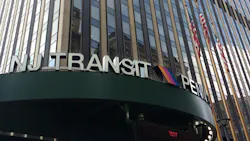
New Jersey Gov. Mikie Sherrill signed a bill into law on Thursday, Aug. 6, that expands transportation options for people with disabilities and seniors. The bill expands the Senior Citizen and Disabled Resident Transportation Assistance Program in the state, now allowing for counties to receive funding under the program for on-demand microtransit service.
The program’s list of eligible services was narrower prior to the update, mainly funding just door-to-door and fixed-route services along with providing fare subsidies. Now the program’s stated use includes microtransit. Further, the legislation also created a legal definition for on-demand microtransit: “publicly available, technology-enabled, shared transportation provided by means of a motor vehicle to individuals selecting a pick-up and drop-off location by telephone or through a mobile application, and which transportation is provided at a time selected by the individual or as soon as possible after the individual selects pick-up and drop-off locations for such transportation.”
The bill doesn’t touch the funding formula or current allocation splits, instead just expanding what funding can be used for. The funding still works out to 85% to counties and 15% to New Jersey Transit for capital improvements and admin costs—capped at 10% of total for admin—still based on county share of 60-plus population per Census data and still $150,000 minimum expended to each eligible county per year.
Further, the bill consolidates and reorganizes redundant definitions in the statute, like duplicate definitions for "accessible," "disabled," "geographic region" got merged—mostly technical updates, not substantive.
While no programs have officially announced tapping this new source of funding, multiple microtransit projects have come online in the state in recent years, like MicroLink in Bergen and Monmouth counties and Passaic County MOVE.
About the Author
 Noah Kolenda
Noah Kolenda
Associate Editor
Noah Kolenda is a recent graduate from the Craig Newmark Graduate School of Journalism with a master’s degree in health and science reporting. Kolenda also specialized in data journalism, harnessing the power of Open Data projects to cover green transportation in major U.S. cities. Currently, he is an associate editor for Mass Transit magazine, where he aims to fuse his skills in data reporting with his experience covering national policymaking and political money to deliver engaging, future-focused transit content.
Prior to his position with Mass Transit, Kolenda interned with multiple Washington, D.C.-based publications, where he delivered data-driven reporting on once-in-a-generation political moments, runaway corporate lobbying spending and unnoticed election records.