California Gov. Newsom issues executive order to jumpstart technology advancement, new strategy development
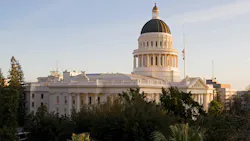
California Gov. Gavin Newsom issued an executive order directing state transportation agencies to advance technology and strategy development to assist locally led transit and passenger rail networks. The order aims to speed up, cheapen and ease the travel burden on California residents.
With California welcoming an increasing number of visitors for tourism and events from around the globe, the state notes its local and regional transit and passenger rail system are increasingly important to keeping people moving affordably and reliably while continuing to power one of the world’s strongest economies.
“As [President Donald] Trump continues to cut critical public transit and clean transportation programs across the nation, California is stepping up by building the transportation infrastructure of the future—from faster buses and local rail to critical regional projects,” Newsom said. “We are accelerating the clean energy transition, bolstering the green economy and creating good-paying jobs.
The new proposed federal infrastructure budget cuts funding for public transit and clean transportation programs nationwide. The fiscal year 2027 budget request would cut federal public transit funding by roughly 23% and passenger rail funding by about 82%, according to the American Public Transportation Association (APTA), eliminating billions in planned investments for systems across the country. According to further APTA analysis, the budget would also zero out funding under the Infrastructure Investment and Jobs Act for key clean transportation programs.
“California is continuing to build on Gov. Newsom’s vision for a transportation system that is safer, cleaner and more connected for all Californians,” said California Transportation Secretary Toks Omishakin. “As global instability drives up fuel costs for working families, California is leading with investments in public transportation and infrastructure that reduces our reliance on fossil fuels.”
Since the conflict with Iran began, the state of California reports that American households have faced an estimated $62.4 billion in extra fuel expenses, or roughly $476 per household, according to the governor’s office. New York Fed research shows the burden is falling on those who can least afford it: low-income households.
The state reports that those households cut gas consumption by 7% in March, yet still faced a 12% spike in expenses due to rising prices.
The order directs the California State Transportation Agency (CalSTA) and other state agencies to accelerate project delivery, improve access to funding and reduce greenhouse gas emissions. The order reflects recommendations from the Senate Bill (SB) 125 Transit Transformation Task Force Final Report and fulfills the requirement in SB 960 that the state establish a statewide transit policy.
Governor Newsom’s order directs CalSTA and state agencies to:
- Prioritize transit projects statewide: Consolidates local and regional projects into a state priority list, establishes public grant dashboards, common standards for transit data and payment systems—all with clear deadlines.
- Streamline project delivery: Develops design and permitting standards for transit infrastructure on the state highway system, reducing bureaucratic delays for local agencies building bus stops, shelters, signage and transit lanes.
- Close transit gaps statewide: Directs Caltrans to coordinate bus and rail services across the state, so Californians in rural counties or underserved neighborhoods can get where they need to go, even where service is limited.
- Modernize transit data and payments: Publishes data standards and expands the California Integrated Travel Project (Cal-ITP)—a statewide program that brings real-time arrival information and contactless payment to transit systems across California, making it easier to ride and reducing operating costs for agencies.
- Expand bus rapid transit (BRT) and bus-only lanes: Supports the development of BRT across the state highway system to deliver faster, more reliable bus service in dedicated lanes.
- Make transit funding easier to access: Launches real-time public dashboards tracking all transit grant programs, application volumes and timelines.
- Caltrans Statewide Active Transportation Deployment Team: Directs Caltrans to establish a dedicated active transportation project delivery team to build in-house expertise and increase accountability.
California’s transportation leadership
The California State Transportation Agency oversees more than $12 billion in annual transportation funding across eight state agencies—delivering roads, bridges, rail, transit and zero-emission infrastructure throughout the state. The California Transportation Commission allocates an additional $10 billion annually for transportation projects. Caltrans—which designs, builds and maintains California’s transportation system—manages more than 50,000 miles of highway.
California’s high-speed rail project is advancing daily with 171 miles currently under design and construction from Merced to Bakersfield, Calif., more than 80 miles of guideway complete and 463 miles of the 494-mile San Francisco to Los Angeles/Anaheim system fully environmentally cleared and construction-ready, according to the authority. Last September, San Bernardino County welcomed the first hydrogen-powered passenger train into revenue service in North America.
The full executive order can be found on the state’s website.
About the Author
 Noah Kolenda
Noah Kolenda
Associate Editor
Noah Kolenda is a recent graduate from the Craig Newmark Graduate School of Journalism with a master’s degree in health and science reporting. Kolenda also specialized in data journalism, harnessing the power of Open Data projects to cover green transportation in major U.S. cities. Currently, he is an associate editor for Mass Transit magazine, where he aims to fuse his skills in data reporting with his experience covering national policymaking and political money to deliver engaging, future-focused transit content.
Prior to his position with Mass Transit, Kolenda interned with multiple Washington, D.C.-based publications, where he delivered data-driven reporting on once-in-a-generation political moments, runaway corporate lobbying spending and unnoticed election records.