SFMTA Board adopts FER Independent Oversight Committee recommendations to implement cost-saving measures
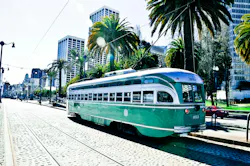
The San Francisco Municipal Transportation Agency (SFMTA) Board of Directors have adopted all of the recommendations made by the Financial Efficiency Review (FER) Independent Oversight Committee. The committee, formed under the mandate of Senate Bill (SB) 63 by the Metropolitan Transportation Commission (MTC), identified strategies for SFMTA, Bay Area Rapid Transit (BART), Alameda Contra Costa Transit District (AC Transit) and Caltrain to realize efficiencies and cost savings.
Since 2019, the four regional transit agencies have implemented more than $1 billion in cost-saving measures since in response to economic pressures and changing travel patterns as a result of the pandemic. SFMTA has achieved approximately $250 million in efficiencies over that period to date.
"By approving the Financial Efficiency Review’s recommendations, the SFMTA Board of Directors has reinforced our ongoing commitment to fiscal responsibility,” said SFMTA Director of Transportation Julie Kirchbaum. “Finding new revenue sources and managing public funds responsibly are vital to securing the agency’s long-term financial health and stability. Smart spending and delivering excellent customer experience can happen at the same time.”
SFMTA says the adoption of the recommendations will help improve operational efficiency and the ability to pursue near-term opportunities to increase and strengthen service and programs with existing resources. SFMTA’s savings of approximately $250 million since 2019 were found through a mix of solutions, including eliminating vacant positions, strategically reducing service and implementing transit priority improvements and eliminating certain planned one-time expenditures.
The FER report’s recommendations adopted by the SFMTA Board are:
- Improve fare compliance and enforcement: The SFMTA will increase Transit Fare Inspector staffing to strengthen fare compliance and recently made it easier to pay for transit fares with tap to pay options as part of the region’s larger Clipper 2.0 migration and payment system upgrade.
- Enhance parking revenue: SFMTA has increased staffing of Parking Control Officers and added two new meter-parking payment apps, ParkMobile and HotSpot, to make it easier to pay at city meters. Additionally, the agency has also unveiled a new parking garage reservation program that allows for pre-paid, reserved parking at SFMTA-operated parking facilities.
- Evaluate zero-emission bus (ZEB) transition program: The SFMTA is working with Bay Area transit agencies to seek deferral of state ZEB transition requirements.
- Examine schedules for efficiencies: The SFMTA is working in consultation with its labor partners to optimize staffing and scheduling to better match service delivery with demand.
- Offer incentives to improve attendance: The SFMTA continues to collaborate with labor partners on strategies and incentives to improve workforce attendance in support of reliable service.
- Improve speed and reliability of service: The Muni Forward program is an ongoing initiative to make Muni more efficient and reliable. Building on the success of this work, the FER adds two new recommendations, including conducting a bus stop optimization study and reinvesting transit priority savings into service.
- Right-size fleet to match demand: SFMTA is operating one-car trains on the K and on the M lines during weekend schedules and is evaluating additional opportunities to realize efficiencies through fleet optimization with the goal of continuing to meet ridership needs.
- Identify and capture cost savings in larger contract renewals: The SFMTA is reviewing larger contracts to determine if services can be provided at lower cost or with improved value.
- Expand Clipper BayPass with more institutions and employers: SFMTA is working with the MTC to expand participation in regional pass programs such as Clipper BayPass to increase ridership, improve customer convenience and strengthen revenues across the region.
“We at MTC appreciate the hard work of the SFMTA, as well as AC Transit, BART, Caltrain and our other transit agency partners have done over the past several years and everything they have committed to do in the future to make sure the Bay Area transit network remains efficient, effective and customer-focused,” said MTC Executive Director Andrew Fremier.
SFMTA notes SB 63 established the Public Transit Revenue Measure District, which includes Alameda, Contra Costa, San Francisco and Santa Clara, Calif., counties, and authorized placement of a regional sale tax measure on the November 2026 ballot to fund Bay Area transit and transportation improvements.
The MTC will begin a second phase of study to identify additional strategies to strengthen and modernize the region’s public transit network, dependent on the approval of the regional sales tax measure.