BART Board approves FY27 budget, maintains service and fare price
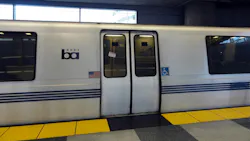
The Bay Area Rapid Transit (BART) Board of Directors has adopted a balanced fiscal year (FY) 2027 budget, which includes a $1.2 billion operating budget and a $828 million capital budget. The budget covers July 1, 2026, through June 30, 2027, a period when pandemic emergency funds run out, the district faces a structural deficit of $375 million and a regional transit funding measure will potentially be on the November ballot.
The BART Board has planned for two financial scenarios, one in which new revenue becomes available, and one in which no new funds are provided to BART in FY27. For the latter, the board has initially approved an alternative service plan detailing service cuts, fare increases and layoffs to close the $375 million deficit.
Preventing service cuts through new revenue, cuts, deferrals and borrowing
The budget adopted assumes the transit funding measure is approved and will provide $74 million in new revenue to BART during the FY. Even with new sales tax proceeds from an approved funding measure, BART says it would still need to solve for an additional $302 million to close the FY27 budget in a way that would not impact riders or cut service.
The budget makes $18.2 million in ongoing cuts with $7.3 million from ongoing department reductions and efficiencies and eliminating 63 operating full-time positions, saving $11 million in labor costs, according to the agency.
“This is a leaner budget with less spending and a smaller headcount,” said BART Board President Melissa Hernandez. “The board challenged staff to find efficiencies and reduce costs in a way that would not be experienced by the riders and would not negatively impact the improvements we have made resulting in the highest reliability and satisfaction rates in years.”
The FY27 budget relies on $88.5 million in borrowing to prevent service cuts and bridge the funding gap until proceeds from the revenue measure may become available to BART.
Ridership growth, coupled with cuts, efficiencies and better investment returns due to cash management from BART’s new Office of the Chief Financial Officer structure, have helped the agency generate nearly $25 million in additional revenue. Further, BART says it anticipates stretching $52 million in remaining state emergency funds into FY27—funds that it expected to use before July 2026. This has reduced the level of borrowing and deferrals needed to close the FY27 budget by $78 million, helping reduce long-term costs, according to BART.
BART says its financial crisis was created because its financial model has historically relied heavily on fare dollars to pay for operations, however, riders are now taking fewer trips each week because of remote work.
Ridership reaches new post-pandemic milestone
While the number of trips served each year remains at about half of what it was pre-pandemic, ridership projections, included in the budget for the first time since the pandemic, the average weekday ridership estimate will be more than 200,000 trips. BART notes it was originally projected to be 191,000 trips, but FY26 had more than a 12% growth in ridership, fueled by higher customer satisfaction, a declining crime rate, strong weekend ridership recovery and improved on-time performance, according to the agency.
No fare increases and all discounts maintained
BART notes that the budget does not include a fare increase during FY27 and maintains discounts for seniors, youth, low-income people and people with disabilities. The budget assumes $2.5 million in additional revenue from demand-based parking increases and more people parking as ridership increases.
Assuming the funding measure is successful, BART will continue to operate current service levels with a schedule change on Aug. 10, 2026. The change aims to bring targeted improvements to reliability and reduce wait times for some riders. By making a change in how trains travel through Daly City Station and operating it as a center platform station, BART says that service will be improved throughout the system with improved headways, transfers and less train congestion.
BART says that trains will be more evenly spaced apart for Richmond-bound riders. Yellow Line and Red Line trains will be spaced 10 minutes apart instead of five and 15 minutes today. Dublin- and Berryessa-bound riders are also set to have better spacing between trains, from three and 17 minutes to eight and 12 minutes. BART notes that there will also be a new cross-platform transfer at Bay Fair for Dublin (Blue Line) to Berryessa (Orange Line) riders and the reverse trip, and riders coming from Antioch (Yellow Line) transferring toward Richmond (Orange or Red Line) will save 17 minutes with a new four-minute transfer.
Capital budget funds infrastructure investments
BART says its $828 million capital budget reflects its continued commitment to reinvest in core infrastructure to improve safety and reliability of service. Major projects include a new Communications Based Train Control system, traction power upgrades, elevator modernization, escalator replacement and a highly prioritized computer network modernization project intended to prevent major service disruptions caused by outdated equipment.
The agency notes FY27 marks a major shift into construction for a large majority of funded projects that have completed planning, design and procurement of materials. In FY27, BART says it will replace track equipment near Fremont and Oakland and will complete construction of a modernized Operations Control Center.
These projects are funded by voter-approved Measure RR and other local, regional, state and federal grant sources, in addition to reduced allocations from BART’s operating budget, which leverage the outside funding needed to fully fund these essential projects.
BART commits to financial efficiency action items
Along with approving a new budget, the BART Board also voted to adopt a series of recommended early action strategies meant to enhance revenue and reduce costs. The action items are the result of an independent Bay Area Financial Efficiency Review commissioned by the Metropolitan Transportation Commission (MTC) of BART, Alameda-Contra Costa Transit District, Caltrain, and the San Francisco Municipal Transportation Agency. The third-party review was called for by Senate Bill 63, which authorized a regional transportation sales tax to work towards being placed on the November 2026 ballot.
The action items approved by the BART Board include:
- Improve fare compliance by further optimizing BART’s new fare gates and continuing with BART’s station hardening program.
- Enhance parking revenue.
- Lease fiber and communications assets.
- Expand Clipper BayPass with more institutions and employers.
- Improve speed and reliability of service through schedule changes.
- Run shorter trains during lower-demand periods.
- Examine contracts for opportunities to reduce costs, such as exploring changes to BART’s lease payments to SFO.
- Study the benefits, challenges and opportunities to expand retail amenity partnerships.
The Financial Efficiency Review found that between 2019 and 2025, BART reduced operating costs by more than $516 million through service reductions, workforce controls and operational efficiencies. The four Bay Area transit agencies that are part of the review saved more than $1 billion combined over the six-year period, according to a review by the MTC.