SFMTA Board greenlights balanced two-year budget, preserves service
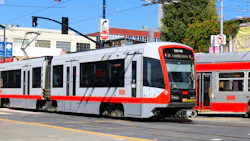
The San Francisco Municipal Transportation Agency (SFMTA) Board of Directors approved a balanced two-year operating budget of $1.5 billion for fiscal year (FY) 2026-2027 and $1.6 billion for FY 2027-2028. According to the agency, its balanced budget closes an immediate shortfall of $307 million in the budget’s first year, which begins on July 1, 2026, and $344 million in the second year.
The SFMTA notes the approved budget prioritizes Muni service, as well as other core transportation services. The plan maintains paratransit service, as well as free and discounted Muni fares for youth, seniors and people with disabilities, among others.
"This budget charts a path to a sustainable future for Muni and will help everyone who travels around San Francisco,” said SFMTA Director of Transportation Julie Kirschbaum. “It shows our shared focus on protecting core Muni services through stronger fiscal accountability paired with significant new revenue to replace pandemic relief funds and stabilize our budget. We deeply appreciate the leadership of Mayor [Daniel] Lurie, the board of supervisors, other elected leaders, our board of directors, our labor and business partners and community members who engaged in this budget process. I also want to thank everyone at the SFMTA, especially our finance team, who got this budget done. There is much more work to do, but this is the start we need.”
The FY 26-27 and FY27-28 budget—according to the agency—is the first step of a multi-year strategy to reduce costs and stabilize the SFMTA budget, where the deficit was projected to grow to $434 million within five years. The agency notes that the budget approved hosts significant savings and charts a course for future operational and cost efficiencies, with the long-term goal of overcoming the structural deficit by bringing expenditures into alignment with revenues.
The SFMTA also notes that its board approved the agency’s two-year capital budget, totaling $655 million in year one and $546 million in year two. Among other investments, the capital budget focuses on sustaining the infrastructure, facilities, vehicles and technology that support Muni service as well as improving roadway safety and accessibility for all street users—according to the agency.
“Approving this balanced budget underscores the board’s firm commitment to fiscal accountability and public transparency throughout this process. Our priority is always the riders who rely on Muni, and this budget allows the SFMTA to continue delivering the transportation services our city deserves,” said SFMTA Board Chair Janet Tarlov. “I want to thank SFMTA staff who worked countless hours to prepare and finalize one of the most challenging budgets this agency has faced. My sincere appreciation to my fellow board members who gave so many hours to ensure their input and contributions were well informed and consistent.”
The first year of the two-year budget includes a $200 million loan from the state of California that will be issued via the Metropolitan Transportation Commission (MTC). The agency notes that the loan has a 12-year term, with two years of interest-only payments—approximately $8 million per year—followed by a 10-year repayment period, including both interest and principal payments—approximately $30 million per year.
The SFMTA says that rising labor costs contribute significantly to the agency’s structural deficit, citing mandatory increases in healthcare and retirement contributions as having led to personnel expenses outpacing revenue growth—despite reducing headcount by 89 positions. The agency says this necessitated “difficult budgetary tradeoffs” to offset the impact of increases in the cost of labor and prevent severe service cuts. About 75% of the total SFMTA operational budget funds Muni service.
Creating a culture of efficiency
Prior to this two-year budget, the SFMTA says it has taken significant action to fortify fiscal management and accountability, resulting in $246 million in cost savings. That work beginning in FY 2020 includes:
- Investing $6 million in improved fare enforcement strategies.
- Eliminating more than 500 vacant positions that would have cost the agency approximately $170 million.
- Eliminating planned one-time investments, saving the agency $30 million in non-personnel costs, as well as negotiating rate reductions across a dozen professional service contracts, saving $9 million.
- Implementing transit priority and other reliability improvements that allow Muni buses to get to their destinations more quickly, allowing the SFMTA to deliver more Muni service with the same number of buses and transit operators, saving the agency $30 million to date.
Fare and parking changes generate revenue
The FY 26-27 and FY 27-28 budget also include increases to Muni fares, parking fees and fines that, coupled with increased Muni ridership and continued fare compliance gains, are expected to generate approximately $30 million in FY 26-27 and an additional $15 million in FY 27-28, according to the agency. The budget plan eliminates the 15-cent Clipper card discount so that full-fare customers who pay with a Clipper card will pay the same $3 for a Muni ride as people who pay cash or tap their credit card. To account for inflation, the agency says fares will increase by $0.10 in 2028.
The agency is also generating more revenue in other areas, such as increasing the price of a single-ride cable car fare from $9 to $12 in the FY 26-27 ahead of its phasing out in FY 27-28 and creating a new family-friendly Cable Car Plus pass. According to SFMTA, the $18 fare unlocks unlimited cable car rides and other Muni service and allows two youth riders to ride free with each paying adult.
The agency is also introducing fare capping for the system. Muni’s first fare capping policy means that after a customer pays for two Muni rides on the same day, any additional rides thereafter on the same day are free.
The agency says these collective fare changes help protect vulnerable populations by supporting the continuation of free or discounted Muni fares for youth, seniors, people with disabilities and people with limited incomes. About 14,000 San Francisco Unified School District students utilize Muni to get to and from school under the program.
The SFMTA also notes that the budget increases some parking fees and fines. Parking citation late penalties will increase by 10% and online credit card fees will be passed on to customers. Parking meter rates, which are adjusted in specific locations based on demand according to the agency, will also see the base rate increase by $0.25 in FY 27-28. At the same time, the agency says the budget reduces the fine for some parking violations, such as not curbing a car’s wheels when parked on a hill.
Keeping Muni service reliable
In 2025, the SFMTA received an overall approval rating of 78%, the highest in the agency’s history. The survey found year-over-year improvements across multiple service categories.
The agency also says the Muni Forward program has made significant upgrades to San Francisco's busiest transit corridors, covering more than 100 miles. This includes:
- Improvements to more than 75 miles of transit lanes.
- Traffic signal upgrades for both bus and train traffic.
- Enhancements made to bus stops.
Riders are experiencing up to 35% faster travel times on improved routes.
This program has saved, according to the agency, approximately $30 million since FY 20 by providing more Muni service with the same number of buses and transit operators. Muni Metro service has also become more reliable. Through programs like Fix It Week, moderate subway delays were down 63% in 2025 compared to 2019 while long delays were down 58%, according to SFMTA.
Street safety and capital investments
Guided by data and community input, SFMTA says investments into street improvements focus on targeted safety improvements where they will have the greatest impact.
Funding for safety, connectivity and community benefit programs supports measures shown to reduce pedestrian collisions by over 30% on average. The capital investment strategy prioritizes investment in:
- Proactive traffic calming, including school areas and speed limit reductions.
- Core safety treatments for intersections on the High Injury Network.
- Quick build community benefit corridor projects.
- Community-based transportation plans.
- Community-focused programs such as Safe Routes to School.
In addition to specific safety investments, the SFMTA says it continues to prioritize core maintenance and a state of good repair items to keep the transportation system safely and reliably moving, including maintaining and upgrading signals and completing repairs by agency shops to address urgent needs and community requests. The SFMTA plans to invest capital funds into phase one of the light-rail vehicle quarterlife overhaul. This will rehabilitate up to 157 light-rail vehicles through repairs and system upgrades and according to SFMTA, will allow it to extend the fleet’s life by improving reliability and the passenger experience.
SFMTA’s long-term funding strategy
The SFMTA says it is currently facing the largest financial crisis in its history, and despite significant progress in identifying cost savings internally, the agency says more funding is necessary to help keep Muni and other transit services running. Without needed funding, the SFMTA says it will be forced to make significant cuts to Muni services and programs beginning in FY 27-28.
The SFMTA’s funding strategy includes three sources of revenue to close the structural deficit, maintain current service and create a stronger future for Muni:
- Ongoing work to identify efficiencies and cost savings, as well as limited additional revenue generated by agency operations, like Muni fares, parking and advertising.
- Regional revenue measure: the Connect Bay Area Transit Initiative would allow voters in Alameda, Contra Costa, San Francisco, San Mateo and Santa Clara, Calif., counties to consider a sales tax to fund Bay Area Rapid Transit, Muni, Caltrain, AC Transit and other transit systems. The sales tax in San Francisco would be 1% and would provide Muni with about $155 million per year if approved by voters to avoid service cuts.
- Local revenue measure: the Stronger Muni for All ballot measure would allow voters in San Francisco to vote on a parcel tax whose proceeds would fund Muni. If approved, homeowners with properties that are 3,000 square feet or smaller would pay $129 per year. Owners of larger homes and owners of commercial parcels would pay a higher tax, and there would be a limit on the amount of the tax that could be passed on to renters. If approved by voters, this measure would provide Muni with about $150 million annually to fund Muni operations plus about $10 million annually for service quality improvements.
Decisions SFMTA will need to consider without the funding strategy
If the SFMTA is unable to close future budget gaps, it says impacts could affect the entirety of the Muni system, including:
- The elimination of up to 20 Muni routes, including hilltop and neighborhood routes, those on corridors with nearby service and downtown express service.
- Doubled wait times on Metro, Rapid and frequent routes, leading to more crowding and pass ups.
- The reduction of evening service (9:00 p.m. to 12:00 a.m.) by up to 60%.
- The reduction or elimination of service on the three cable car lines and F Market and Wharves streetcar Line.
- Less transit service for sporting events, Fleet Week and concerts in Golden Gate Park.
Community-informed budget process
The SFMTA notes its budget community outreach and engagement process kicked off in October 2025, with a city-wide survey in four languages to gather community input on the transportation priorities going into the two-year budget cycle. The SFMTA received over 5,000 responses, with about 2,500 included additional comments. The agency says this input directly informed the development of the two-year budget.
Of surveyed respondents, 84% selected "Maintaining the speed, frequency and reliability of Muni buses and trains” as their first or second transportation priority.
“This was an incredibly tough budget year, and while we do not agree with every decision, we appreciate that this budget protects the core of what riders depend on,” said San Francisco Transit Riders Community and Policy Manager Dylan Fabris. “Preserving Muni service, maintaining discount programs for those who need them most and introducing fare capping are meaningful wins in a very difficult financial moment. We are grateful that SFMTA worked closely with community partners and advocates throughout this process to deliver a budget that reflects riders' top priorities while helping to avoid devastating service cuts.”
The agency notes that Lurie will include the balanced two-year SFMTA budget in his May 1 budget submittal to the board of supervisors, which per the Charter, may then allow the budget to take effect without a vote or reject the budget in its entirety. More information about the SFMTA’s budget process can be found on its website.