CALSTART’s new findings show ZEB growth spreading into Southeast, Midwest
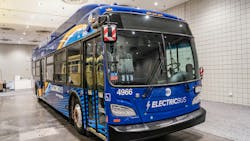
Zero-emission bus (ZEB) adoption is continuing to grow nationwide according to CALSTART’s updated Zeroing in on ZEBs report, an annual report that shows growth despite ongoing procurement challenges, long lead times and a constrained domestic manufacturing base. CALSTART’s annual market update showcases the number of funded, ordered, delivered and/or deployed transit ZEBs within the U.S. as of July 2025.
Key findings in the report include:
- A total of 8,116 full-size ZEBs have been funded, ordered, delivered or deployed as of July 2025, representing a 16% growth over the July 2024 count according to CALSTART.
- Nearly 1,400 small ZEBs have been adopted nationwide, representing 20% of year-over-year growth.
- Full-size ZEB adoption remains geographically widespread.
- California continues to lead the nation (1,933 battery-electric buses (BEBs) and 690 fuel cell electric buses), followed by New York (829), Washington (521), Florida (519) and Massachusetts (292).
- CALSTART says there are notable year-over-year increases observed in California, Washington, Indiana, Wisconsin and Illinois.
- BEBs remain dominant (7,261 full-size vehicles have been adopted nationwide, representing a 13% increase from the previous reporting year), but fuel cell buses have gained traction as agencies diversify their zero-emission mix.
- Fuel cell electric buses surged 49% nationwide, outpacing overall ZEB growth.
- During the reporting period, fuel cell electric bus adoption reached 855 vehicles nationwide.
- CALSTART notes that this growth can be attributed to new vehicles entering the market and fleet expansions in states with existing hydrogen programs and fueling investments.
- California remains the largest market, followed by Nevada (52), New York (15), Illinois (14) and Ohio (14).
- More than 1,000 new ZEBs were added despite supply chain and manufacturing constraints.
“The data clearly shows ZEBs are no longer confined to early-adopter markets,” said CALSTART Deputy Director of Transit Mike Hynes. “We’re seeing sustained deployment nationwide—from traditional leaders like California to fast-growing states like Florida and Texas—even as agencies navigate longer timelines and a constrained domestic supply environment. That signals a durable market shift driven by transit agencies making long-term operational decisions. Continued progress and deployment at scale will depend on stable funding, flexible implementation pathways and policies that support domestic manufacturing.”
Long-term policy frameworks that provide funding flexibility and phased-in implementation approaches are proving critical to continued deployment. With the support of grant programs—like the Low or No Emission Program and Grants for Buses and Bus Facilities Program under the Infrastructure Investment and Jobs Act—vehicle and infrastructure incentives and regulatory outlines, CALSTART says the ZEB market will continue its momentum.
CALSTART says the report confirms that ZEB adoption continues to expand across the country, signaling market opportunities for vehicles, infrastructure and the workforce. Moving forward, the organization says the progress will depend on offering and protecting funding opportunities, supporting domestic manufacturing capacity and ensuring that transit agencies have the resources they need to advance the deployment of clean vehicle technologies.