OCTA releases 2025 update on Measure M2 Next 10 Delivery Plan
The Orange County Transportation Authority (OCTA) released the 2025 update of its Measure M2 Next 10 Delivery Plan, which will provide a refreshed and fiscally responsible roadmap for delivering freeway, street, transit and environmental improvements across Orange County through 2035.
OCTA says the plan incorporates the most recent sales tax revenue forecast (now estimated at $13.2 billion through 2041), external funding assumptions and refined project schedules and costs to ensure the agency continues meeting the commitments made to voters when the half-cent transportation sales tax measure was approved in 2006.
“This updated Next 10 Plan reflects OCTA’s continued promise to deliver meaningful mobility improvements for the people of Orange County,” said OCTA Board Chair Doug Chaffee. “Even in the face of economic and regulatory challenges, OCTA remains fully committed to responsible planning and investing in projects that keep our communities moving safely and efficiently.”
The 2025 update confirms that the full M2 Program remains deliverable through 2041 and outlines approximately $6.1 billion in transportation investments over the next decade. The plan continues to prioritize early delivery of improvements while maintaining financial sustainability and limiting reliance on future debt.
OCTA notes the Freeway Program is a part of the Next 10 Plan. Of the 30 project segments identified for delivery, 17 have been completed, three are currently under construction and eight are advancing through final design. OCTA remains on track to complete 93% of freeway segments by 2033—eight years early—despite inflationary pressures and evolving regulatory requirements.
The update also maintains critical funding for the Environmental Mitigation Program, which provides long-term preservation and restoration of open space to offset project impacts. OCTA continues to progress toward its goal to support the management of protected properties.
Across local streets and roads, the plan supports continued investment in the Regional Capacity Program, Regional Traffic Signal Synchronization Program and Local Fair Share Program, which help cities reduce congestion, coordinate traffic signals across 2,000 intersections and maintain essential transportation infrastructure.
According to the agency, the Transit Program remains a major area of focus, particularly the sustainability of Metrolink operations. OCTA notes that while ridership is growing, performance continues to fall short of forecasts, and rising costs present long-term financial challenges. OCTA is working closely with Metrolink and partner agencies to develop a financially sustainable service plan that protects Orange County’s rail mobility needs through 2041.
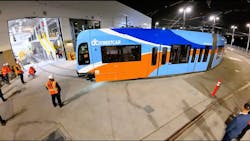
The agency notes that preparation and testing also continues for the OC Streetcar, scheduled to open in 2026. The plan maintains stable funding for senior mobility programs, community-based transit circulators and enhancements at the county’s busiest bus stops.
Railroad track stabilization in south Orange County remains a top priority, as coastal erosion and storm surges continue to pose risks to the Los Angeles – San Diego – San Luis Obispo rail corridor. OCTA is partnering with state and regional agencies to pursue both short-term protections and a long-term strategy to ensure rail service reliability.
The plan addresses several key risks, including a 5.7% decrease in the long-term sales tax revenue forecast and anticipated construction cost increases in the coming years. OCTA says that despite the challenges, its financial planning ensures the agency can continue delivering its commitments while adapting to changing conditions.