ENC reveals ZAVIR medium-duty shuttle at APTA EXPO 2026
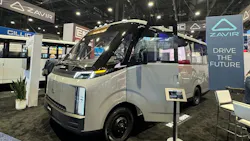
ENC unveiled its ZAVIR™ electric shuttle at the American Public Transportation Association’s (APTA) TRANSform Conference and EXPO in Chicago.
ZAVIR™ is a new brand designed for the medium-duty market. The original concept vehicle unveiled at EXPO—an American-made ground-up shuttle bus—features functional aerodynamics and lighting, panoramic windshield views and a cockpit the company calls futuristic.
“For 50 years, ENC has built heavy-duty buses that agencies count on. ZAVIR is how we put that experience to work in new segments and give the market more of what it is asking for,” said ENC CEO Jason Lee. “This concept vehicle is an early look at where we are headed. As demands on public transportation evolve and require the right-sizing of vehicles to meet that demand, we too are evolving what operators can order across the ENC family.”
Two variants of the concept shuttles were revealed: a low-floor configuration and a high-floor configuration. They measure 22-feet long and eight-feet wide, offer seating for up to 18 passengers plus standees and provide wheelchair access by lift or ramp.
Alongside ENC’s established diesel, hybrid and battery-electric transit buses, the company says that ZAVIR expands both the vehicle classes and the propulsion options ENC brings to the market.
“Shuttle and paratransit operators have spent years adapting vehicles that were never designed for their routes,” said ENC Shuttle Sales Vice President Thomas Allen. “The ZAVIR concept vehicle we are showing at APTA is our answer: a shuttle engineered from the ground up and designed for real world budgets, around the people who ride it, drive it and keep it running. We are showing it now so operators can help shape it before it reaches the market.”
The brand is developing a purpose-built lineup with various seating layouts, offered with a choice of battery-electric and range-extended electric propulsion.
The vehicle unveiled at EXPO is a concept vehicle. ENC notes that it anticipates the ZAVIR vehicle completing Federal Transit Administration (FTA) bus testing at the Altoona Bus Research and Testing Center next year, with reservations of the ZAVIR shuttle anticipated to open in late 2027. Commercial availability and production launch of the vehicle at ENC’s Jurupa Valley facility are estimated for 2028.
Most shuttles in this class begin life as a legacy narrow body van or cutaway chassis built for another purpose, with a passenger body added afterward. ENC says that it took a different approach for ZAVIR. The vehicle architecture, electric drive, accessibility features and interior were engineered together from the start, so each system works with the others rather than around them.
Operators can choose between two propulsion options: a battery-electric configuration with an estimated range of 150 miles or a range-extended electric configuration that adds a high efficiency gasoline generator that refuels with standard fuel and extends total range to over 450 miles for longer routes and cold-weather operation. The battery-electric configuration supports DC fast charging at up to 200 kilowatts.
“Building heavy-duty buses teaches you what survives real service and what fails early,” said ENC Operations Vice President Mike Crostic. “ZAVIR draws on that experience and the same Jurupa Valley operation and quality systems behind our transit buses, so that when this shuttle reaches production, it is ready for the demands of daily service.”
About the Author
 Noah Kolenda
Noah Kolenda
Associate Editor
Noah Kolenda is a recent graduate from the Craig Newmark Graduate School of Journalism with a master’s degree in health and science reporting. Kolenda also specialized in data journalism, harnessing the power of Open Data projects to cover green transportation in major U.S. cities. Currently, he is an associate editor for Mass Transit magazine, where he aims to fuse his skills in data reporting with his experience covering national policymaking and political money to deliver engaging, future-focused transit content.
Prior to his position with Mass Transit, Kolenda interned with multiple Washington, D.C.-based publications, where he delivered data-driven reporting on once-in-a-generation political moments, runaway corporate lobbying spending and unnoticed election records.