NJ Transit advances bus technology upgrades to add Wi-Fi, better bus tracking
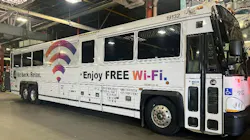
New Jersey Transit (NJ Transit) reports that it has made progress in modernizing its bus fleet and improving the rider experience. The agency is undertaking a statewide initiative to upgrade computer equipment and antennas on buses to provide more accurate real-time location data.
NJ Transit says it is utilizing this improved data to provide more accurate bus arrival predictions—and the new hardware offers passengers free Wi-Fi on board. The equipment and free Wi-Fi are currently available on more than 1,500 buses statewide and are scheduled to expand to nearly 2,000 buses by the end of 2026.
"New Jerseyans rely on NJ Transit to get to work, school, appointments and everywhere else life takes them, and we should be doing everything we can to make those trips easier,” said New Jersey Gov. Mikie Sherrill. "By upgrading real-time bus tracking and providing free Wi-Fi for customers, we're making NJ Transit work better for the people who rely on it every day."
The announcement comes as the agency launches a new website, app, artificial intelligence-power chat bot and a request for information for companies to assist in the improvement of passenger communications and as it waits on new buses as part of its full fleet modernization plan.
“Offering free Wi-Fi, service updates and real-time arrival information will make bus travel more convenient for our customers while modernizing the technology that supports our operations,” said New Jersey Department of Transportation Commissioner and NJ Transit Chair Priya Jain. “I appreciate Gov. Sherrill’s leadership and the sense of urgency fostered by the Rapid Action Plan, which is helping deliver lasting improvements for customers across New Jersey.”
That Rapid Action Plan is a near-term roadmap, funded from NJ Transit’s existing funding, that seeks to target upgrades to the agency’s digital experience, cleanliness, accessibility and public safety through upgrades like these.
"Customers want to know where their bus is and when it will arrive, and arrival predictions in our app have improved from 74% to 86% accuracy,” said NJ Transit President and CEO Kris Kolluri. “With the introduction of free Wi-Fi on more than 1,500 buses today and nearly 2,000 by the end of the year, we’re also delivering a ride that becomes more productive for our bus customers."
In total, more than 1,500 buses currently have the new technology, according to the agency. NJ Transit says it has retrofitted more than 1,300 buses with the hardware and free Wi-Fi while new buses entering the fleet already have the upgraded components. Additional retrofits and more new buses joining the fleet will expand that number to more than 1,900 by the end of 2026, representing more than 80% of the 2,373 buses in the fleet. The remaining buses are marked for retirement and, as they are replaced, the new buses will be manufactured with the technology already installed.
Free Wi-Fi on buses
The provision of free Wi-Fi on board NJ Transit buses aims to address the inequity in broadband access by offering this critical feature in a setting which may be the only convenient and/or practical place for many bus customers to access the internet, the agency notes. This project is funded by a $15 million federal grant from the U.S. Department of Treasury as part of the Capital Projects Fund.
The NJ Transit bus Wi-Fi network is structured to provide bandwidth for all customers on each bus, supporting general web browsing activities. Buses enabled with free Wi-Fi are marked with a sticker near the entrance of the bus.
Other rider improvements
NJ Transit says it is advancing its real-time bus arrival information through an ongoing effort with Swiftly. This partnership, according to the agency, continues to improve the reliability of bus arrival predictions. Beginning in October, riders will see these enhanced predictions on the NJ Transit website, the mobile app, station signage and a wide range of third-party applications. NJ Transit notes it will continue strengthening these improvements through upgraded GPS hardware and antennas that provide more precise location data. The agency says the goal is to give passengers clearer and more dependable information about where their bus is and when it will arrive.
Further, NJ Transit says it continues testing new bus stop signs with digital screens showing waiting riders the real-time arrival information of the next bus. The pilot program showcases two companies’ technology across eight bus stops.
NJ Transit says it has installed five signs from infrastructure provider BusPas at locations in Hudson County—two in Hoboken, two in Union City and one in Jersey City, N.J. The signs feature real-time customer information such as arrivals, detours, delays, service alerts and bus occupancy levels. The pilot signs are solar powered and employ e-paper displays, making them ADA-compliant. They also include text-to-speech announcement capability and automated safety lighting for improved nighttime visibility.
A similar pilot is underway in Manalapan Township and Howell Township in Monmouth County, N.J., through a partnership with Urban Solar.
The digital signs currently in service are located at:
- 15th Street and Willow Avenue, Hoboken
- 9th Street and Washington Street, Hoboken
- 31st Street and Bergenline Avenue, Union City
- 31st Street at JFK Boulevard, Union City
- Congress Street at Palisades Avenue, Jersey City
- Route-9 North at Gordon’s Corner Rd.
- Aldrich Rd. Park and Ride (Route-9 North and Aldrich Rd.)
About the Author
 Noah Kolenda
Noah Kolenda
Associate Editor
Noah Kolenda is a recent graduate from the Craig Newmark Graduate School of Journalism with a master’s degree in health and science reporting. Kolenda also specialized in data journalism, harnessing the power of Open Data projects to cover green transportation in major U.S. cities. Currently, he is an associate editor for Mass Transit magazine, where he aims to fuse his skills in data reporting with his experience covering national policymaking and political money to deliver engaging, future-focused transit content.
Prior to his position with Mass Transit, Kolenda interned with multiple Washington, D.C.-based publications, where he delivered data-driven reporting on once-in-a-generation political moments, runaway corporate lobbying spending and unnoticed election records.