City of Boston to launch five free Link Bus routes to strengthen transit and community connections
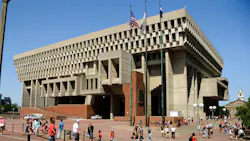
Boston Mayor Michelle Wu revealed that the city is set to launch five free, publicly accessible Link Bus routes to expand neighborhood transportation options and strengthen connections to the Massachusetts Bay Transportation Authority (MBTA), jobs, schools, healthcare, local businesses and other essential destinations.
The new and expanded services will operate in Mattapan, Roxbury, Allston-Brighton, Charlestown and the Lower Mystic, and South Boston Waterfront. The shuttle service will provide last-mile service along an established route between residential neighborhoods and transit stops at no cost for users.
“Boston is a city of incredible opportunities, but residents must have more reliable and affordable transportation for every family to build their fullest lives and strengthen our community,” Mayor Wu said. “The Link Bus program will bring free transportation services directly into our neighborhoods, strengthen connections to the MBTA and make it easier to get to work, school, appointments and local businesses. We are grateful to our federal, state and community partners for helping build a transportation network that works for everyone.”
The Link Bus program is supported by approximately $11.5 million from the Federal Highway Administration’s Congestion Relief Program, administered through the Massachusetts Department of Transportation. The funding is part of the broader $21.6 million LINKUP Greater Boston award, which also includes approximately $10 million to expand Bluebikes and support greater access to e-bikes. The federal grant will support three years of operations for the free shuttle services. During that time, the city notes it will be evaluating ridership, better understanding demand for the services and identifying opportunities to support their long-term sustainability.
The Economic Development and Industrial Corporation of Boston (EDIC) authorized acceptance of the Link Bus funding at its Sept. 17 meeting, allowing the city and its partners to move forward with contracting, community engagement, service planning and launch preparation.
Three services will be operated in partnership with transportation management associations (TMA) serving Allston-Brighton, Charlestown and the Lower Mystic and the Seaport. The city, through EDIC, notes it will competitively procure operators for the Mattapan and Roxbury fixed-route transit services. The services are expected to launch in early 2027.
“Transit is foundational to how Boston’s neighborhoods grow and thrive,” said Streets Interim Chief Chris Osgood. “Link Bus services will complement the MBTA by filling targeted first-mile and last-mile gaps and connecting people more directly to the regional transit network. Each service will reflect its neighborhood while sharing a commitment to being free, accessible, reliable, and open to everyone.”
The city says its Link Bus initiative builds on its experience supporting free neighborhood transportation services, including the Mission Hill Link, the Lower Mystic Link and EZRide. Once launched, residents will be able to access rider information, including schedules and stop locations, through the city’s website. Community engagement, procurement and detailed service planning will continue over the coming months, according to the city.
“This investment demonstrates how transportation and planning can work together to connect residents to opportunity and support the economic vitality of our neighborhoods,” said Boston Chief of Planning Kairos Shen. “This will create stronger connections among homes, jobs, commercial districts, community institutions and the broader transit system.”
The routes, stops, schedules and service models for the Mattapan and Roxbury services have not yet been finalized. The city notes it will work with residents, businesses, elected officials and community organizations to identify the destinations and connections to improve access to neighborhood commercial districts.
The TMAs, including A Better City, Lower Mystic TMA and Seaport TMA are set to play a central role in operating and coordinating three of the five grant-supported services, according to the city. TMAs work directly with employers, institutions, residents and commuters to improve commuters' experience and ease traffic congestion.
“Transportation Management Associations are built to bring partners together and develop practical transportation solutions that respond to how people actually travel,” said Pat Sullivan of the Lower Mystic and Seaport TMAs. “This investment gives us an extraordinary opportunity to strengthen existing connections, expand free public access and create services tailored to the needs of the Lower Mystic and Seaport communities.”
A Better City is set to support the development of the Allston-Brighton service through its transportation demand management work and partnerships with the neighborhood’s employers and institutions.
“Reliable first-mile and last-mile connections are essential to a transportation system that supports workers, businesses, and a growing regional economy,” said Scott Mullen of A Better City. “The Link Bus program combines significant public investment with the local knowledge and partnerships needed to deliver useful, accessible service. We are excited to work with the city and the Allston-Brighton community to help shape this new transportation option.”
Link Bus services are designed to complement the MBTA by closing targeted transportation gaps, improving connections to transit stations and serving destinations that can be difficult to reach through the existing network. The city notes that the MBTA supported the city’s application for the federal award.
About the Author
 Noah Kolenda
Associate Editor
Noah Kolenda is a recent graduate from the Craig Newmark Graduate School of Journalism with a master’s degree in health and science reporting. Kolenda also specialized in data journalism, harnessing the power of Open Data projects to cover green transportation in major U.S. cities. Currently, he is an associate editor for Mass Transit magazine, where he aims to fuse his skills in data reporting with his experience covering national policymaking and political money to deliver engaging, future-focused transit content.
Prior to his position with Mass Transit, Kolenda interned with multiple Washington, D.C.-based publications, where he delivered data-driven reporting on once-in-a-generation political moments, runaway corporate lobbying spending and unnoticed election records.