2026 40 Under 40: Davis Rajtik
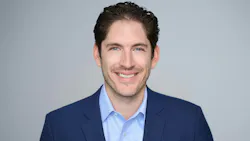
One word to describe yourself: Authentic
Alma Mater: Undergraduate: Shippensburg University; Graduate: Catholic University of America, Columbus School of Law
Fast fact about yourself: I can identify cars at night by their light signature.
What’s your best experience on transit and what made it memorable? It was Jan. 26, 2002, and I traveled from Shady Grove to Gallery Place on the Washington Metropolitan Area Transit Authority Red Line. This was my first trip on a transit system, and I was completely enthralled. I grew up in rural Pennsylvania without any transit to speak of.
Davis Rajtik is the deputy chief operating officer at the Washington Metrorail Safety Commission (WMSC). He’s responsible for direct safety oversight of the Washington Metropolitan Area Transit Authority’s (WMATA) rail system, developing oversight programs, enhancing corrective action and building collaboration between agencies.
Rajtik initially joined WMSC in 2020 as an audit manager, shortly after the commission took over safety oversight from the Federal Transit Administration (FTA). Coming in at the ground level, he designed, built and implemented foundational safety oversight programs that are still in practice today. For instance, he led a comprehensive overhaul of WMSC’s program standard—a key document that guides daily interactions between WMSC and WMATA and shapes WMSC’s oversight of WMATA. Thanks to the overhaul, Rajtik condensed the document, reduced conflicting information and outlined clearer expectations for the two agencies.
In addition to revising the program standard, he has created and overseen three out of WMSC’s five core safety oversight programs—ranging from audits and corrective actions plans to inspections. He's led over 25 safety audits and implemented 300-plus safety improvements with corrective action plans during his tenure.
Now in his current role, Rajtik collaborates with colleagues to collectively direct the agency’s work. As a member of the senior leadership team, he has supported oversight across some of WMATA’s major projects, including the Silver Line Phase II, Potomac Yard Station improvements and the return to automatic train operation. He also represents WMSC to elected officials and other stakeholders, ensuring mission alignment and collaborative efforts strengthen the rail system’s safety.
Thanks to his work at WMSC, Rajtik has presented during several industry conferences. Most recently, in March 2026, he presented at the FTA’s annual Joint State Safety Oversight and Rail Transit Agency Workshop, highlighting WMSC’s inspection program that includes risk-based inspections.
Outside of WMSC, Rajtik recently began his two-year term on the Transit Safety Oversight Association (TSOA) Board of Directors as one of four directors. He’s tasked with representing and advocating for member state safety oversight agencies (SSOAs) before the U.S. Department of Transportation, the FTA and other stakeholders.
Is there a specific experience that led you to where you are today?
On Sept. 21, 2015, I became stuck on a train for nearly an hour in a tunnel near Farragut West because of a large fire at a power substation near Stadium-Armory. This was the first time I thought about transit from a safety perspective and how such an event negatively affects a rail system.
Service was noticeably reduced for many months afterwards, which made my commute much longer. A few years later, the WMSC was created to oversee the safety of WMATA’s rail system, and I applied as soon as it was stood up.
What do you enjoy most about your job?
I am fortunate to work in an industry that has fascinated me for as long as I can remember. Although I am an all-modes transportation enthusiast at heart, rail has always been a particular focus of mine. In my current role, I work on complex issues involving safety oversight, operations, governance and public accountability, and it all affects a tangible rail system in ways that can be seen. For example, the WMSC ultimately concurred that it was safe for WMATA to return to automatic train operations and to the higher design speeds; the next day, I could feel the trains operating differently and faster.
What’s the most challenging part of your job?
Safety is often thought of as the absence of accidents, but in practice, it is much more complex because the goal is to prevent accidents. The most challenging part of my job is evaluating risk in situations where there is not always a clear right answer. We frequently work with incomplete information and must assess whether a condition represents an acceptable level of risk or requires mitigation.
Success requires balancing technical analysis, sound judgment and collaboration. A significant part of my role is fostering collaboration between the WMSC and WMATA so that we can work through difficult issues, address emerging risks and ultimately improve safety for the public.
What is the accomplishment you’re most proud of and why?
Professionally, I am most proud of the role I have played in helping build the WMSC into a mature and effective safety oversight agency. Since joining the WMSC, I have created, developed and led three of the agency's five oversight programs, including designing and launching a new risk-based inspection program that earned FTA approval.
I also led a comprehensive redesign of the WMSC's program standard, creating a more effective regulatory framework that continues to guide oversight of WMATA today. Knowing that this work contributes to a safer transit system for millions of riders is incredibly rewarding.
What is an accomplishment you would like to work towards in your career?
I would like the opportunity to lead an organization and help shape its long-term vision and strategy. Throughout my life, I have enjoyed building a vision. Developing programs, building teams and turning complex challenges into practical solutions is something I do well.
I am energized by creating a vision, building alignment around that vision and then translating strategy into measurable results. In the future, I hope to serve in an executive leadership role where I can combine my passion for transportation, public service and organizational development to create sustained, long-term impact.
What is your best advice you can share from your area of expertise?
Keep asking questions until you fully understand what is being relayed. It is in those gaps in understanding where there can be significant bits of information. If you lean into natural curiosity at this point, you can uncover bits that have the potential to change how you might act or proceed on an issue.
About the Author
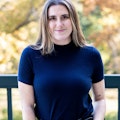 Megan Perrero
Megan Perrero
Editor in Chief
Megan Perrero is a national award-winning B2B journalist and lover of all things transit. Currently, she is the Editor in Chief of Mass Transit magazine, where she develops and leads a multi-channel editorial strategy while reporting on the North American public transit industry.
Prior to her position with Mass Transit, Perrero was the senior communications and external relations specialist for the Shared-Use Mobility Center, where she was responsible for helping develop internal/external communications, plan the National Shared Mobility Summit and manage brand strategy and marketing campaigns.
Perrero serves as the board vice president for LIT, the second vice chair of the American Public Transportation Association’s (APTA) programs and communications committee and is a member of APTA’s Marketing and Communications Committee. She holds a bachelor’s degree in multimedia journalism with a concentration in magazine writing and a minor in public relations from Columbia College Chicago. Her work has been recognized with a first place AdWheel Award, AZBEE Bronze Regional awards, an AZBEE Regional Gold Award and an AZBEE National Silver Award.