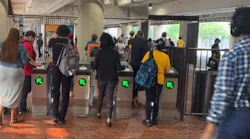
WI: 25% of Metro Transit rides go unpaid, but city says figure is misleading
About a quarter of the rides on Madison’s Metro Transit are unpaid, according to the public bus line’s figures, although city officials point to several factors that mean the true number is lower.
Metro counted between 721,240 and 1,369,561 monthly trips from January 2025 to September of this year, and for between 154,120 and 400,871 of those trips, the bus line has no record of having collected a fare. That works out to between 19.19% and 33.12% of trips, or 24.95% for the entire period.
The data come after Metro Transit launched its bus rapid transit, or BRT, line in September of 2024. BRT features flexible, extra-long buses that allow riders to enter from doors well behind the driver.
Along with ride-volume data from traditional fareboxes, data from onboard digital readers that accept smart cards, credit cards and single-ride tickets are used to come up with the number of paid rides. A separate automatic passenger counter — which uses beams of light to count passengers entering and exiting the bus — is used to calculate the number of actual rides.
Metro points to several operational realities that affect the paid-ride figures.
First, four routes — 80, 81, 82 and 84 — that serve the UW-Madison campus when school is in session are subsidized by the university and are designed to be free, and they can make up between 10% and 20% of the system’s ridership, depending on the time of year.
Second, a person using a transfer might not tap their card on bus readers when taking the second leg of their trip, meaning that trip is considered free in the data even though its cost has been paid up front.
And finally, “Metro has historically experienced intermittent issues with its legacy farebox data collection methods,” the bus system said in a statement.
“As hardware and software of these machines age, the issues have become more noticeable,” the system said. “In some cases, whole days of ridership data have been lost through the process of extracting the data from the vehicle.”
In a statement, city transportation director said Christof Spieler told the Wisconsin State Journal that the data provided by the system “simply cannot be used as a proxy for calculating fare evasion.”
“Given the complexity of different fare rates, transfers and technological limitations, we can definitively say it’s significantly lower than 24.95% and in line with comparable transit systems across the country,” he said.
It’s not clear what level of fare evasion is common nationally, however. The Federal Transit Administration doesn’t collect that data, and fare evasion can vary widely across public transit systems. Fare evasion has been as high as 46% in New York City last year and as high as 35% in the Seattle area in the last half of last year, according to reports.
Under Metro policy, people who don’t pay their fares are “politely” asked to pay them, the system said. People who repeatedly fail to pay can be banned from the system for between seven days and six months.
City spokesman Dylan Brogan said Metro keeps no list of people who are banned from the bus system for not paying their fares, and he said that the cost of enforcing fare evasion in Madison would likely be more than what fare evaders cost Metro Transit.
“Metro Transit doesn’t believe anyone benefits from diverting resources away from the core service — transportation — in favor of additional enforcement measures,” Spieler said in his statement. “Instead, we’re focused on making buses easier to use and more reliable for all riders through credit card tap-to-pay and all-door boarding.”
At the same time, he said Metro Transit is “paying close attention” the broader discussion about fare evasion nationally.
© 2026 The Wisconsin State Journal (Madison, Wis.). Visit www.wisconsinstatejournal.com.
Distributed by Tribune Content Agency, LLC.