FTA approves Categorical Exclusion for new Okanogan County Transportation Authority administration and maintenance facility
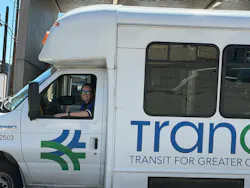
The Federal Transit Administration (FTA) has approved a Categorical Exclusion (CE) under the National Environmental Policy Act (NEPA) for the Okanogan County Transportation Authority's (OCTA) proposed administration and maintenance facility in Omak, Wash.
The determination follows FTA's review of project materials submitted by the Washington State Department of Transportation (WSDOT) on behalf of OCTA, including a CE worksheet and supporting environmental documentation describing the proposed project. FTA determined that the project will not result in significant environmental effects.
The new facility will provide a permanent home for administrative operations, fleet maintenance, vehicle storage and supporting transit functions that are critical to providing reliable public transportation throughout Okanogan County.
Earlier this year, OCTA was awarded $9.24 million through FTA's Section 5339 Bus and Bus Facilities Program to support development of the facility.
"This is a big deal for OCTA," said OCTA General Manager Brent Timm. "Since I was hired, developing a permanent administration and maintenance facility has been one of our highest priorities. We have spent years laying the groundwork, identifying opportunities, pursuing funding and navigating the planning and environmental review process to reach this point. Receiving FTA's NEPA approval, combined with the award of the $9.24 million Bus and Bus Facilities grant, represents a major milestone and allows us to continue moving forward."
The site will serve as a center of operations for both TranGO, which is operated by OCTA, and Okanogan County Transportation & Nutrition, which offers door-to-door bus service and meal deliveries, primarily for elders and people with disabilities, according to Methow Valley News. The report also notes that TranGO staff work out of a converted bank building in downtown Okanogan, where buses pull up in an alley to pick up passengers. TranGO currently needs to schedule appointments with local shops for maintenance and repairs.
For the administration and maintenance facility, the NEPA process included:
- Project development and documentation.
- Project sponsors developed plans for the proposed facility, identified the purpose and need for the project and prepared supporting technical and environmental documentation.
Potential impacts to environmental and community resources were evaluated, including:
- Land use and community compatibility
- Wetlands and water resources
- Floodplains
- Air quality
- Noise and vibration
- Historic and cultural resources
- Biological resources and protected species
- Environmental justice considerations
"OCTA appreciates the partnership and support of WSDOT and the Federal Transit Administration throughout this process," Timm said. "These milestones demonstrate what can be accomplished through persistence, collaboration and a shared vision for the future of public transportation in Okanogan County. This project is about much more than a building. It is about creating the foundation OCTA needs to improve operations, expand services, maintain our growing fleet and better serve communities throughout Okanogan County.
"This means that OCTA can continue moving forward to ensure improvements and expansion to transit service for many years to come. The facility will support transit improvements well into the future and help ensure that residents continue to have access to safe, reliable and sustainable transportation," Timm concluded.
About the Author
 Brandon Lewis
Brandon Lewis
Associate Editor
Brandon Lewis is a recent graduate of Kent State University with a bachelor’s degree in journalism. Lewis is a former freelance editorial assistant at Vehicle Service Pros in Endeavor Business Media’s Vehicle Repair Group. Lewis brings his knowledge of web managing, copyediting and SEO practices to Mass Transit magazine as an associate editor. He is also a co-host of the Infrastructure Technology Podcast.