DDOT opens new terminal complex operations, maintenance and storage facility
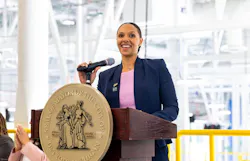
The Detroit Department of Transportation (DDOT) celebrated the opening of its new terminal complex on July 9 with Detroit Mayor Mary Sheffield and officials from the Detroit Building Authority, along with state and federal partners, union representatives, bus drivers and transit advocates. The $160 million facility will serve as DDOT's main base of operations on the city’s west side and replaces the former Coolidge Terminal that was destroyed by a fire in 2011 and demolished in 2023.
DDOT says the new 200,000-square-foot, three-building terminal complex provides a modern new base for operations, maintenance and storage. DDOT has moved its previous west side operations from the aging Gilbert Terminal, which will also be demolished, to the new Coolidge Terminal. DDOT’s eastside base will continue to be the Shoemaker Terminal near I-94 and Connor.
“Our DDOT drivers and mechanics are critical to making sure our residents can get to work, to school, their doctor’s appointment or to store and absolutely essential to our city’s economy,” Sheffield said. “They deserve to have a first-class facility to support them and now they do.”
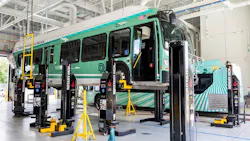
The new terminal features new climate-controlled bus storage, state-of-the-art maintenance and operations facilities, as well as a new administration building with an indoor-outdoor employee lounge and kitchen and a workout room with lockers and showers. Each building serves a specific purpose:
- A 121,192-square-foot, climate-controlled storage building will house up to 120 buses during overnight hours or when they are not in service or undergoing maintenance. A section of the building also includes bays for vehicles to be washed regularly to help prevent maintenance issues.
- A 54,293-square-foot maintenance building where buses will have routine maintenance and routine repairs conducted.
- A 16,922-square-foot administration building will have offices and several new amenities for employees, including an exercise room, kitchen with an indoor/outdoor lounge, lockers and showers.
“The new Coolidge facility represents a major investment in transit for the city, adding a modern base for west side operations and a new city-wide DDOT control center,” said DDOT Executive Director Robert Cramer. “The site includes new employee amenities and technology that will support operating safe, reliable service for decades to come.”
DDOT began researching options for rebuilding the Coolidge Terminal in 2019, completing a facilities master planning initiative in 2021. After considering options to continue using the site with no improvements, re-using existing buildings and a blend of reuse and building new, DDOT determined that the best course of action was to build an entirely new facility. As part of the site research, DDOT says it surveyed the surrounding area to ensure existing traffic, pedestrian crossings and business accessibility would not be negatively affected.
The Detroit Building Authority also managed the adaptive reuse of the former State Fair Dairy Cattle Barn near 8 Mile and Woodward, which is now DDOT’s Jason Hargrove Transit Center.
DDOT notes each building’s architectural, mechanical and electrical systems are designed to use requirements meeting or exceeding the Michigan Energy Code. Such items include use of LED lighting fixtures, lighting controls systems with occupancy sensors and time clocks, energy efficient windows and skylights, as well as high-performance precast concrete insulated wall panels. The light sensors in the buildings will detect how much light to emit based on the amount of natural light coming from windows and skylights.
About the Author
 Brandon Lewis
Brandon Lewis
Associate Editor
Brandon Lewis is a recent graduate of Kent State University with a bachelor’s degree in journalism. Lewis is a former freelance editorial assistant at Vehicle Service Pros in Endeavor Business Media’s Vehicle Repair Group. Lewis brings his knowledge of web managing, copyediting and SEO practices to Mass Transit magazine as an associate editor. He is also a co-host of the Infrastructure Technology Podcast.