Caltrain Board adopts new CROWS right-of-way safety strategy
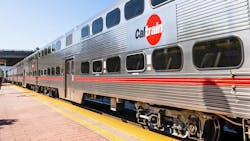
The Caltrain Board of Directors has opted to go for a new Caltrain Corridor Right-of-Way Safety Strategy (CROWS), a corridor-wide framework the board says is designed to strengthen ongoing safety enhancements on Caltrain’s right-of-way.
“Safety is Caltrain’s core value, and the need to make our right-of-way safer is reflected in everything we do,” said Caltrain Executive Director Michelle Bouchard. “After years of targeted improvements, this strategy establishes a comprehensive approach to reducing risk, strengthening accountability and delivering the most effective treatments where they are needed most throughout the entire Caltrain corridor to keep the people and communities we serve safe.”
Caltrain says it has implemented safety improvements at specific locations in response to known risk conditions, operational needs and available funding since the agency’s founding to fortify safety of the system. Even with these investments, the agency says that the corridor continues to face repeated trespassing incidents and vehicle incursions onto the right-of-way—events it says can result in death or serious injury, trauma to employees and the public, significant service disruptions and property damage.
The new strategy is designed to standardize and scale effective improvements to accelerate deployment at identified high-risk locations while strengthening ongoing maintenance operations and allowing for monitoring to ensure safety improvements remain effective over time. Staff are also seeking additional funding to expand proven measures to more locations throughout the corridor.
The agency says that the CROWS Strategy combines education, outreach, enforcement, engineering improvements and standards/procedure updates—organized around data-driven risk analysis and national best practices for trespass and suicide prevention. The strategy includes:
1) Hazard and risk assessments (data-driven prioritization)
- Update a corridor-wide threat and vulnerability assessment (TVA) that explicitly addresses trespass, suicide risk and grade-crossing hazards, incorporating applicable Federal Railroad Administration (FRA) tools and Caltrain data.
- Update the Grade Crossing Hazard Assessment using FRA accident prediction inputs and local collision/trespass history to support prioritization for separation, closure or improvements.
2) Enforcement (targeted deterrence and rapid response)
- Recurring, data-driven enforcement blitzes at high-risk crossings and trespass locations, providing opportunities to educate the public, as well as citations for egregious behavior.
- Coordinated operations with cities and local police to increase presence at peak-risk times.
- Training and coordination with law enforcement on crisis intervention and rail-specific hazards, including appropriate 988 referral pathways.
- Expanded data collection and analytics (including heat maps by location/time) to deploy resources effectively and measure results.
- Potential license plate recognition pilot to deter grade-crossing violations, identify unauthorized vehicles and support coordinated enforcement with local partners.
3) Education and outreach (shared responsibility and safer behavior)
- A corridor-wide safety communications strategy with consistent messaging: stay off the tracks, follow grade-crossing rules and increase 988 suicide and crisis lifeline visibility in appropriate locations and formats.
- Targeted outreach in communities near high-risk crossings and stations (e.g., schools, senior centers, businesses and service providers).
- Seasonal and event-based campaigns using earned media, social media and station announcements.
- Partnerships with organizations such as Operation Lifesaver and local jurisdictions for ongoing joint education and enforcement events.
4) Engineering and technology (physical and operational risk reduction)
- A corridor-wide plan to reduce access to the tracks (barriers, fencing, channelization and design integration for grade separations and station rebuilds).
- Pilot and standardize treatments such as anti-trespass panels at high-risk access points.
- CCTV master planning for a unified system across crossings, stations, yards and high-risk areas, including analytics/intrusion detection and defined monitoring/response protocols.
- Vegetation management focused on safety sightlines, fire risk and limiting informal access paths into the ROW.
- Copper theft mitigation measures to protect critical signal and grade-crossing infrastructure and reduce service impacts.
5) Standards and procedure updates (consistency and accountability)
- A grade crossing design standard incorporating current best practices (signage, lighting, channelization, barriers, CCTV expectations and other treatments).
- Updated internal controls requiring TVA and hazard assessment use in scoping capital and third-party projects.
- Enhanced right-of-way access procedures and strengthened internal reporting systems to improve visibility, tracking, and corrective action.
- Ongoing transparency through quarterly safety reporting
Caltrain says that it will continue to provide regular safety reports to the board and share similar information with employees to support a stronger safety culture and continuous improvement. Reports include both lagging indicators reported to the FRA and leading indicators that help identify risk earlier and enable preventive action before incidents happen.