ODOT awards $13.5 million in Ohio Workforce Mobility Partnership Program funding to transit agencies in 13 counties
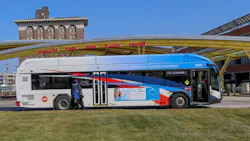
The Ohio Department of Transportation (ODOT) has awarded $13.5 million in funding through the Ohio Workforce Mobility Partnership Program (OWMP) to transit agencies in 13 counties to support public workforce transportation in rural and urban areas of Ohio.
The funding will support 19 transit projects that increase the ease and efficiency of transporting residents to economically significant employment centers or places of employment outside of their home communities.
“When we connect workers directly to reliable transportation, our entire economy improves,” said Ohio Gov. Mike DeWine. “This new round of funding ensures that hard-working Ohioans can easily reach growing employment centers, helping businesses stay fully staffed and competitive."
The OWMP Program was established with support from the Ohio General Assembly. The program provides funding for infrastructure, equipment, technology, vehicles and planning projects.
“Ohio’s economic momentum depends on a strong, dependable workforce and getting people to work is a critical piece of that puzzle,” said Ohio Lt. Gov. Jim Tressel. “By investing in smart, efficient transit options, we are empowering Ohioans to take advantage of new job opportunities while strengthening our state’s workforce team.”
ODOT notes that in this current grant cycle, funding will support high-impact projects operated by local transit authorities, regional transportation districts and county partners. Projects include purchasing bus equipment, replacing existing equipment, expanding transit facilities, improving signage and modernizing bus shelters.
As part of the funding, the Greater Cleveland Regional Transit Authority (GCRTA) has been awarded $620,000 to modernize light-rail signage and implement raised modular boarding platforms along two main bus corridors.
Key project highlights include:
- Raised modular platforms: Allows buses to stay in the travel lane instead of pulling to the curb between parked cars or through a bike lane. GCRTA says this will eliminate the need to wait for the opportunity to merge back into the travel lane, thus, reducing travel time and proving traffic safety for passengers, pedestrians and those on mobility devices.
- Enhanced wayfinding and signage: Installing high-visibility, digital transit signage to deliver accurate real-time schedule information, track-level wayfinding and service alerts to workers and daily transit riders.
“This investment recognizes the essential role of transit in keeping our communities connected and Ohio’s economy moving forward,” said GCRTA Programming and Planning Director Maribeth Feke. “Raised modular bus boarding platforms and modern passenger signage make our system more accessible and dependable for thousands of residents traveling to work, school, medical appointments and other daily destinations.”
About the Author
 Brandon Lewis
Brandon Lewis
Associate Editor
Brandon Lewis is a recent graduate of Kent State University with a bachelor’s degree in journalism. Lewis is a former freelance editorial assistant at Vehicle Service Pros in Endeavor Business Media’s Vehicle Repair Group. Lewis brings his knowledge of web managing, copyediting and SEO practices to Mass Transit magazine as an associate editor. He is also a co-host of the Infrastructure Technology Podcast.