City of Everett, Community Transit unveil plan to consolidate transit services in 2027
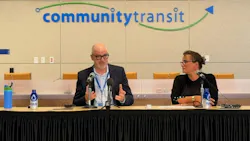
On Sept. 23, the city of Everett, Wash., Mayor Cassie Franklin and Community Transit CEO Ric Ilgenfritz revealed plans to consolidate transit service in Snohomish County, Wash. The proposed Interlocal Agreement (ILA) for the consolidation of Everett Transit with Community Transit would increase bus service in the city by 50%.
The agreement, which would go into effect on April 1, 2027, if approved by both governing bodies, prioritizes preserving current paratransit service for Everett residents and maintains employment for Everett Transit employees.
"Now is the time to build one seamless transit system for Everett and Snohomish County," Franklin said. "Sound Transit light rail is transforming how we connect to destinations around Puget Sound. With six more stations on their way, we must seize this pivotal moment."
Community Transit says the ILA was shaped with input from Everett bus and paratransit riders, employees and the public. The city of Everett and Community Transit gathered input through conversations with key stakeholders, meetings with staff, an open house and online and written comments.
"We've reached an agreement based on public input that improves transportation for all Snohomish County residents," Ilgenfritz said. "If this plan is approved, we will get started right away, making public transportation easier and more convenient for people to get where they want to go county-wide."
Key provisions in the ILA include:
- Phased increase in transit service in Everett of 50% through 2031—double the service increase envisioned in the Everett Transit Long Range Plan.
- Adding a Zip microtransit zone in Everett by spring 2028.
- Retaining paratransit eligibility and service area for current Everett paratransit customers.
- Retaining employment for all Everett Transit staff by transferring to Community Transit or staying with the city. Community Transit will fully honor the collective bargaining agreements of transferring employees.
"Investing in a strong public transportation system is critical to economically successful regions," said Economic Alliance Snohomish County President and CEO Ray Stephanson. "This consolidation expands transit service within Everett and Snohomish County, improving access to thousands of current and future riders and helping the county attract jobs, employees, customers and economic opportunities."
Current transit service would remain largely as-is until 2028, with emphasis on avoiding disruptions to riders during public involvement efforts and internal preparations to shape and implement expansions.
Earliest improvements—including the addition of the Zip microtransit zone—would come in March 2028, with further expansions ramping up later in the year and continuing into 2031. Fares would remain unchanged while the Community Transit Board of Directors, with the addition of Everett representation, reviews long-term options.
The expansions would be funded by bringing local transit funding in Everett to the same level that already applies to Snohomish County's other cities. Once the plan would take effect, Community Transit's 1.2% transit sales tax would replace Everett's 0.6% transit sales tax within the city, an increase of 6 cents on a $10 taxable purchase.
According to My Everett News, Everett Transit is currently being funded by COVID-19 pandemic relief funds, which are drying up, and the city would have likely had to increase the transit sales tax to 0.9% in the near future without this plan.
Financial details
As part of the agreement, Community Transit would pay the city of Everett $54.5 million. Of that amount, $42.5 million reflects transit property and assets—including Everett Station, buses, charging equipment and other transit facilities and equipment; $12 million recognizes impacts and transition costs to city services.
The city of Everett would separately transfer $16 million in existing transit capital reserves to Community Transit to fund equipment and vehicle replacement.
About the Author
 Brandon Lewis
Brandon Lewis
Associate Editor
Brandon Lewis is a recent graduate of Kent State University with a bachelor’s degree in journalism. Lewis is a former freelance editorial assistant at Vehicle Service Pros in Endeavor Business Media’s Vehicle Repair Group. Lewis brings his knowledge of web managing, copyediting and SEO practices to Mass Transit magazine as an associate editor. He is also a co-host of the Infrastructure Technology Podcast.