BART achieves record on-time performance, new high for rider satisfaction
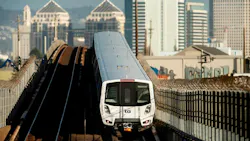
Bay Area Rapid Transit (BART) reports that its riders reached their destinations on time 95% of the time in the fourth quarter of fiscal year (FY) 2026, a new high for customer on-time performance, outperforming the previous quarter’s peak. Overall, train delays were down 13% this quarter, according to the agency.
Customer satisfaction also reached 91.4% in the fourth quarter, the highest level BART says it has recorded since it began using the metric.
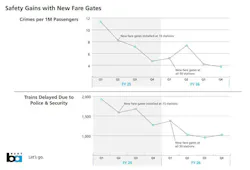
The agency notes that the gains extend to safety, as in the fourth quarter, the agency hit every one of its six safety targets, and the number of crimes against riders per million trips fell 67% since the end of 2024—further improvements from the numbers released in May that were already trending down.
These gains come as ridership grew 13.9% year over year to 16 million trips during the quarter, demonstrating what BART says are ongoing efforts in increasing rider confidence and strengthening the system financially. Average weekday ridership hit 205,000 in the fourth quarter, up 6% from the previous quarter while weekend ridership grew 15% year over year. On Sept. 15, BART notes that it recorded its highest ridership day since the pandemic—242,090 trips. BART's FY26 Q4 quarterly performance report (QPR) covers April 1 through June 30, 2026.
“Years of deliberate work have changed the baseline for what riders can expect from the BART system,” said BART General Manager Bob Powers. “This is not a single strong quarter, but a continuation of a multi-year effort to make the system demonstrably safer and more reliable. A safe and clean BART is no longer an aspiration – it's what the data demonstrates, quarter after quarter."
Riders give BART high marks
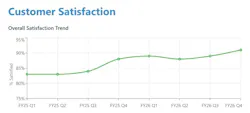
Overall customer satisfaction increased to 91.4% in the fourth quarter, up from 88.9% the previous quarter. BART says the number of customer complaints decreased, down 29% compared to the third quarter.
Customer ratings for BART in the following categories all exceeded targets:
- Onboard train: 4.2 out of 5
- Rider information and support: 4.2 out of 5
- Inside station: 4.1 out of 5
- Outside station: 4.0 out of 5
Safety and security continue to improve
BART says the gains in ridership, reliability and customer confidence coincide with a steady retreat in crime. Crimes against riders per million trips have fallen 67% since the end of 2024. Safety-related delays were down 47% over the same period, with fewer incidents meaning fewer trains were held up awaiting a police response.
The agency reports that fare evasion is following a similar trend. The share of riders who reported seeing it dropped to 9% this quarter, down from 10% the quarter before, and a fraction of the 25% high recorded in FY24. The drop comes as BART celebrated one year since the installation of its new fare gates in September.
Meanwhile, BART says all six of its safety key performance indicators met their goals this quarter, a 100% safety index BART hasn't hit since late 2018.
Upgrading the system
Amidst these improvements, BART notes that it continues to invest in trackside upgrades, track replacement and modern train control technology to make the system even more resilient.
During FY26, BART notes that it completed 98 miles of track grinding and surfacing, added three new substations and four portable substations, increasing power capacity from Colma to Downtown Oakland, Calif., by 30%, upgraded eight stations with new LED lighting and completed three station improvement projects.
Future improvements, like the currently underway communications-based train control project, will contribute further reductions to the customer impact of disruptions, even when incidents occur.
About the Author
 Noah Kolenda
Noah Kolenda
Associate Editor
Noah Kolenda is a recent graduate from the Craig Newmark Graduate School of Journalism with a master’s degree in health and science reporting. Kolenda also specialized in data journalism, harnessing the power of Open Data projects to cover green transportation in major U.S. cities. Currently, he is an associate editor for Mass Transit magazine, where he aims to fuse his skills in data reporting with his experience covering national policymaking and political money to deliver engaging, future-focused transit content.
Prior to his position with Mass Transit, Kolenda interned with multiple Washington, D.C.-based publications, where he delivered data-driven reporting on once-in-a-generation political moments, runaway corporate lobbying spending and unnoticed election records.