NYC Health Department releases Congestion Relief Zone air quality study results
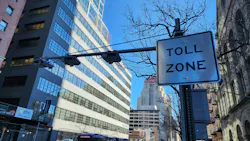
The New York City (NYC) Health Department has unveiled its first evaluation of the Congestion Relief Zone Tolling Program’s impact on neighborhood air quality. The study found that the city’s air quality remained stable or improved slightly in the first year of congestion pricing, continuing a 20-year trend of improving air quality and declining pollution. Further, the study revealed that environmental justice communities alongside major highway corridors identified in the Congestion Relief Zone Tolling Environmental Assessment did not experience increased air pollution attributable to congestion pricing.
“Cleaner air means healthier communities, and New Yorkers deserve to know how major policies affect the air they breathe,” said NYC Health Department Commissioner Dr. Alister Martin. “This report gives us the clearest picture to date of how air quality has changed during the first year of congestion pricing, and we now know that air quality across New York City was not any different because of congestion pricing. By continuing to monitor neighborhood air quality over time, we’re helping to ensure that decisions affecting our city are informed by strong health data.”
The department also notes that the report found that the reduced congestion, improvements in transit systems and investments through the mitigation program—which directs funds toward initiatives in environmental justice communities—demonstrates the benefit of the program.
“With congestion pricing, we’ve seen fewer vehicles entering Manhattan’s central business district and more people choosing to bike, walk and take mass transit,” said New York City Department of Transportation Commissioner Mike Flynn. “Health’s findings, combined with the program’s investment of over $120 million into the city’s air quality and public health initiatives like NYC [Department of Transportation]’s (NYCDOT) Clean Trucks Program, mean that congestion pricing will help communities across the city breathe cleaner.”
To conduct the evaluation, the Health Department says that it expanded its existing New York City Community Air Survey (NYCCAS) monitoring network in partnership with the Metropolitan Transportation Authority (MTA), the NYCDOT and the New York State Department of Transportation.
The analysis examined concentrations of four traffic-related air pollutants, fine particulate matter, nitrogen dioxide, nitric oxide and black carbon, within the Congestion Relief Zone and in environmental justice communities where concerns had been raised about potential traffic changes—areas that include the Major Deegan Expressway, Cross Bronx Expressway, Brooklyn-Queens Expressway, Staten Island Expressway, FDR Drive and Trans-Manhattan Expressway.
Using data starting one full year before tolling began and continuing one year after, researchers were able to distinguish the effects of congestion pricing from other factors that influence air quality, such as weather, seasonal changes and regional wildfire smoke, by using a control site that was not affected by congestion pricing and statistical modeling.
For nearly two decades, the Health Department has used NYCCAS to monitor neighborhood-level air quality to better understand what causes differences between neighborhoods, how pollution changes over time and how it affects health. NYCCAS has found that air quality improved dramatically in all NYC neighborhoods over the past decades, but more work is needed to mitigate traffic-related air pollution, which is linked to asthma, heart disease, stroke and other serious health conditions.
In May, the city announced a $20 million investment from the MTA to improve childhood asthma outcomes in the Bronx. The Health Department says this investment allows it to further support the Bronx Asthma Program and expand the Asthma Case Management Program.
“Before we turned the cameras on, there was concern about the potential for increased pollution caused by drivers looking to avoid the toll,” said MTA Chair and CEO Janno Lieber. “As this study confirms, that didn’t happen, and congestion pricing is already funding additional investments to further improve air quality.”
About the Author
 Noah Kolenda
Noah Kolenda
Associate Editor
Noah Kolenda is a recent graduate from the Craig Newmark Graduate School of Journalism with a master’s degree in health and science reporting. Kolenda also specialized in data journalism, harnessing the power of Open Data projects to cover green transportation in major U.S. cities. Currently, he is an associate editor for Mass Transit magazine, where he aims to fuse his skills in data reporting with his experience covering national policymaking and political money to deliver engaging, future-focused transit content.
Prior to his position with Mass Transit, Kolenda interned with multiple Washington, D.C.-based publications, where he delivered data-driven reporting on once-in-a-generation political moments, runaway corporate lobbying spending and unnoticed election records.