APTA responds to USDOT’s proposals for surface transportation reauthorization bill
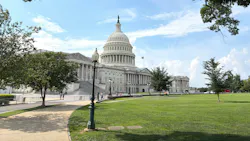
U.S. Department of Transportation (USDOT) Secretary Sean Duffy issued a letter to senate committee leaders on July 22 outlining the USDOT proposals for the next surface transportation reauthorization.
The letter asks for several adjustments to precedented handeling of this legislation, including:
- Transit safety/security: Give the Federal Transit Administration (FTA) the authority to withhold up to 100% of formula funding from agencies/municipalities that don't show progress on crime and fare evasion, replacing existing earmarks with a new mandatory safety/crime prevention set-aside.
- Autonomous vehicle (AV) policy: A voluntary AV pilot program with federal preemption over state law. These proposed regulatory changes would include lifting the 2,500-vehicle exemption cap, extending exemption terms to five years, new federal motor vehicle safety standards specifically for driverless vehicles and a "make inoperative" carve-out for safety features during autonomous operation.
- Rail safety: A push to include the Railway Safety Act (East Palestine-driven) to any surface transportation package.
- Highway Trust Fund restructuring: Eliminate the Mass Transit Account entirely and fold all federal fuel tax revenue into the Highway Account.
- New York Penn Station: Including an additional $1 billion more in federal-state partnership grant funding to support the transformation of Penn Station—a provision letting Amtrak enter PILOT agreements. This adjustment would also include a Railroad Rehabilitation and Improvement Financing cap raise from $35 billon to $50 billon and a line directing Amtrak to rename Penn Station.
- Bike lanes: Restrict competitive/formula funding for bike infrastructure that reduces vehicle throughput and support removing existing lanes tied to congestion.
- "Freedom Car": Bar any federal/state/local mandate requiring vehicles sold or operated on public roads to have automated driving or wireless data transmission capability.
- Dalilah's Law: Restrict non-domiciled commercial driver’s licenses to those with employer-sponsored visas and require English-only CDL testing.
- Grant program consolidation: This is in an effort to fold multiple existing competitive grant programs into fewer, broader ones. The reason presented being to reduce application and administrative burden while consolidating or eliminating several standalone grant programs, including some with climate- or zero-emission-specific set-asides. Examples include:
- Merging the Bridge Investment Program and Competitive Highway Bridge Program.
- A new Federal Railroad Administration intercity passenger rail program consolidating Federal-State Partnership for Intercity Passenger Rail, Corridor Identification and Development, Restoration and Enhancement and Interstate Rail Compacts.
- Combine FTA's bus grant merger 5339(b) and 5339(c).
- Dropping the zero-emission bus set-aside.
- A single FTA ferry program.
- Two new secretary mega-programs. The Building Beautiful Infrastructure is Great program for large multimodal projects and America's Beautiful Community Transportation Projects for smaller ones that absorb existing programs like Nationally Significant Freight and Highway Projects, Mega, Rural and Reconnecting Communities.
- 12 Infrastructure Investments and Jobs Act (IIJA) programs to not extend, three to modify (Appendix C): The letter proposes not extending 12 IIJA programs—many related to climate, electric vehicle (EVs), active transportation or equity initiatives—and modifying three others to remove transit- or electrification-focused elements and emphasize highway-oriented uses. Programs like the Carbon Reduction Program, Reconnecting Communities, Healthy Streets, Active Transportation Infrastructure Investment, EV charging grants (both the IIJA competitive version and the Division J formula/National Electric Vehicle Infrastructure (NEVI) program), the EV Working Group and smaller ones like Invasive Plant Elimination and Pollinator-Friendly Practices were proposed to be eliminated. Three others—Truck Emissions at Port Facilities, Congestion Relief and Safe Streets and Roads for All—would be adapted rather than removed, generally to strip out transit/electrification-adjacent language and reorient them toward highway-only applications.
- Private Activity Bonds (PABs): The letter proposes replenishing the PAB allocation authority and aligning eligibility with the Transportation Infrastructure Finance and Innovation Act (TIFIA) and RRIF with one carve-out: transit-oriented development and airports would be excluded from that conforming eligibility. It's grouped under "Expand Private Sector Investments" alongside removing the TIFIA airport project eligibility sunset and lifting RRIF financing limits for rail shippers, all aimed at pulling more private capital into infrastructure financing rather than direct federal grants.
The American Public Transportation Association (APTA) released a statement and further information that strongly opposes USDOT’s proposals to eliminate all guaranteed funding for public transit and passenger rail by eliminating the Mass Transit Account of the Highway Trust Fund and advance appropriations.
APTA says these proposals jeopardize more than 85% of federal public transit and passenger rail investment across the nation, including all public transit formula grants.
“APTA appreciates Secretary of Transportation Duffy’s leadership in highlighting the importance of developing a long-term surface transportation authorization bill,” APTA said in the statement. “We look forward to working with the [US]DOT on the next authorization bill, including on the department’s proposals to advance autonomous vehicle innovation and private-sector participation in infrastructure.
"However, we are extremely troubled by [US]DOT’s proposal to eliminate all guaranteed funding for public transit and passenger rail, jeopardizing more than 85% of federal public transit and passenger rail investment across the nation. [US]DOT proposes to eliminate the Mass Transit Account of the Highway Trust Fund, which is a cornerstone of the federal partnership that enables communities to plan, finance and deliver long-term public transit investments.
"By eliminating both the Mass Transit Account and advance appropriations, [US]DOT would strip all guaranteed funding from transit formula grants, which would have an outsized impact on rural and smaller communities that depend most on Federal support to provide critical public transit services. It also removes guaranteed funding for important safety initiatives, such as eliminating highway-rail grade crossings.”
APTA says that by eliminating both the Mass Transit Account and advance appropriations, USDOT would strip all guaranteed funding from transit formula grants, including urban, rural, bus, state of good repair and seniors and individuals with disabilities grants. USDOT would also be eliminating guaranteed funding for other safety and infrastructure initiatives, such as competitive grants to eliminate highway-rail grade crossings, purchase buses and constructing bus facilities. The association says the cutting of these proposals would have an outsized impact on rural and smaller communities that rely more heavily on federal funding for both capital and operating needs.
“We urge Congress to reject these proposals and build upon current public transit and passenger rail investment in the next Surface Transportation Authorization Act,” APTA’s statement said. “Let’s work together to build America’s economy and transportation system for the next several decades.”
About the Author
 Noah Kolenda
Noah Kolenda
Associate Editor
Noah Kolenda is a recent graduate from the Craig Newmark Graduate School of Journalism with a master’s degree in health and science reporting. Kolenda also specialized in data journalism, harnessing the power of Open Data projects to cover green transportation in major U.S. cities. Currently, he is an associate editor for Mass Transit magazine, where he aims to fuse his skills in data reporting with his experience covering national policymaking and political money to deliver engaging, future-focused transit content.
Prior to his position with Mass Transit, Kolenda interned with multiple Washington, D.C.-based publications, where he delivered data-driven reporting on once-in-a-generation political moments, runaway corporate lobbying spending and unnoticed election records.