More transit funding questions make their way to 2026, 2027 ballots
More transit ballot measures are making their way toward the 2026 and 2027 ballots after moves from Piece Transit’s Board of Commissioners and the St. Louis Board of Aldermen this week. The pair of measures look to renew and expand or redirect their intended use to another project.
Pierce Transit Board places question to renew and expand transit funding on general election ballot
With the adoption of Resolution 2026-00 by the agency’s board of commissioners, the measure next moves to the Pierce County Auditor for formatting for the ballot.
Pierce Transit says the proposed measure reflects years of community input, ridership data and long-range service planning.
“Pierce Transit is at a critical moment. Due largely to inflation, our expenses are expected to outpace revenue as early as 2027,” said Pierce Transit CEO Mike Griffus. “Without additional funding, we would continue providing today’s level of service for as long as possible, but rising costs would eventually require service reductions. This proposal is the result of extensive community input and thoughtful planning to not only preserve today’s service, but provide more transit, to more people and places more often. If approved by voters, the measure would fund a 47% increase in transit service across our service area.”
If greenlit by voters, it would fund service improvements such as:
- New bus routes and special event service.
- More frequent service and shorter wait times.
- Later evening and weekend service.
- Easier transfers and more direct trips.
- Fare-free bus and paratransit service for seniors.
- Expanded paratransit service for people with disabilities.
If approved by voters, the measure would change Pierce Transit’s local sales tax from 0.6% to 0.9% — an increase of 0.3%, or 3 cents on every $10 spent on qualifying purchases in the Pierce Transit service area.
“Reliable transit creates opportunity. It gets people to work, school, medical appointments and helps riders connect with the people and places that matter most,” said Pierce Transit Board Chair and Tacoma City Councilmember Kristina Walker. “For years, we’ve heard from riders and communities across Pierce County about the need for a transit system that reflects our county’s growth and evolving needs. Working with the public, staff have put together a comprehensive package that touches every area of the Pierce Transit’s service area, and I couldn’t be happier with the results. By placing this measure on the ballot, the board is giving voters the opportunity to decide whether they want to make that investment in the future of local transit.”
St. Louis Board of Aldermen advances ballot question to redirect transit tax revenue to new bus rapid transit (BRT) project
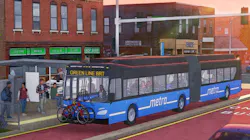
A new ordinance from the St. Louis Board of Aldermen would place a ballot measure before voters in the city of St. Louis on April 6, 2027, asking whether funds generated through the 2017 Proposition 1 Economic Development Sales tax—including both revenue already collected and revenue collected in the future—should be redirected to support the proposed Green Line BRT project along the Northside-Southside corridor.
Since voters approved Proposition 1 in 2017, approximately $96 million has been collected through the economic development sales tax for North-South MetroLink expansion.
In September 2025, the Bi-State Development’s Board of Commissioners approved a shift from light rail to evaluating the feasibility of BRT along the Northside-Southside corridor. That the decision came due to notable increases in projected light rail construction costs, along with changes in the Federal Transit Administration’s national funding priorities for major transit projects.
In June 2026, the East-West Gateway Board of Directors adopted the 11.5-mile Florissant Avenue alignment as the Locally Preferred Alternative (LPA) for the proposed Green Line BRT project. The adoption of the LPA is set to help the project as it advances through the federal Capital Investment Grant process.
Compared to the originally proposed 5.6-mile light-rail alignment, the proposed BRT alignment would extend approximately 11.5 miles, providing transit access to additional neighborhoods while supporting economic development opportunities at a lower estimated project cost.
About the Author
 Noah Kolenda
Noah Kolenda
Associate Editor
Noah Kolenda is a recent graduate from the Craig Newmark Graduate School of Journalism with a master’s degree in health and science reporting. Kolenda also specialized in data journalism, harnessing the power of Open Data projects to cover green transportation in major U.S. cities. Currently, he is an associate editor for Mass Transit magazine, where he aims to fuse his skills in data reporting with his experience covering national policymaking and political money to deliver engaging, future-focused transit content.
Prior to his position with Mass Transit, Kolenda interned with multiple Washington, D.C.-based publications, where he delivered data-driven reporting on once-in-a-generation political moments, runaway corporate lobbying spending and unnoticed election records.