Transit Commission of UTA assumes oversight of agency
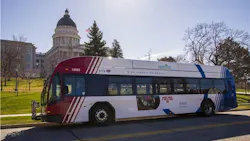
The Transit Commission of the Utah Transit Authority (UTA) has assumed oversight of the agency. The commission consists of seven part-time members and a full-time executive director. Under the previous structure, UTA had a full-time board of trustees and a part-time local advisory council. The transition comes on the heels of Senate Bill (SB) 197, which was passed during the 2026 legislative session, and is designed to strengthen accountability, coordinate transportation investment, increase ridership and position UTA for long-term growth.
The commission will serve as UTA’s governing and oversight body, responsible for approving the annual budget, adopting the long-range transit plan, providing accountability for the region’s transit investments and advocating for riders and entities within the service area. Transit Commission Executive Director Jay Fox will set UTA’s strategic direction and lead the agency’s daily operations, staff and services.
SB 197 sponsors Sen. Wayne Harper (R-UT-16) and Rep. Kay Christofferson (R-UT-53) said the new governance structure is based on in-depth research, including the evaluation of other major transit districts and interviews with stakeholders. Harper added that this is a new chapter for transit governance in Utah, intended to clarify how local governments and customers engage with UTA and its processes and enhance the efficiency of internal and external operations.
“This will position UTA to move forward and better serve growing Wasatch Front communities,” Harper said. “Utah cannot build enough roads to meet its transportation needs. Transit must be reliable, timely and responsive to every area UTA serves.”
UTA says SB 197 amendments extend beyond governance by establishing a dedicated state funding mechanism for transit. Beginning in fiscal year (FY) 2029, 5% of the incremental new growth in state sales tax above a FY28 baseline will be captured and deposited into the Transit Transportation Investment Fund (TTIF), which is dedicated for transit purposes. UTA notes projections show TTIF revenues growing from $109.2 million in FY28 to nearly $200 million by FY35—without raising taxes or redirecting existing resources.
“I’m grateful to the state for its vote of confidence in UTA’s continued success and its commitment to a dedicated funding vision,” Fox said. “This begins an era of greater coordination and unity between transportation agencies and communities to prepare for Utah’s future growth, founded on the daily commitment of our employees to continuously improving our service.”
The new structure, modeled on the governance framework of the Utah Department of Transportation (UDOT), is designed to make UTA more responsive to growing Wasatch Front communities and better aligned with Utah’s long-term regional programs, including the 2034 Winter Olympics.
During the first year of the commission’s operation, UDOT’s executive director will serve as a nonvoting, ex-officio member—a coordination role designed to align state transportation planning with transit services during the transition period.
Fox credited the outgoing board of trustees with improving UTA’s processes and restoring the agency’s fiscal accountability.
“The trustees’ efforts have prepared UTA well to meet Utah’s growth,” Fox said. “Over their tenure, the board also navigated the agency through COVID-19 ridership recovery, the opening of new bus rapid transit lines and sustained gains in public trust.”
UTA notes its day-to-day operations—including bus, TRAX, Streetcar, FrontRunner, paratransit, UTA On Demand and Vanpool—will continue without interruption.