SamTrans Board adopts local investment plan framework to guide funding if Connect Bay Area tax ballot measure passes in November
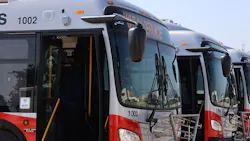
The San Mateo County Transit District (SamTrans) Board of Directors adopted a local investment plan framework to guide how it would invest potential local funding generated by the Connect Bay Area sales tax ballot measure, should voters approve it this November. According to SamTrans, If the measure qualifies and voters approve it, the agency would administer San Mateo County, Calif.,’s local transit funding under the board-adopted local framework.
The agency says the local framework reflects several months of community outreach and stakeholder engagement focused on what San Mateo County residents want from future public transit investments. SamTrans held more than 30 presentations and meetings with cities and community groups and received 1,800 survey responses with hundreds of comments that helped shape the plan.
According to the agency, the community feedback showed clear support for protecting current transit service, enhancing reliability and efficiency, expanding access for communities with limited service and improving aging transit infrastructure.
“Residents told us they want SamTrans to protect the service people rely on today while planning responsibly for the future,” said SamTrans Board of Directors Chair Marie Chuang. “This framework is rooted in community input and gives us a clear way to invest potential local funds in a fiscally responsible way that is also responsive to community needs.”
If approved by voters, the potential 14-year, five-county Connect Bay Area sales tax measure would provide about $50 million annually in locally controlled funding for public transit in San Mateo County, for an estimated total of $700 million over the life of the measure. The agency notes those funds would stay in San Mateo County for public transit purposes.
The board-adopted Local Investment Plan framework organizes that potential funding into four categories over the life of the measure:
- 45% to prevent cuts to existing public transit services
- 30% to improve the rider experience and promote traffic reduction through reliable, efficient service, better bus stops and last mile service solutions.
- 20% to expand affordable transit access for underserved communities, including the coast and vulnerable populations.
- 5% to repair and maintain aging transit infrastructure, including bus stops and potholes on bus routes.
Under the framework, SamTrans would use potential funding to help preserve and sustain existing public transit. SamTrans says its post-pandemic ridership recovery is robust and averages close to 100% of pre-pandemic levels.
The plan also creates a path for improvements residents said matter most to them, including faster and more reliable bus service, improved neighborhood coverage and east-west connections, cleaner and safer bus stops, continued support for free and reduced fare programs and better access for underserved communities, including coastal areas.
According to the agency, potential projects identified through the planning process include bus stop improvements, real-time transit information at bus stops, transit signal priority, route improvements, paratransit investments, support for fare programs, first- and last-mile solutions for accessing public transit and repairs to aging transit assets.
The framework also commits SamTrans to strong financial transparency and accountability measures. SamTrans will prioritize cost containment, accountability and efficiency in operations; provide regular board updates on Connect Bay Area spending; plan for long-range deficit recovery; evaluate new service based on performance; and early investment in near-term visible projects that can deliver results.
SamTrans will calibrate the funding framework percentages about every three years based on current needs, conditions and service performance. The agency will also continue pursuing grants and partnerships to help stretch local funds and deliver larger projects.