Denver RTD’s latest customer, community surveys show improvement in transit services
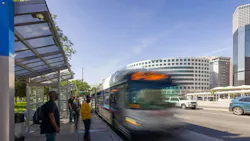
Denver Regional Transportation District’s (Denver RTD) latest customer and community surveys show that satisfaction with the agency’s bus and rail services exceeds national averages in several key areas, including community value, fare prices and operators. According to Denver RTD, findings from the surveys also indicate improvement in perceptions of bus and rail services, with the largest gains in the timely arrival of buses (+15%), commuter rail (+10%) and light-rail trains (+26%). Bus and rail customers report overall satisfaction levels at 26% and 31% higher than the national average, respectively.
The agency saw year-over-year increases in respondents perceiving the agency’s transit services support local business and provide regional accessibility to employment, medical, educational and recreational destinations, as well as affordable housing. Denver RTD’s bus operations exceeded the national average for transit agencies in all 16 comparative categories, and rail operations exceeded the national average in 15 of the 16 comparative categories.
“The surveys' results underscore the important role public transit continues to play in connecting people across the Denver metro area,” said Denver RTD General Manager and CEO Debra Johnson. “Throughout the past year, the agency has continued to advance initiatives focused on creating a welcoming transit environment and improving the overall customer experience. It is encouraging to see these efforts reflected in the results, particularly as [Denver] RTD continues to perform strongly in several key areas nationally. At the same time, the agency remains committed to building on this momentum through ongoing innovation and continuous improvement.”
Survey methodology
For the sixth consecutive year, Denver RTD commissioned comprehensive surveys of its customers and the community to better understand the agency’s strengths and identify opportunities for improvement. In March and April, research firm ETC Institute conducted statistically valid surveys to assess perceptions, attitudes and experiences, as well as provided comparative national data and benchmarks. The bus and rail surveys were conducted using a customer intercept method, which allowed researchers to gather immediate, real-time feedback from individuals using Denver RTD's fixed-route bus and rail services to ensure responses were provided by actual customers and that the data collected was proportionate to boardings across all bus routes and rail lines.
Denver RTD says customers who use Access-a-Ride and Access-on-Demand services, complementary paratransit service and supplemental premium service, respectively, were randomly selected to participate and were able to respond via mail, email and text messages. To gauge sentiments toward the agency among community members, including non-customers, the ETC Institute mailed surveys to a demographically representative sample of households in the Denver metro area.
Customer excellence net promoter score (NPS)
Denver RTD says an important metric derived from the annual surveys is an NPS; a measure of how likely customers and community members are to recommend the agency’s services to others. The agency’s 2026 combined NPS for bus, rail and paratransit customers is +50— a 13-point increase from 2025 and a 37-point jump from 2024.
Customer satisfaction
Customer satisfaction results in 2026 improved over 2025 across key categories, as bus, rail and paratransit customers, as well as community members, reported high level of satisfaction related to overall service, safety and frequency of use, which the agency says demonstrates continued progress in enhancing the customer experience.
Bus customers
- 82% of respondents are satisfied with Denver RTD services, up from 76% in 2025 and 68% in 2024.
- 71% rely on agency services.
- 90% agree or strongly agree that Denver RTD provides value to the community.
- 67% use bus services at least three days a week and 53% for their work commute.
- 80% believe buses reach their destination in a reasonable amount of time.
- 73% are satisfied with the frequency of service.
- 73% feel safe and secure while riding the bus.
According to the agency, bus NPS is +46, a 20-point jump from 2025; the national average is –16.
Rail customers
- 87% of commuter rail and light-rail respondents report overall being satisfied with Denver RTD rail services, a 12% year-over-year increase.
- 65% rely on agency services.
- 93% agree or strongly agree that Denver RTD provides value to the community.
- 58% use rail services at least three days a week and 48% for their work commute.
- 85% believe rail services reach their destination in a reasonable amount of time.
- 77% are satisfied with the frequency of service.
- 71% feel safe and secure while riding the train.
Rail’s NPS is +49, an 18-point increase from 2025; the national average is –3.
Paratransit customers
- 87% of Access-a-Ride customers are satisfied or very satisfied, a 7% increase from 2025.
- 84% of Access-on-Demand customers are satisfied or very satisfied, a 12% decrease from 2025.
- Both Access-a-Ride and Access-on-Demand have an NPS of +57.
Community
- 44% of respondents reported using transit primarily for social or recreational purposes, up from 35% in 2025.
- 33% use Denver RTD primarily to get to work, compared with 41% in 2025.
- 86% report that Denver RTD services are valuable to the greater Denver region.
- 89% believe Denver RTD provides options for those with special mobility needs.
- 83% indicate Denver RTD is valuable or extremely valuable at reducing pollution and achieving sustainable practices, for the third consecutive year.
- 81% believe Denver RTD is a safe transportation option.
- 89% feel that Denver RTD vehicles are mechanically safe.
- 81% believe Denver RTD helps reduce traffic congestion.
The agency notes all surveys were conducted in English and Spanish, with language assistance available in an additional 20 languages, and accommodations for individuals who are blind or visually impaired. Surveys were administered to a representative sample of the customer and community population to ensure statistically valid results.
Denver RTD notes more information about survey methodology and confidence intervals is available on its website. National comparative data was provided by the ETC Institute based on household surveys conducted by the research firm.