National Aboriginal Capital Corporations Association, Alto sign MOU for high-speed rail project along Toronto to Québec City corridor
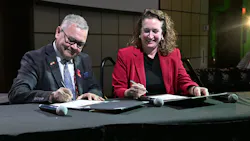
The National Aboriginal Capital Corporations Association (NACCA) and Alto have signed a memorandum of understanding (MOU), establishing a collaborative framework to connect Indigenous businesses, entrepreneurs and workers to opportunities emerging from the high-speed rail network along the Toronto, Ontario, to Québec City, Montreal, corridor. The companies note that the MOU reflects a shared commitment to advancing Indigenous leadership, economic participation and reconciliation in Canada’s future economy through involvement in major projects.
“Canada’s largest infrastructure project in modern history must also be one of its most inclusive,” said NACCA Board Chair Keith Matthew. “This MOU with Alto signals a meaningful step toward ensuring that Indigenous peoples, as business owners, workers and community leaders are at the table from the very beginning. NACCA’s network of indigenous financial institutions has helped build over 54,000 businesses coast to coast to coast, and we are ready to bring that capacity, those relationships and that vision to help shape a high-speed rail project that reflects the full economic potential of Indigenous Canada.”
The MOU brings together NACCA’s national indigenous finance and business development network, which spans more than 50 indigenous financial institutions across Canada, and Alto’s work developing Canada’s high‑speed rail network to support Indigenous participation in economic opportunities connected to the project. Through this partnership, both organizations intend to actively connect Indigenous-owned businesses, entrepreneurs and workers to procurement, contracting and employment opportunities as the project advances.
The high-speed rail network corridor, stretching from Toronto to Québec City with stops in Peterborough, Ottawa, Montréal, Laval and Trois-Rivières, Montreal, is expected to generate approximately 50,000 jobs over its construction period and deliver economic benefits worth approximatively C$24.5 billion (US$17.9 million).
“Indigenous‑led organizations play an important role in informing how we approach Indigenous business participation and economic opportunity as an essential part of the project,” said Alto Vice President of Indigenous Relations Danielle Belanger. “This MOU provides a structured way to advance that work together. Our partnership with NACCA is intended to help ensure Indigenous communities along and beyond the corridor are positioned to both benefit from and help shape how economic opportunities associated with the project take shape. Reconciliation is a commitment we are building into every stage of this project, shaping how economic participation is approached over the project lifecycle and aligned with Indigenous priorities and aspirations.”