Op-Ed: Design cabs that fit the driver – Why adjustability is now essential in bus workstations
We talk a lot about making buses smarter and cleaner, but we don’t talk enough about making them easier to work in. For the person in the cab, the workstation is their daily environment, and small design compromises become big physical costs over time.
For drivers, the office is the seat, steering column, pedals, controls, mirrors and displays all working together as one system. If that system doesn’t properly adapt to different body types and working styles, discomfort becomes the default and injury risk climbs.
When the cab doesn’t fit, the consequences aren’t minor grumbles; they’re injuries, absences and churn. An RMT Union study found more than half of professional drivers report lower-back pain and up to 93% experience some form of musculoskeletal discomfort. In an industry already struggling to recruit and retain staff, it’s worth asking: Why are we still designing buses that drivers have to contort themselves to use?
One cab, many drivers
In practical terms, adjustability refers to the ability of the seat, steering wheel and any important controls to adapt to the driver’s physical needs. That includes basic features like height and fore-aft seat movement, but also lumbar support, backrest tilt, steering reach and angle and even mirror or display positioning.
The challenge is that no two drivers are alike. One might be 5'2", another 6'5". One might have limited flexibility, another might have a weightlifting hobby. If a cab is designed around an average driver, it's guaranteed to be wrong for many. Without proper adjustability, drivers must force themselves into awkward positions for hours at a time, a situation that can lead to long-term injuries.
The RMT study showed that most bus drivers report suffering musculoskeletal injuries from their work. Figures like that might be front page news in another industry, and that’s before we consider the broader impact. Many operators face ongoing driver shortages, with services suffering and buses being taken off routes on both sides of the Atlantic. Attracting and retaining skilled drivers is critical but an uncomfortable workstation is unlikely to help recruitment efforts.
What the rules say
Ergonomic standards for driver workstations exist. The ISO 16121 series outlines detailed ergonomic requirements for line-service buses, including how the seat and steering should accommodate a wide range of body sizes and “allow some variation when seated.” In the European Union (EU), these standards are reinforced by worker safety laws, like the whole-body vibration directive, which mandates action if drivers are exposed to harmful levels of vibration. In the U.K., general safety regulations such as the Provision and Use of Work Equipment Regulations 1998 require that equipment, including driver seats, be safe and suitable for all users.
In the U.S., while there’s no binding federal ergonomics standard, ANSI/ISO 16121 has been adopted as a reference, and the American Public Transportation Association includes ergonomic specs in its bus procurement guidelines, though these aren’t very detailed. For example, the Standard Bus Procurement Guidelines state that the most commonly used driver controls “shall be placed based on frequency of use and ergonomic considerations.”
From policy to practice
Across the U.S., U.K. and EU, there are examples of agencies working to improve driver workstations. In the U.S., the Amalgamated Transport Union’s Bus of the Future Project has a section dedicated to improving ergonomics. In the U.K., Pailton Engineering was involved in a consultation to help develop Transport for London’s Bus Driver’s Cab of the Future project, which is redesigning cabs with a focus on improved seating, visibility and inclusivity.
But in many cases, real-world assessments are reactive, happening after injuries, insurance claims or union pressure. When budgets are tight or specifications are vague, adjustability can fall down the list of priorities. Even when vehicles are equipped with adjustable features, drivers may not have enough time or training to use them effectively.
The integrated cab
However, there seems to be change on the horizon. New bus designs are embracing fully integrated, adjustable workstations that prioritize the driver’s wellbeing. Some manufacturers are exploring memory-based systems where the driver workstation automatically adjusts to a driver’s pre-set profile. This would eliminate the time-consuming process of manual adjustments and ensures consistency, which is especially important in busy operations where drivers swap vehicles frequently.
At the same time, the layout of the cab itself is evolving. Rather than treating the seat, wheel and controls as separate elements, newer designs are treating the workstation as one system. When the steering wheel moves, the display cluster moves with it, keeping frequently used controls within reach.
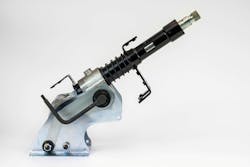
Maximizing adjustability means ensuring that components can achieve a wide range of motion without interfering with one another. This can present a challenge, so some steering specialists manufacture custom solutions that can integrate with these highly adjustable environments.
The bottom line is that no one should get hurt doing their job, especially not from sitting in the same seat every day. Adjustable workstations are essential for both driver health and long-term sustainability of the industry.
The industry can keep investing in drivetrains, software and safety systems, but none of it lands if the driver is tired, sore or fighting the cab all shift. Designing workstations that genuinely fit the driver should be non-negotiable.
About the Author
 Kostas Poulios
Kostas Poulios
Principal Design and Development Engineer, Pailton Engineering
Kostas Poulios is the principal design and development engineer at Pailton Engineering. He leads the design, testing and validation of steering systems for commercial and off-highway vehicles, with a strong emphasis on driver-centric design.