How SCRTD is building a zero-emission mobility model in Southern New Mexico
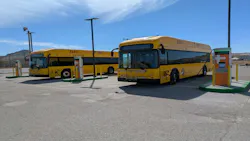
Public transit agencies across the country are confronting the same fundamental question: How do we transition to cleaner transportation while continuing to provide reliable, affordable service to the communities that depend on us?
For the South Central Regional Transit District (SCRTD) in southern New Mexico, the answer has been to think beyond the bus.
Our approach combines zero-emission vehicles, renewable energy generation, charging infrastructure, facility modernization and expanding regional transit service into a single strategy. At the center of that effort is the SCRTD's Sunland Park Mobility and Energy Hub, a facility that is becoming the foundation for SCRTD's transition toward a cleaner and more resilient regional transportation system.
What makes the project especially significant is where it is happening.
SCRTD is not a major metropolitan transit authority with thousands of employees and a multibillion-dollar capital program. We serve communities throughout southern New Mexico and provide regional connections into El Paso, Texas. Our routes connect rural communities, small cities, employment centers, colleges, medical services, downtown destinations and major transfer points across a large geographic area.
Yet many of the challenges facing our region are the same challenges facing the largest transit systems in the country: rising transportation demand, air quality, energy costs, fleet modernization and the need to build infrastructure capable of supporting the next generation of public transportation.
Building the infrastructure before expanding the fleet
The transition to zero-emission transit involves much more than purchasing an electric bus.
Transit agencies must address charging capacity, electrical infrastructure, utility coordination, maintenance requirements, workforce training, facility design and operational planning. For agencies operating long regional routes, vehicle range and charging strategy become even more important.
SCRTD recognized early that fleet electrification had to be accompanied by a broader energy strategy.
In 2025, the district acquired and opened its new headquarters and operations facility in Sunland Park, N.M. The approximately 7.5-acre property now serves as the operational center for a growing regional transit network and provides SCRTD with something it had never previously possessed: sufficient space to integrate transportation operations with energy infrastructure.
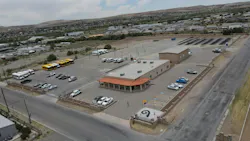
The facility includes administration, maintenance and vehicle operations functions, as well as charging infrastructure for SCRTD's growing electric fleet.
But the most visible component of the transformation is now taking shape immediately outside the buildings.
SCRTD is completing a major ground-mounted solar array and battery energy-storage project designed to help support the district's battery-electric buses (BEB), electric vehicles and facility energy requirements.
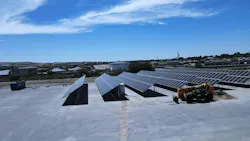
Rather than viewing the project simply as a solar installation, SCRTD views it as transportation infrastructure.
The solar array, energy-storage system and charging equipment are being developed as an integrated system capable of supporting approximately 12 BEBs and electric vehicles while also supplying energy to district facilities.
That creates a direct relationship between the energy SCRTD produces and the transportation service we deliver.
Sunlight collected at a transit facility in southern New Mexico can ultimately help power the vehicles moving passengers throughout the region.
Zero emissions where air quality matters
The environmental benefits are particularly important in the southern portion of SCRTD's service area.
Sunland Park and Santa Teresa, Texas, are located within the greater El Paso metropolitan area, a region facing significant air-quality challenges. Transportation investments that reduce tailpipe emissions therefore have benefits extending beyond the transit agency itself.
Every diesel vehicle that can eventually be replaced by a zero-emission vehicle represents another opportunity to reduce transportation-related emissions in communities where air quality is already a public concern.
SCRTD currently operates BEBs and electric support and passenger vehicles and continues to expand its clean-vehicle fleet.
The district is also pursuing additional battery-electric vehicles for new mobility programs, including complementary ADA paratransit service serving Sunland Park and Santa Teresa.
This is important because zero-emission transportation should not be limited to traditional fixed-route buses.
The same clean-energy strategy can support smaller vehicles providing paratransit, microtransit and community mobility services. For SCRTD, electrification is increasingly becoming a systemwide strategy rather than an isolated fleet demonstration.
Growth is driving the transformation
SCRTD's investments are occurring at the same time that demand for regional transit is increasing substantially.
The district began operating regional transit service in 2016. Since then, ridership has grown dramatically, as SCRTD has expanded its network and strengthened connections between communities in Doña Ana, Sierra and Otero counties in New Mexico and El Paso County in Texas.
For fiscal year 2026, SCRTD is projecting approximately 204,785 passenger trips, representing approximately 24% annual ridership growth.
Over the district's first decade, ridership growth has exceeded 900%.
Those numbers have changed the conversation about public transportation in southern New Mexico.
What began as a relatively small regional transit operation is becoming an increasingly important component of the region's transportation infrastructure.
Our passengers include employees traveling to jobs, students traveling to colleges and universities, seniors reaching medical appointments, residents accessing government and commercial services and passengers connecting to the larger Sun Metro transit network in El Paso.
The district's Yellow, Silver and Purple routes, for example, help connect communities in Sunland Park, Santa Teresa and Anthony with destinations and transit connections in El Paso.
As ridership grows, SCRTD is simultaneously preparing to introduce complementary ADA paratransit and microtransit services and to expand transportation serving one of New Mexico's most important employment centers, the Santa Teresa Industrial Park.
That means our clean-energy investments are not being made for a static transit network. They are being built for a system that is continuing to grow.
A different model for smaller transit agencies
There is a misconception that major transit innovation occurs only in the nation's largest metropolitan areas.
Smaller transit agencies can be exceptional laboratories for innovation because they often have the ability to connect projects that would otherwise be developed independently.
At SCRTD, fleet planning, renewable energy, facility development, passenger service and regional economic development are increasingly part of the same strategy:
- The Sunland Park project illustrates that philosophy.
- A traditional transit facility stores and maintains buses.
- A mobility and energy hub can do much more.
It can produce electricity. It can store energy. It can charge buses and smaller electric vehicles. It can support maintenance and workforce training. It can serve as the operational center for fixed-route transit, paratransit and emerging mobility services.
And it can demonstrate to the community that investments in public transportation can also be investments in infrastructure resilience and cleaner air.
Preparing the workforce
The transition also requires investment in people.
Battery-electric vehicles introduce new technologies for operators, mechanics, supervisors and facility personnel. Charging infrastructure requires employees to understand equipment and operating procedures that were not part of conventional diesel transit operations.
SCRTD has therefore made workforce development an important component of its zero-emission transition.
Drivers and maintenance employees are being trained on BEB systems, and specialized manufacturer training is helping mechanics understand the charging and electrical systems associated with the fleet.
The objective is not simply to acquire new technology. It is to develop the institutional knowledge necessary to operate that technology successfully for decades.
That may ultimately be one of the most important lessons for agencies considering similar projects: the transition to zero emissions is as much an organizational transformation as it is a technological one.
Looking toward the next decade
The Sunland Park Mobility and Energy Hub is only one component of SCRTD's long-term capital program.
The district is also advancing development of a future transit facility on the East Mesa of Las Cruces, N.M., that is planned to accommodate buses, charging infrastructure, light maintenance operations and future service expansion.
Additional buses are being added to the fleet, including vehicles supported through competitive federal transit grants.
Together, these investments are creating a network of facilities and vehicles designed around the transportation needs SCRTD expects to face during its second decade of service.
Our experience in southern New Mexico demonstrates that zero-emission transit does not need to be limited to large urban systems.
Rural and regional transit agencies can participate in the clean-energy transition as well.
But doing so requires looking beyond individual vehicle purchases and asking a larger question: What transportation and energy infrastructure will our communities need 10 or 20 years from now?
For SCRTD, that question has led us from operating buses to building a mobility and energy system.
The solar panels rising above our Sunland Park facility are therefore more than another capital improvement.
They represent where the district is headed next—a regional transit system where mobility, renewable energy, clean air and community connectivity increasingly work together.
About the Author
 David J. Armijo
David J. Armijo
David J. Armijo is the executive director of the South Central Regional Transit District (SCRTD), where he has led the development and expansion of regional public transportation across southern New Mexico since 2015. Under his leadership, SCRTD has grown from an emerging five-bus operation into a regional transit system with more than 40 vehicles serving communities across Doña Ana, Sierra and surrounding counties, with connections to Las Cruces and El Paso, Texas.
The district’s growing fleet includes battery-electric buses and vans, hybrid-electric buses and conventional vehicles, supported by charging infrastructure and the Sunland Park Mobility and Energy Hub.
During Armijo’s tenure, SCRTD has experienced significant ridership and service growth while expanding regional connections, developing new facilities, introducing microtransit and preparing complementary ADA paratransit service.
Armijo has more than three decades of public transportation leadership experience, including executive and senior management positions with transit agencies in New Mexico, California and Florida. His career has included leadership roles with the Los Angeles County Metropolitan Transportation Authority, the Alameda-Contra Costa Transit District, the Orange County Transportation Authority and the Hillsborough Area Regional Transit Authority.
Armijo has served on the American Public Transportation Association (APTA) Board of Directors and Executive Committee, participated in Leadership APTA, served on the Southwest Transit Association Board and held leadership roles with the New Mexico Transit Association and COMTO.