IL: To make buses faster, CTA tries removing some stops
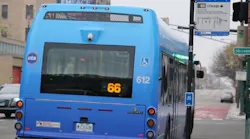
A Chicago Transit Authority bus stopped Thursday morning at the intersection of Damen Avenue and Roosevelt Road to let a couple of riders step off.
After pausing for a red light, the bus continued north through the intersection, but pulled over almost immediately to pick up a rider at the next stop, which, like the previous one, is named Damen & Roosevelt.
Starting Monday, the first of the two northbound Damen & Roosevelt stops and a dozen more on the Damen route are being eliminated in a bid to make the bus faster and more reliable, said Molly Poppe, the CTA’s chief planning and innovation officer.
The CTA operates 127 bus routes that pick up and drop off passengers at more than 10,000 stops systemwide. The No. 50 Damen line, which connects neighborhoods from McKinley Park to Edgewater, had the most stops that were very close together of any bus route in the CTA’s network, according to Poppe. Some bus stops were even within about 300 feet of each other — or about one-twentieth of a mile apart.
The CTA, Poppe said, is hoping “to improve that overall travel time and speed and reliability” for people who rely on the bus to get around. She said the CTA plans to evaluate how things go on the Damen line before it might eliminate stops elsewhere.
“Then we’ll start to look at some other routes,” Poppe said, though she declined to name specific routes that might be next in line for a bus stop edit.
Going forward, decisions about bus stop spacing “will be part of a broader regional conversation over the next year,” said Melissa Meyer, a spokesperson for the Northern Illinois Transit Authority, the new governing body that oversees the CTA, Metra and Pace. She noted the state’s transit reform legislation requires NITA’s board of directors to adopt regional service standards by the end of next year.
Chicago’s bus stops are some of the most closely spaced in the country, according to a 2021 article published by researchers from the University of Illinois Urbana-Champaign.
The CTA’s own standards about bus stop spacing, which the agency describes as “consistent with major urban areas in peer cities,” say bus stops should usually be one-eighth to one-fourth miles apart. Spacing of an eighth of a mile is intended “to maintain neighborhood connectivity” and spacing of one-fourth of a mile is to be used “in areas with very low ridership, poor pedestrian access” or where conditions like traffic congestion demand wider spacing.
The CTA says less than 5% of CTA bus stops are one-fourth of a mile or more apart.
And in practice, the CTA has about 1,400 pairs of bus stops that are within 500 feet — or less than one-eighth of a mile — or less apart, Poppe said.
In Little Italy, southbound Damen buses stopped in the middle of the block in front of the Jesse Brown VA Medical Center, then stopped again at the end of the same block, at the intersection of Damen and Taylor Street. On Monday, the latter stop got slashed.
Buses go faster when they make fewer stops, said Jarrett Walker, a public transit planning consultant who has worked on projects around the U.S. and internationally. That’s important, he said, because “people ultimately make their judgments about whether to use transit overwhelmingly based on the amount of time it takes.”
Generally speaking, Walker said, spacing bus stops just about a quarter mile apart is optimal when it comes to minimizing total travel time.
“A lot of American transit agencies have been reviewing their stop spacing,” Walker said. “The general consensus of most of those agencies is that one-eighth of a mile, which is the Chicago standard, is too close.”
Faster bus routes are also cheaper to operate, Walker noted.
With the stop eliminations on the Damen line, bus stops in the affected areas will now generally be 600 to 1,300 feet apart, Poppe said — or just about one-eighth to one-fourth of a mile apart.
The CTA has not yet done an analysis of how much time riders would save after the stops are eliminated on Damen, though that will happen after the new route starts running, Poppe said. The agency also has not yet put a number on potential cost savings, she said.
Poppe noted that the CTA works with NITA and with city and state transportation departments in its efforts to make buses more reliable.
Chicago Department of Transportation spokesperson Erica Schroeder said the city department “collaborates closely” with the CTA on bus stop locations, adding that CDOT “will follow any service standards set by NITA” regarding bus stop spacing.
Bus stop elimination — or consolidation, as it is sometimes more politely called — can raise concerns among advocates for people with disabilities and the elderly, who argue that for some transit riders, getting themselves to a bus stop that’s an extra block or two away can present a real burden.
Poppe said the CTA had taken care to keep stops that served venues like hospitals and senior homes. The CTA also looked at how often bus ramps — which are used by people in wheelchairs and by parents with strollers — were deployed at specific stops when deciding whether to keep or slash a stop, she said.
The CTA reached out to aldermanic offices in affected wards about the stop-elimination plan and decided to keep a handful of stops the agency initially planned to slash after receiving feedback, Poppe said. She acknowledged the CTA had not reached out directly to disability advocates in advance of launching the new plan.
Laura Saltzman, senior transportation policy analyst for the disability rights group Access Living, said the CTA approached the Damen stop eliminations in what she described as a thoughtful and considered way, adding that she met with the CTA about the plan after it was announced.
Future bus stop eliminations on other routes should follow a similar process, she said.
“I very much want to avoid moving fast and breaking things,” she said. “That does not work out for disabled people.”
Though Poppe indicated more bus stop eliminations are likely coming in Chicago, she said the agency was “certainly not” looking to eliminate all stops that are, for instance, less than an eighth of a mile apart.
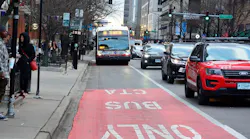
The agency, she says, sees stop consolidation as “one tool in the toolbox” when it comes to making buses more reliable,pointing to other mechanisms to move buses faster, like dedicated bus-only lanes. “We really are trying to take a scalpel approach,” she said.
©2026 Chicago Tribune.
Visit chicagotribune.com.
Distributed by Tribune Content Agency, LLC.