MTA reports speed improvements in Queens after bus network redesign
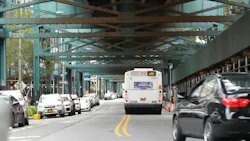
The Metropolitan Transportation Authority (MTA) shared that Queens local buses have been operating faster and more reliably following implementation of the Queens Bus Network Redesign.
“The Queens Bus Network Redesign is delivering on the promises of faster buses, greater reliability and increased access to jobs, education and more for the city’s most bus reliant borough,” said New York City Transit President Demetrius Crichlow. “These improvements are the result of years of community input to ensure a bus network for the modern era.”
Overall, Queens local buses are traveling 1.7% faster on weekdays, according to the MTA. Off-peak speeds increased 1.9%. Rush routes have seen an average 4.6% speed increase. Citywide, 24 out of 25 routes with the greatest speed increases from spring 2025 to Sspring 2026 occurred in Queens.
Riders on the Q51 route between South Ozone Park and Cambria Heights are saving up to 18 minutes due to new Limited service and B62 riders between the Greenpoint Avenue G station and 21 Street-Queensbridge M station are saving up to 11 minutes due to a route extension. Working with partners at the New York City Department of Transportation (NYC DOT), new and upgraded bus lanes on Hillside Avenue installed at the same time as the Queens Redesign implementation are resulting in speeds up to 28% faster.
“Thanks to the redesign, Queens riders are spending less time waiting for the bus and less time on the bus which amounts to real times savings for New Yorkers,” said New York City Transit Buses Executive Vice President Frank Farrell. "The Buses team is committed to getting buses running faster, more reliably and safely for the millions of daily riders who count on us to get them where they need to go.”
In Queens, where the MTA notes that residents are more likely to face longer commutes and have limited access to subway and rail compared to other boroughs, the bus network plays what the MTA calls an important role, especially for historically marginalized communities. Since the Queens Bus Network Redesign, 124,000 more Queens residents have access to a bus that arrives every 10 minutes or better between 6:00 a.m. and 9:00 p.m., and 68,000 more Queens residents have access to 24-hour bus service.
Since implementation, Customer Journey Performance Time (CJTP), or the percentage of trips that arrived at their destination within five minutes of scheduled time, was the highest May recorded since being published publicly, excluding the pandemic years between 2020 and 2022. According to the agency, 71.2% of trips in Queens made it to their destinations within five minutes of scheduled time.
The MTA notes that the overhaul of the decades-old Queens bus network was shaped by six years of planning and community feedback consisting of 300 redesign events and nearly 20,000 comments. These changes work to expand accessibility, improve transit equity and deliver better bus service with faster trips, more frequent service and better connections to key destinations and the rest of the transit system. The new bus network includes 124 routes, consisting of 94 Local and 30 Express routes, a net increase of 11 routes from the existing network.
The new bus network adds a new type of route, labeled “Rush,” in addition to the existing Local, Limited, Select Bus Service and Express routes. Designed to get riders to their destination more quickly, Rush routes have both a local and a non-stop portion to quickly connect between outer borough neighborhoods and subway stations.
The MTA says that the Queens Bus Network Redesign is part of major effort to modernize New York City’s bus network across every borough. Over decades, demographics have shifted in residential and business communities and so have travel patterns. The redesigned networks deliver the needed larger-scale improvements to better meet the demand of current and future bus customers.
In 2018, a redesigned express bus network was implemented on Staten Island. In 2022, a redesigned local bus network was implemented in the Bronx. In Brooklyn, the project team is reviewing feedback from the Brooklyn Bus Network Redesign’s Draft Plan released in December of 2022 to develop the Revised Draft Plan.
About the Author
 Noah Kolenda
Associate Editor
Noah Kolenda is a recent graduate from the Craig Newmark Graduate School of Journalism with a master’s degree in health and science reporting. Kolenda also specialized in data journalism, harnessing the power of Open Data projects to cover green transportation in major U.S. cities. Currently, he is an associate editor for Mass Transit magazine, where he aims to fuse his skills in data reporting with his experience covering national policymaking and political money to deliver engaging, future-focused transit content.
Prior to his position with Mass Transit, Kolenda interned with multiple Washington, D.C.-based publications, where he delivered data-driven reporting on once-in-a-generation political moments, runaway corporate lobbying spending and unnoticed election records.
Related
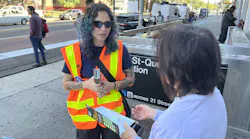 An MTA employee directs a traveler on the new bus routes.