The New Era of AI-Based Bus Lane Enforcement and Driver Behavior Monitoring
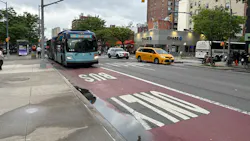
Transit agencies have spent countless years dealing with lane blockages and have been collecting vehicle and driver data for the last three decades—data that's typically archived and called upon only when an incident requires it, not embedding it in the way the system functions. Now, artificial intelligence (AI) is coming to bus fleets to change both, and in some cities, it's already begun.
Enter AI vision, being used for both automated camera enforcement (ACE) to ticket drivers that block bus lanes and bus stops, and now in dash cams that monitor transit operators and the road in front of them for more robust incident reporting and driver training. These implementations of AI seek to improve the transit experience by making trips more efficient and safer for riders.
ACE leads to low rates of recidivism and system efficiency improvements
On the ACE side of things, Hayden AI has made big strides since its 2019 inception—now serving multiple major metropolitan areas like New York City and Philadelphia—with its bus-mounted cameras that are enforcing the rules of modern bus-only lanes.
“I think it’s no secret that managing bus lanes—keeping bus lanes clear—is essential to cities being able to take advantage of the full value of adding them,” said Hayden AI Chief Growth Officer Charley Territo. “We decided to take a look at whether or not we could at least initially provide a mobile-based system that provided a high level of capture with a high level of accuracy and was able to do essentially four things: one, increase bus speeds; two, enhance safety; three, increase the amount of on-time arrivals; and lastly, hopefully increase bus ridership, and the system we developed was designed to do exactly that.”
Those were also what the Southeastern Pennsylvania Transportation Authority (SEPTA) was looking to solve for when it first piloted the technology back in 2023, according to Hayden AI. The company noted that bus speeds in the city were averaging eight miles per hour, slower than the national average of between 13 and 14 miles per hour, costing its riders time and its operations budget $15.4 million. Additionally, blocked bus stops create unsafe boarding conditions, especially for those with disabilities or who are using mobility aids.
That pilot, which captured more than 36,000 observations of parking obstructions, led SEPTA to adopt the technology throughout its system in April 2025. Hayden AI installed 152 systems on SEPTA buses and is currently installing 38 systems on SEPTA trolleys .
According to SEPTA, bus routes equipped with this technology have seen speeds increase by 3% to 6% since the program began while routes without enforcement have gotten slower during the same timeframe.
The program did receive some critiques, largely focused on oversight. However, SEPTA Planning Programs Manager Matthew Zapson notes that there’s oversight with every citation.
“We were really comfortable with the process that was laid out through the legislation—through that ordinance—that was passed because it required the same requirement as there is for automated red-light enforcement and automated speed enforcement,” Zapson said. “In all three programs, a sworn law enforcement officer has to sign or affirm a violation before a ticket is ever issued.”
Zapson explained a perception of false positives could “undermine the program more generally.”
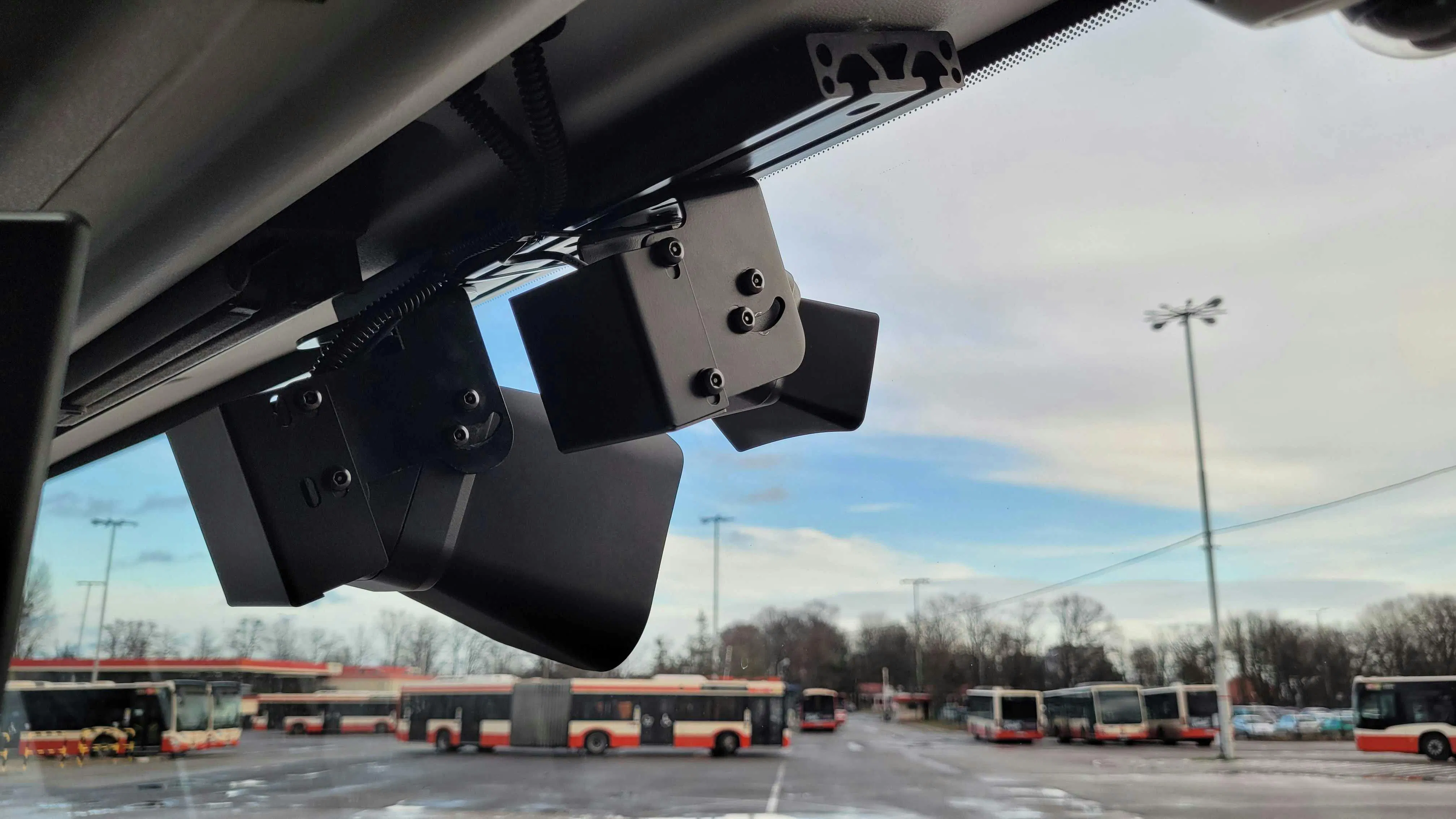
By design, Territo says the technology is not being billed as a parking enforcement tool, rather a tool that’s designed to aid in the flow of transit and that the system was created with nuance to only enforce rules when violations impact that flow, not just if they’re seen at all.
“Our systems are only capturing events when those events impede the operation of the bus and the transit network, and I think that's important,” Territo said. “You know, I don't think anyone believes that there are never times when a vehicle may need to stop at a bus stop or stop in a bus lane to discharge a passenger for a brief moment. Quite honestly, as long as that doesn't impede the operation of the transit network, it's not always a bad thing. Cities are complicated, crowded spaces.”
Territo also explains the benefit of operating a system like that is it requires less compute and data transmission and allows for the processing of incidents to be done on the bus instead of having to be sent to the cloud for analysis. Once the on-bus system sees what it deems as a violation, it then creates a package of information and sends only that information for review instead of a constant stream of the camera feeds. Further, the AI isn’t just left to figure it all out on its own, as cities work with Hayden AI to chart out what constitutes a violation in pre-defined zones.
“Every program begins with a discussion of the rules of that particular city,” Territo said. “Our system is designed so that how a city treats a violation or a specific zone is specific to how our system detects events. So, if a city has certain hours that a bus lane is enforced, that is something that our system accounts for. If the system has certain rules with the size of a bus stop, that's something that our system accounts for. If our system has rules with the amount of time a vehicle can stop at a bus stop, that's something that our system accounts for.”
Territo explained that the first step was defining the rules, then applying those to a layer of mapping. The program then merges that mapping layer with a layer that detects vehicles, and when deployed, determines if passed vehicles fall within the parameters of a citable offense as defined by those rules. If the system determines it does meet the parameters, that’s when an event is created, and data is collected for the ticketing authority.
Since launching last April, 63% of registered vehicle owners who received one violation from the Philadelphia Parking Authority have not received a second ticket—a number that stretches to 91% when looking at the Metropolitan Transportation Authority’s multi-year implementation, according to Hayden AI. As recidivism numbers are low and dropping with subsequent check-ins—suggesting driver behavior is changing—the company doesn’t see this as a means to generate revenue from ticketing, but in cost savings that can be achieved through an increase in efficiency.
“So over time we would expect the benefits to shift and any benefit that comes from revenue, comes from revenue generated by more people riding buses, by less fuel being needed because of reduced idle time, by maybe less buses being needed because of faster, more reliable service and not because of just violation or fines,” Territo said.
As for reactions to the technology in practice, Zapson says it’s been a positive experience because of the equitable way enforcement is carried out—only ticketing when a violation impedes transit instead of just when a violation occurs at all.
“It's a happy surprise because there's always some caution when you're introducing a new enforcement tactic like this, but by and large, it's seemed pretty positive,” Zapson said.
AI-powered dash cams look to streamline driver training and incident reporting
Another area where AI is being employed in the busing experience comes to the dash cams buses are outfitted with. Samsara has launched an AI-powered dash cam that’s designed to prevent incidents while monitoring the transit operator and the road ahead for faster, more robust event logging and as a method to help train drivers based on their own behaviors.
What started as a telematics and equipment management company, Samsara has expanded to include new offerings that harness AI for safety and behavior correction. Corrected with in-cab alerts like beeps or voice prompts, the system is monitoring for drowsiness, unintended lane departures, possible forward collisions, inattentive driving, seatbelt usage, phone usage, tailgating, rolling stops, harsh driving and possible pedestrian collisions to prevent incidents, helping drivers maintain awareness and improve their skills.
Samsara Principal Product Manager Margaret Finch notes that she saw the benefit of adding AI vision to its dash cam when she saw immediate behavior changes in session videos.
“I think for me, seeing video evidence of drivers holding their phone or looking down, hearing an in-cab alert and correcting that behavior in real time was really the moment where I realized there is huge potential here,” Finch said. “Like, we can scale this out. We can help customers get their drivers off of their phone, off of distraction and actually implement this as a key behavior change mechanism.”
Beginning in other applications outside of public transit—like in construction and trucking—Samsara has expanded its offerings to include coaches and buses, like that from Coach USA, while also beginning contracts with public transit agencies like the San Mateo County Transit District (SamTrans).
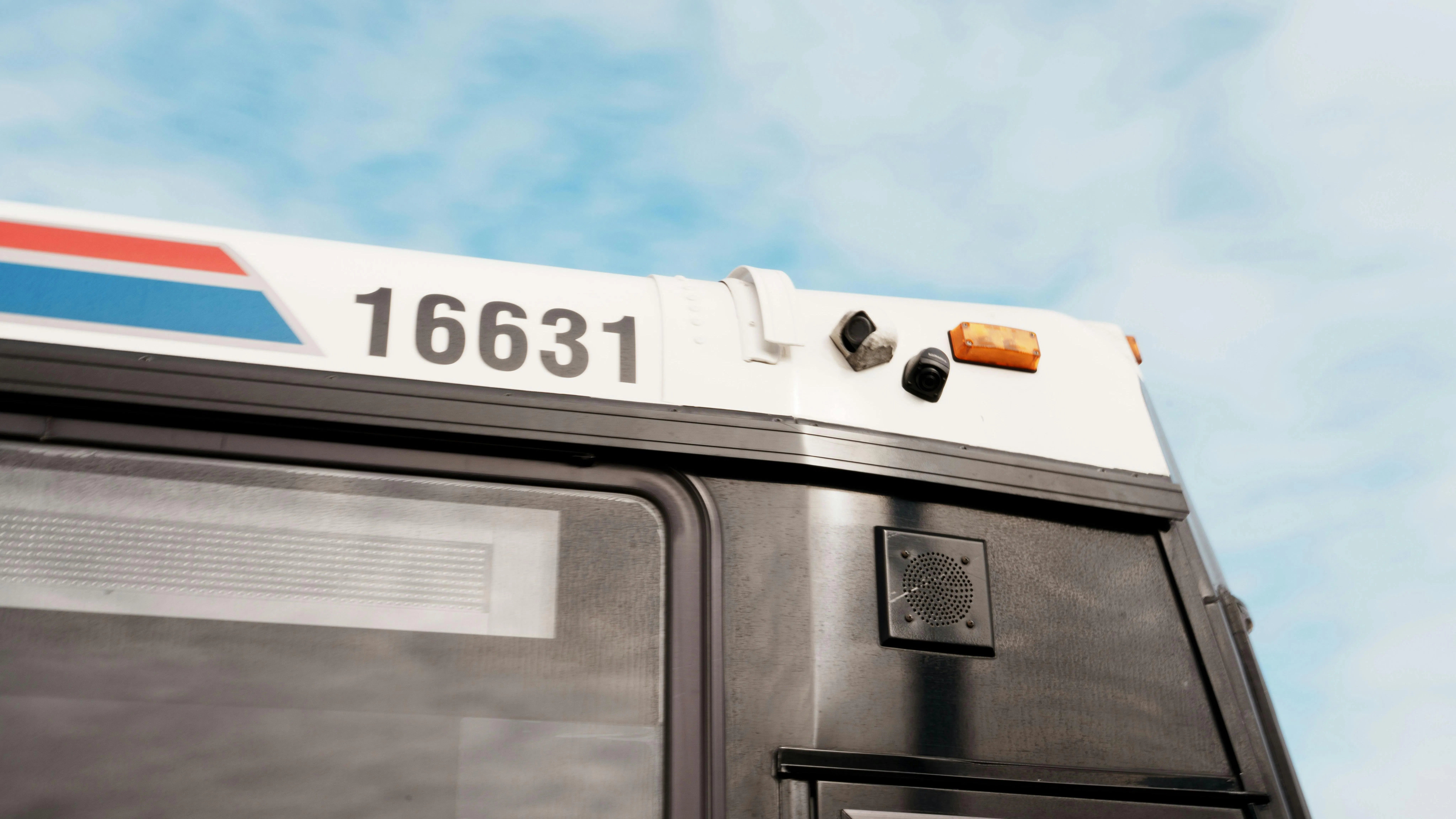
“Those numbers just are incredible, right?” Finch said. “I think when you imagine at that scale of over 1,000 buses being able to have that 92% decrease in these preventable incidents, it's just such an amazing proof point that we know so many other customer types can benefit from.”
As for the drivers, Finch says the platform is designed to keep them at the center, noting that feedback on the coaching was positive as it kept drivers actively aware instead of truncating training or review to a manager’s office. Finch also says this gives the opportunity to recognize and reward drivers for safe behaviors as the AI unlocks data points that managers may not have had time to calculate on their own in the past.
Finch notes that while she’s seen a lot of variety in the adoption curve with drivers, once a driver notices a change in themselves or has evidence from an incident they otherwise wouldn’t have, they become a “spokesperson internally” for their other drivers.
“Typically what we see is as soon as a tenured driver in the fleet has a moment where they either get exonerated from an accident or they notice a real change in their own behavior, like, ‘oh, I didn't realize I was picking my phone up that much,’ they can really help drive the buy-in and the adoption of the rest of the drivers,” Finch said.
As for how the cameras are making these detections, Finch explained that the AI is specifically seeking out things “on the edge” and using those to generate training events—only firing when it notices something it’s not supposed to see in normal driving. Further, the AI looks at the situation holistically instead of just focusing on one trigger to gauge the severity of the event.
For example, if the AI detects a mobile phone event, it then examines the rest of the available data from connected streams to assess things like road and weather conditions, vehicle information and GPS data to understand road characteristics such as speed and special zoning—like schools or construction—to assemble a full report. These events then turn out a personalized training item that aims to correct a behavior by delivering the why behind the lack of safety in the event determination instead of just reminding a driver to stay off their phone.
The approach of holistic data collection also allows for different events to be handled in different manners—small events can be recapped and noted in weekly AI training summaries, leaving more time and focus for larger events that need human intervention in training.
“We want to get people focused on the right thing and focused on impacting the biggest risk and the biggest impact drivers,” Finch said. “So, it's like, how can we help safety managers and coaches free up their time to focus where it really matters instead of just having a blanket approach for everyone, which won't work as effectively.”
The cameras are next set to be installed on 235 SamTrans fixed-route buses, expanding what the agency says is efforts to reduce collisions and improve safety for passengers, operators and the public.
“This technology gives our operators additional tools to stay aware of their surroundings while helping us better understand and prevent incidents,” said SamTrans Acting Deputy Director of Safety Omar Brown in a press release. “Improving safety for our riders, employees and everyone sharing the roadway remains a top priority for SamTrans.”
What's emerging across both lanes of AI adoption is less a collection of individual products and more the early architecture of a connected fleet. A bus equipped with Hayden AI's ACE cameras can now coordinate with traffic signals through LYT. A bus running Samsara's suite of sensors and its AI-powered dash cam can share its data with maintenance systems, dispatch platforms and safety dashboards through an open API. In both applications, the technology is converging toward the same destination: a vehicle that doesn't just collect data, but acts on it—and increasingly, does so before a driver or a dispatcher has to ask.
About the Author
 Noah Kolenda
Noah Kolenda
Associate Editor
Noah Kolenda is a recent graduate from the Craig Newmark Graduate School of Journalism with a master’s degree in health and science reporting. Kolenda also specialized in data journalism, harnessing the power of Open Data projects to cover green transportation in major U.S. cities. Currently, he is an associate editor for Mass Transit magazine, where he aims to fuse his skills in data reporting with his experience covering national policymaking and political money to deliver engaging, future-focused transit content.
Prior to his position with Mass Transit, Kolenda interned with multiple Washington, D.C.-based publications, where he delivered data-driven reporting on once-in-a-generation political moments, runaway corporate lobbying spending and unnoticed election records.