King County Metro Transit, Atlanta Beltline expand on-demand transit services with new pilots
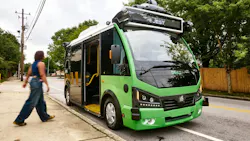
Transit providers King County Metro and the Atlanta Beltline are increasing the footprints of their on-demand transit services to be able to offer them to more riders.
King County Metro expands Metro Flex service into Auburn and Federal Way
King County Metro is set to launch two new Metro Flex pilots serving Auburn and Federal Way, Wash., on Aug. 31. The pilots expand on-demand transit in South King County as part of a broader set of transit improvements made possible through the South Link Connections project.
Metro Flex allows riders to book on-demand trips within designated service areas, providing connections between neighborhoods, transit hubs, jobs and other destinations. Riders are able to book trips through the Metro Flex app or by phone, with rides provided in Metro-operated minivans. The Auburn and Federal Way pilots are currently set to run for two years.
“Expanding Metro Flex into Auburn and Federal Way adds an important new transit option and helps reshape how people move through their daily lives in two of our fastest-growing communities,” said King County Executive Girmay Zahilay. “I want to thank Mayors Nancy Backus and Jim Ferrell for their partnership in bringing this service to their communities. As we continue to strengthen our multimodal transit network across King County, partnerships like these help us keep South King County moving and make it easier for people to get to work, appointments, events and everything our region has to offer without relying on a car.”
The agency says that the Metro Flex launch builds on its previously announced fall service changes, which begins Aug. 29, bringing more frequent service, expanded service hours and strong regional transit connections. In addition to offering another mode of travel within neighborhoods, Metro Flex connects riders to the broader regional transit network, buses and Link light rail at Federal Way Transit Center and bus and Sounder service at Auburn Station.
“King County Metro’s expansion of Metro Flex in Auburn gives our residents more access to everything—to work, school, appointments and communities across our region,” Backus said. “It’s as low-cost as any regular bus trip, with the speed and convenience of transportation being just a few taps away on an app. I’m grateful to King County Metro for making this important investment in Auburn.”
Rides cost $3, the same as a standard King County Metro bus fare. Transfers are free to a bus or light rail. Reduced fares are available for seniors, riders with disabilities and customers with lower incomes.
“Metro Flex provides a new level of mobility for the Federal Way community. It solves one of transit’s biggest challenges by connecting residents from their homes to transit hubs, expanding their transportation options throughout the region,”Ferrell said. “All of our residents, especially seniors and those with disabilities, are now able to more easily get where they need to go. Our neighborhoods and residents are better connected to the rest of the region than ever before.”
Reservations can be made in the app available in the Apple and Google Play stores or by calling the reservation line.
Atlanta Beltline expands ATL Spoke autonomous transit pilot
ATL Spoke, Atlanta's first autonomous transit shuttle, is expanding to include the Atlanta University Center. The Atlanta Beltline notes that the expanded route provides an additional connection to the already established service between the West End Metropolitan Atlanta Rapid Transit Authority (MARTA) Station, the Atlanta Beltline Southwest Trail and the Lee + White commercial district. The expanded route creates a new connection for Atlanta University Center students, faculty and staff, as well as residents and visitors, ahead of the fall semester.
With the expanded route, the Atlanta Beltline says that the ATL Spoke makes it easier to connect to the Atlanta Beltline, MARTA, campuses, places of employment, local businesses and parks. The service is designed to help close first-and last-mile gaps and improve connections between existing transit, trail and community destinations in Southwest Atlanta. The expansion reflects Atlanta Beltline’s broader approach to connecting transportation infrastructure with access to education, employment, economic opportunity and community destinations.
“ATL Spoke is an example of how we can bring together transit, trails, institutions, businesses and neighborhoods to make our communities more connected and accessible. As we think about the future of equitable urban development, we have to focus on how we connect people to opportunity,” said Atlanta Beltline President and CEO Clyde Higgs. “By extending this pilot to the Atlanta University Center, we are not only expanding mobility options for students, faculty, staff and visitors—we are testing a model that Atlanta and other cities can learn from as they work to build more equitable, connected and opportunity-rich communities.”
ATL Spoke launched in June 2026 as a free autonomous transit service that provides first-and last-mile connection between Atlanta Beltline and MARTA. Rides are free and open to the public, with service operating seven days a week from 12:00 p.m. to 10:00 p.m. and shuttles arriving every 12 to 15 minutes.
The Atlanta Beltline notes that each ATL Spoke shuttle is staffed by a dedicated onboard attendant trained to answer questions, ensure a smooth experience and manually operate the vehicle if necessary. All four vehicles in the fleet are ADA accessible and carry up to 12 passengers.
This transit project seeks to make it easier for residents, students, trail users and visitors to move throughout southwest Atlanta while supporting a more connected, inclusive and forward-thinking transportation future for all Atlantans. It will also help evaluate how autonomous transit technology can support flexible, cost-effective neighborhood circulation and strengthen connections to existing transit and trail infrastructure.
“Expanding ATL Spoke gives us an opportunity to learn how autonomous transit can serve a broader range of riders and destinations,” said Atlanta Beltline Transit Innovation Vice President Joe Iacobucci. “As the pilot continues, we’ll use ridership data and community feedback to understand how this type of service can complement MARTA and other transit options and inform future neighborhood mobility solutions.”
The organization notes that the project is a learning opportunity, designed to test the technology, the application to public transit under real-world operating conditions in Southwest Atlanta. Atlanta Beltline further notes that safety is central to the project, and each vehicle will be staffed with an attendant at all times with additional oversight happening from vehicle cameras and sensors.
The 12-month pilot project, supported by a $1.75 million grant from the Georgia Transportation Efficiency Authority (GTEA) and delivered by Beep, runs approximately two miles along public streets in Southwest Atlanta.
The initial route included stops at MARTA West End Station, Joseph E. Lowery Boulevard at Beecher Street and two stops within the Lee + White district: the Food Hall on the west and Boxcar/Wild Heaven on the east. For routes, stops and more information, visit the service’s website.
About the Author
 Noah Kolenda
Noah Kolenda
Associate Editor
Noah Kolenda is a recent graduate from the Craig Newmark Graduate School of Journalism with a master’s degree in health and science reporting. Kolenda also specialized in data journalism, harnessing the power of Open Data projects to cover green transportation in major U.S. cities. Currently, he is an associate editor for Mass Transit magazine, where he aims to fuse his skills in data reporting with his experience covering national policymaking and political money to deliver engaging, future-focused transit content.
Prior to his position with Mass Transit, Kolenda interned with multiple Washington, D.C.-based publications, where he delivered data-driven reporting on once-in-a-generation political moments, runaway corporate lobbying spending and unnoticed election records.