2026 40 Under 40: Whitney D. Ehresman
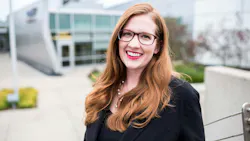
One word that describes you: Empathetic
Alma Mater: Undergraduate: Aquinas College; Graduate: Grand Valley State University
Fast fact: I am involved with my local theater organization and have been involved with nine productions as an actor or director since the end of 2023.
What’s your best experience on transit and what made it memorable? I was in Salt Lake City for work and had a full day to explore the city. I really wanted to check out the capitol building, so I spontaneously downloaded the Transit app, added money to my account and hopped a bus. The new rider experience was seamless, including paying for the trip, and the driver was helpful in ensuring I was dropped off at the best spot.
Whitney D. Ehresman is described as a forward-thinking leader whose efforts seek to improve the transit experience for all it serves—the riders, the employees and the broader community. Ehresman serves as the transportation director for Allegan County Transportation (ACT) in Michigan. In her role, she directs a countywide transit system serving an 825-square-mile rural area with a fleet of nearly 30 vehicles and more than 62,500 annual rides. Since assuming leadership of ACT, Ehresman has overseen a period of operational growth and modernization.
As part of Allegan County’s strategic plan, Ehresman worked closely with county administration and elected officials to utilize new funding to grow the service from primarily medical trips and agency sponsored service to a county-wide service available to all. This funding enabled a major service expansion, extending operating hours to 5:00 a.m. through 9:00 p.m. on weekdays and adding Saturday service—delivering a rural system supporting employment access, medical trips and quality-of-life travel. In 2025, ACT recorded a 37% increase in ridership over the previous year, with vehicles logging more than 1.04 million revenue miles.
Additionally, Ehresman oversees budgeting, grant administration, performance monitoring and contractor coordination while maintaining engagement with frontline staff and riders. In 2025, ACT marked its 25th anniversary, an event Ehresman used to recognize staff and educate the public on expanded services, new technology and fleet investments. During the celebration, the Michigan Department of Transportation recognized ACT for its contributions to regional mobility.
Further, Ehresman is helping lead ACT’s transition to alternative fuels. She’s facilitated the procurement of two additional propane-powered transit buses that have already been delivered and has secured funding for two more—on top of the seven the agency already had. These propane buses now make up approximately one-third of the county’s fleet. These vehicles are projected to reduce fuel costs by approximately 50% and maintenance costs by up to 70% for the agency. As a result, ACT is reducing emissions in a nonattainment area while positioning the agency ahead of future regulatory requirements.
Ehresman also guided ACT’s partnership with Via Transportation, Inc to deploy a mobile rider application that supports real-time trip information for a rural demand-response system. The app has been downloaded more than 1,700 times and has contributed directly to ridership growth by lowering barriers to access and improving the customer experience. Internally, Ehresman has advanced the use of scheduling and dispatch tools to improve route efficiency, reduce vehicle idle time and better align service supply with demand.
Beyond her local responsibilities, Ehresman works to contribute to the broader transit industry. She is active in the Michigan Public Transit Association, including through participation in statewide committees that address rural transit operations, funding and workforce challenges. She is also a regular participant in peer discussions and training forums. In 2025, she was selected for the Community Transportation Association of America (CTAA) Leadership Academy and has served as a panelist three years in a row to discuss alternative fuels for bus fleets at the CTAA national conference, as well as a speaker at the Michigan Public Transportation Conference. She was also selected to attend the Center for Transportation and the Environment one-on-one transit summit in 2026. In these settings, she has shared lessons learned from ACT’s alternative fuel transition and technology deployment, contributing to knowledge-sharing across agencies of varying sizes. She has participated in statewide workshops and roundtables, including the Rural Transit Managers Workshop, facilitating discussions on leadership, workplace culture and operational problem-solving. Additionally, she has been involved in early planning conversations around new regional training and skills-development initiatives, including exploratory work on a new local bus skills competition.
Is there a specific experience that led you to where you are today?
There wasn’t a single defining moment that led me to where I am today, but rather a series of experiences that shaped my path. It began with my own use of public transit while living in Grand Rapids, Mich., in my 20s. I lived independently in a large city without a driver’s license until my mid-20s because transit made it possible for me to get where I needed to go.
That experience gave me a deep appreciation for the role public transportation plays in creating access and opportunity.
When I had the opportunity to join the Rapid at the end of 2017, it felt both meaningful and full circle. I was honored to be part of an organization that had played such an important role in my own life, and that continues to provide connection and opportunity for so many others.
What do you enjoy most about your job?
I enjoy the collaborative nature of public transit. The industry is incredibly resourceful, supportive and always willing to share ideas and best practices. I also value the opportunity to work alongside local human service agencies and community partners. We share a common goal of improving quality of life and strengthening our communities, and when we work together, we can make a meaningful difference in the lives of others.
What’s the most challenging part of your job?
The most challenging part of my job is balancing an almost unlimited need for public transportation with the reality of limited resources. Every day, we see opportunities to expand mobility—whether that’s providing transportation to job sites in neighboring communities, extending evening service hours or offering service on Sundays. These initiatives can have a significant impact on people’s quality of life, independence and economic opportunity, but they require funding and resources that are often limited.
As a leader, I strive to lead with empathy and understand the real-world impact transportation has on the people we serve. At the same time, I must make difficult decisions about priorities, service levels and investments. Knowing that some individuals may be affected by those decisions is never easy, but it reinforces the importance of advocating for sustainable funding and finding innovative ways to maximize the resources we do have.
What is the accomplishment you’re most proud of and why?
One of the accomplishments I am most proud of is earning my master’s degree with honors while welcoming my son just one month before graduation. It was an incredibly demanding time personally and professionally, adjusting to life with a newborn while completing a rigorous graduate program.
There were many long days and little sleep, but I stayed committed and finished the program successfully. That experience is something I carry with me—it reinforced my ability to persevere through challenging seasons, stay focused on long-term goals and balance personal and professional responsibilities. It’s a reminder of what is possible with determination and support.
What is an accomplishment you would like to work towards in your career?
One accomplishment I would like to work toward is completing a comprehensive service design study for our transit system. Serving a geographically large county with a diverse population presents both challenges and opportunities, and I would like to better understand how we can optimize service delivery to meet growing demand.
My goal is to explore a more integrated and flexible system that could include fixed-route service along key corridors to improve consistency and accessibility, paired with microtransit zones with on-demand service availability. I would also like to expand and refine non-emergency medical transportation options to provide more timely and flexible access for riders.
Beyond system structure, I am also interested in growing the number of choice riders in our community. In rural transit, many riders rely on public transportation out of necessity, but I would like to help build a system that more people choose to use because it is convenient, reliable and offers broader benefits such as environmental sustainability.
What is your best advice you can share from your area of expertise?
Adopt the mindset of being a lifelong learner. The public transit industry is constantly evolving, driven by changes in technology, funding environments and the shifting needs of the communities we serve. Staying open to new ideas, tools and approaches is essential to staying effective and relevant in this work. The most successful outcomes I’ve seen come from being willing to learn continuously, adapt quickly and apply new solutions in ways that improve access and service for the people who depend on us.
About the Author
 Noah Kolenda
Noah Kolenda
Associate Editor
Noah Kolenda is a recent graduate from the Craig Newmark Graduate School of Journalism with a master’s degree in health and science reporting. Kolenda also specialized in data journalism, harnessing the power of Open Data projects to cover green transportation in major U.S. cities. Currently, he is an associate editor for Mass Transit magazine, where he aims to fuse his skills in data reporting with his experience covering national policymaking and political money to deliver engaging, future-focused transit content.
Prior to his position with Mass Transit, Kolenda interned with multiple Washington, D.C.-based publications, where he delivered data-driven reporting on once-in-a-generation political moments, runaway corporate lobbying spending and unnoticed election records.