2026 40 Under 40: Natalie Lawrence
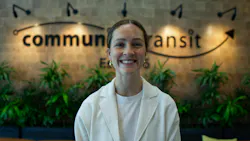
One word that describes you: Collaborative
Alma Mater: University of Washington
Fast fact: My favorite thing to do in Seattle is to ride the Seattle Monorail to the Pacific Science Center Laser Dome.
What’s your best experience on transit and what made it memorable? When I was at the University of Washington, there was a bus operator on King County Metro’s Route 44 who would narrate what was happening outside as if he was leading us on a Disneyland ride. It was the sweetest part of my day and inspired an early reverence for the people who get us where we want to go safely.
Natalie Lawrence is described as one of Community Transit’s most promising emerging leaders. She currently serves as a marketing program strategist for youth for the agency, entering Community Transit without prior agency experience. She stepped into the role with no prescribed curriculum, no partner list and no predefined program to inherit, so Lawerence has designed the foundation of the role herself.
In this role, she’s created a youth mobility program and scaled it into a countywide, year-round initiative that helps strengthen access to free public transit for young riders in Snohomish County, Wash. She conducted a national scan of youth transit education programs, cold calling counterparts across the country to understand their models, challenges and lessons learned. She synthesized this research into the first iteration of a program tailored to the community’s needs. She conducted informal focus groups with employee families, youth advisory boards and community organizations to test content and gather feedback. She reworked the content repeatedly based on what young people said they needed to be engaged with the program and feel confident using transit. As a result, Community Transit’s youth education program now reaches its target audience of middle school students in every public school district in Snohomish County.
Lawerence also created a specialized team of coach operators who participate in school presentations, offering interactive demonstrations and real-world practice with features like bike racks. This operator-led component has become a signature element of the program. Recognizing that mobility education shouldn’t pause during summer, she forged partnerships with youth-serving organizations to sustain engagement year-round. She collaborated on environmentally focused field trips using transit, partnered with libraries for reading events featuring coach operators and organized tours of Community Transit’s base to introduce young people to public service careers. These partnerships expand the program’s reach.
In addition to countywide school coverage, Lawerence designed and oversaw a summer internship program, creating a pipeline for emerging talent and integrating academic partnerships into Community Transit’s outreach strategy. She has also become a trusted public representative of the agency. Her work was featured in a Cascade PBS segment highlighting Community Transit’s efforts to help riders build confidence using public transit. Her clarity and professionalism in that piece are described as reflecting her ability to communicate complex information in a way that empowers the community. She has built a program that is both scalable and sustainable. What began as a one-person effort is now a recognized, multi-component initiative with strong partnerships, a trained operator team, summer interns and a clear identity within the community.
Lawerence’s contributions extend beyond Community Transit and into the broader transit industry. After connecting with youth mobility educators across the country during her initial research, she recognized these professionals had no shared forum to exchange ideas, challenges and best practices. Instead of stopping after gathering information for her own program, she took the next step in leadership. She organized Youth Mobility Professionals Unite, an international virtual summit that brings together youth-focused practitioners from across the U.S. and abroad. She recruited participation, built the agenda and created a space for collaboration that had not previously existed. This summit has become a catalyst for shared learning and has elevated the visibility of youth mobility work within the transit industry.
Is there a specific experience that led you to where you are today?
Working in the public sector, and specifically in transit, has been informed by my work in the nonprofit space. I have always been motivated by mission-driven work that intersects with the environment. My passion for working with youth, our natural world and building programs has led me to my current role which feels like a dream job.
What do you enjoy most about your job?
I enjoy connecting young people to transit and to our frontline staff! Watching young people connect the dots and see transit as their way to access more opportunities is an incredible thing and makes me believe we are building the next generation of transit riders. I love that most of my week is spent in schools teaching students how to use the bus. In-person programming and tailored lessons are an engaging and real way to inspire people to use transit!
What’s the most challenging part of your job?
I think an ongoing challenge is how we continue to center young people in program design. It can be challenging to build programming for the intended audience, so I am always excited and eager to find new ways to keep our programming relevant and engaging to young people. Trends, needs and priorities can change so fast; it can be hard to keep up!
What is the accomplishment you’re most proud of and why?
Our school program, Bussin’ Basics, educates thousands of Snohomish County students every year! We bring a bus, a driver and a whole lesson to schools so that students can learn how to ride in a stress-free environment. I am so proud of the reach we have with this program and for all the partnerships we have built with schools, community organizations and teachers.
What is an accomplishment you would like to work towards in your career?
I’d love to work on how we scale this work regionally and unify messaging. What I love most about working in transit is that we are eager to share what works at different agencies. We share the “rising tide floats all boats” philosophy, and I believe the more we can unify messaging and how we teach transit education, the more future riders we will inspire! I’d love to see transit education become part of every middle schooler’s curriculum or school experience so that we can trust every student in our state is being introduced to this valuable life skill at an age where they are still forming new habits.
What is your best advice you can share from your area of expertise?
Iteration is the key and perfectionism is a pitfall! It’s important to be thoughtful, but I firmly believe it’s better to put something out in the world and build on it, than wait for it to be perfect. We are constantly gathering feedback from program participants and school partners, and this feedback helps us iterate and make improvements.
About the Author
 Noah Kolenda
Noah Kolenda
Associate Editor
Noah Kolenda is a recent graduate from the Craig Newmark Graduate School of Journalism with a master’s degree in health and science reporting. Kolenda also specialized in data journalism, harnessing the power of Open Data projects to cover green transportation in major U.S. cities. Currently, he is an associate editor for Mass Transit magazine, where he aims to fuse his skills in data reporting with his experience covering national policymaking and political money to deliver engaging, future-focused transit content.
Prior to his position with Mass Transit, Kolenda interned with multiple Washington, D.C.-based publications, where he delivered data-driven reporting on once-in-a-generation political moments, runaway corporate lobbying spending and unnoticed election records.