2026 40 Under 40: Kyle O'Donnell Burrows
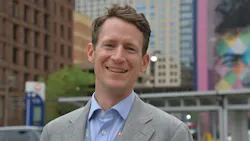
One word to describe yourself: Curious
Alma Mater: Undergraduate: University of Wisconsin-Madison; Graduate: University of Minnesota
Fast fact about yourself: I love to spend time hiking and camping on the north shore of Lake Superior with my family.
What’s your best experience on transit and what made it memorable? The first time I took my kids on the METRO E Line, the fifth arterial BRT Line in our region, which we opened December 2025. I started working on that project as the planning lead in 2018, right before my oldest was born. All three love the bus as part of the regular way we get around the city, and it was a great experience to show them something I was involved in from the start.
Kyle O’Donnell Burrows is described to have a reputation as a thoughtful leader who consistently demonstrates dedication and positivity. Beginning his career in 2012 as an intern at Minneapolis’ Metro Transit, O’Donnell Burrows has taken on increasing responsibility as he’s ascended through the agency. Working through roles in transit and bus rapid transit (BRT) planning, O’Donnell Burrows is now serving as the acting director of arterial BRT (ABRT), leading a team responsible for network, corridor and station planning for the ABRT program.
Throughout his time at Metro Transit, O’Donnell Burrows has taken initiative to address challenges, center the needs of riders and produce high-quality work. In his transit planning roles, O’Donnell Burrows has designed service improvements, taking a lead role in projects with network and regional implications, including several iterations of regional service improvement plans and the development of regional transit policy. He was also cited as an important participant in agencywide efforts to articulate the case for bus lanes with the public and roadway authorities, and to evaluate transit improvements based on accessibility and transit network simplification criteria.
O’Donnell Burrows became a senior planner in 2018, leading efforts to plan three BRT lines that have since opened. In 2022, Kyle moved into a BRT planning manager role where he helped establish a regional process for identifying and prioritizing BRT corridors, navigating complex technical, public and partner agency stakeholder considerations to select the most promising corridors to advance. Using this process, O’Donnell Burrows led a yearlong engagement and evaluation process to identify three BRT lines that will be implemented between 2030 and 2035.
O’Donnell Burrows is described as someone who centers riders and the communities Metro Transit serves in planning decisions. He strives for high-quality planning and engagement processes that translate the region’s policy priorities into sound, rider- and community-supported plans.
Further, O’Donnell Burrows looks for opportunities to grow and develop the next generation of transit professionals at Metro Transit and beyond. He has consistently mentored interns who have gone on to begin promising careers in transit. Outside of his agency, O’Donnell Burrows works to share his knowledge and experience as a regular guest lecturer for planning students at the University of Minnesota, and by seeking opportunities for his team to share project lessons at national industry conferences and across peer networks within the National Association of City Planning Officials and the American Public Transportation Association. He is also a participant in the alumni mentor program at the University of Minnesota Humphrey School.
Is there a specific experience that led you to where you are today?
I became interested in how cities and transportation networks work as a kid growing up in a second-ring suburb and having to walk a mile-and-a-half to get to the nearest convenience store. From there, I’ve had the good fortune to receive critical guidance from several important teachers, mentors and bosses who’ve supported me over the years.
What do you enjoy most about your job?
Working with a team of highly committed people that are motivated to build a faster, more reliable, more dignified transit network for our community. Our work can be challenging at times, and working to solve difficult problems with people you trust and enjoy working with makes our shared accomplishments that much more enjoyable.
What’s the most challenging part of your job?
We have an ambitious program of projects, and our team is made up of driven people who want to achieve the goals we’ve set for ourselves. It can be a challenge to balance those goals with the realities of team capacity and the systems and structures we operate within.
What is your best advice you can share from your area of expertise?
As best you can, treat everyone with kindness and grace.
About the Author
 Noah Kolenda
Noah Kolenda
Associate Editor
Noah Kolenda is a recent graduate from the Craig Newmark Graduate School of Journalism with a master’s degree in health and science reporting. Kolenda also specialized in data journalism, harnessing the power of Open Data projects to cover green transportation in major U.S. cities. Currently, he is an associate editor for Mass Transit magazine, where he aims to fuse his skills in data reporting with his experience covering national policymaking and political money to deliver engaging, future-focused transit content.
Prior to his position with Mass Transit, Kolenda interned with multiple Washington, D.C.-based publications, where he delivered data-driven reporting on once-in-a-generation political moments, runaway corporate lobbying spending and unnoticed election records.