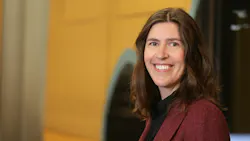
One word to describe yourself: Passionate
Alma Mater: Undergraduate: Northern Arizona University; Graduate: Aalborg University
Fast fact about yourself: I love to travel and I’ve been to over 40 countries
What’s your best experience on transit and what made it memorable? Traveling in Switzerland. Traveling by rail in Switzerland was my best transit experience because it was so seamless and easy to navigate. Clear, real-time information made transfers simple, showing exactly where to go and how long it would take to walk to the next train platform.
As a transportation planner at AECOM, Estella Hollander leads complex planning efforts that advance transit and multimodal mobility at multiple scales—from regional transportation systems to neighborhood-level safe routes to school connections. Her work on transit feasibility studies and short-range transit demonstrates an ability to integrate data driven analysis with a human-centered approach. Colleagues note Hollander is particularly skilled at aligning innovation with implementation, ensuring that creative ideas are operationally feasible, financially sustainable and politically supported. Her approach is collaborative, inclusive and grounded in real world needs. Her ability to work effectively with public agencies, nonprofits and community stakeholders has made her a trusted advisor and leader within the transportation planning profession.
Prior to AECOM, she served as planning manager at Mountain Line in Flagstaff, Ariz., where she led the successful implementation of the agency’s first microtransit pilot. Hollander designed and facilitated a multi-stakeholder, inclusive planning process that engaged the city of Flagstaff’s largest homeless shelter, numerous human services organizations and potential riders of the service to ensure the service addressed real mobility gaps. She then led the pilot through implementation, coordinating across operations, fleet, marketing and executive leadership.
As Mountain Line’s lead grant writer, she secured over $80 million in federal funding, dramatically expanding the agency’s capacity and infrastructure. These funds enabled the design and construction of Northern Arizona’s first dedicated commercial driver’s license (CDL) testing course, a new downtown connection center and a modern maintenance facility. These investments strengthened workforce development, operational resilience and customer experience for the region’s transit system.
Her professional experience spans the U.S., Denmark, the Netherlands and Thailand, informing a nuanced understanding of how different policy frameworks and design approaches can improve mobility outcomes. She applies these insights to develop innovative solutions such as first mile/last mile strategies and emerging service models that bridge gaps between traditional fixed-route transit and evolving rider needs.
Beyond her professional responsibilities, Hollander is deeply engaged in advancing the transportation field through leadership and service. She served for three years on the board of Flagstaff Young Professionals. For eight years, she contributed to the city of Flagstaff’s Bicycle Advisory Commission. She also spent four years on the Association of Commuter Transportation’s Diversity, Equity and Inclusion Committee. Her commitment to inclusive leadership continues through her participation in the American Council of Engineering Companies’ Leadership in Engineering Administration Program, which she completed in June of this year.
Is there a specific experience that led you to where you are today?
Growing up in Phoenix, the car is king. However, a defining experience for me was visiting Amsterdam as a kid. I remember being amazed by how people got around: bike lanes everywhere, huge bicycle parking garages filled with bikes and easy access to streetcars and buses. It was the first time I realized that transportation didn’t have to revolve around cars. That trip opened my eyes to how infrastructure shapes daily life and planted the seed for my interest in creating more connected, multimodal communities.
What do you enjoy most about your job?
What I enjoy most about my job is helping create transportation systems that give people real choices. Good mobility means having options—whether that’s driving, biking, taking transit or walking—and being able to choose what works best for you. I value being able to develop plans and projects that expand those options. When people have reliable and accessible ways to get from point A to B, it directly improves quality of life and supports overall well-being in our communities.
What’s the most challenging part of your job?
One of the most challenging parts of my job is balancing competing priorities. Transportation projects often involve trade-offs between cost, environmental considerations, community preferences, and existing policies or guidelines. It can be difficult to align all perspectives while staying within project constraints.
What is the accomplishment you’re most proud of and why?
I’m most proud of leading the development of a microtransit pilot in Flagstaff, serving an area with a high concentration of human services, including the city’s largest homeless shelter. The area was physically isolated by railroad tracks and an interstate, limiting access to nearby transit stops. I led the planning effort and secured a $300,000 grant to implement a pilot program. Today, it has become a permanent part of Mountain Line’s service, improving access to essential destinations and expanding mobility options for folks in most need of transportation options.
What is an accomplishment you would like to work towards in your career?
An accomplishment I would like to work toward is advancing transportation systems that truly put people first by making non-car options more convenient, reliable and appealing. I’m motivated by the idea that mode shift happens when people have real, practical choices that fit their daily lives. I want to help lead efforts that design systems where transit, biking and walking are not just alternatives, but preferred options, ultimately improving mobility, sustainability and quality of life.
What is your best advice you can share from your area of expertise?
My advice is to approach transportation planning with both technical rigor and empathy. Data is important but understanding how people actually experience the transportation systems is just as important. Take the time to listen to stakeholders, ask thoughtful questions, and consider long-term impacts. Flexibility and collaboration are key, especially as communities evolve.
About the Author
 Brandon Lewis
Brandon Lewis
Associate Editor
Brandon Lewis is a recent graduate of Kent State University with a bachelor’s degree in journalism. Lewis is a former freelance editorial assistant at Vehicle Service Pros in Endeavor Business Media’s Vehicle Repair Group. Lewis brings his knowledge of web managing, copyediting and SEO practices to Mass Transit magazine as an associate editor. He is also a co-host of the Infrastructure Technology Podcast.