Infrastructure Technology Podcast: Road pricing, AI and the future of transportation
Key takeaways
- Autonomous vehicles could also create new forms of shared mobility: Roads and Bridges Staff Writer Jessica Parks interviews Mark Deflin, the vice president of sales in North America for Emovis. Deflin discusses the possibility of autonomous vehicles functioning like highly personalized minibuses, using real-time ride-sharing to efficiently connect passengers.
- Road pricing could become an alternative to the traditional gas tax: As vehicles become more fuel-efficient and electric vehicles become more common, Deflin says that mileage-based user fees could provide a way to better connect transportation funding with how much people actually use the roads.
- Transportation agencies need to think beyond individual modes: Deflin argues that autonomous vehicles and road pricing present an opportunity to move toward a broader mobility as a service model that connects driving, transit, rideshare, biking and other modes.
- Better integration between transportation systems will be important: Tolling agencies, transit agencies and other transportation providers often operate separately. Deflin argues connecting those systems could create more seamless trips and potentially allow travelers to use a single payment platform.




 ITP Episode 53 graphic.
ITP Episode 53 graphic.
Episode 53 of the Infrastructure Technology Podcast explores the future of road pricing, autonomous vehicles and connected transportation systems with Mark Deflin of Emovis. Roads and Bridges Staff Writer Jessica Parks speaks with Deflin about Virginia’s Mileage Choice program, which has grown to nearly 25,000 participants, and the lessons it offers for states considering mileage-based user fees. The discussion examines how financial safeguards, payment flexibility, privacy protections and giving drivers a choice in how their mileage is measured can help build public trust.
Listen time
38:22
About the guest
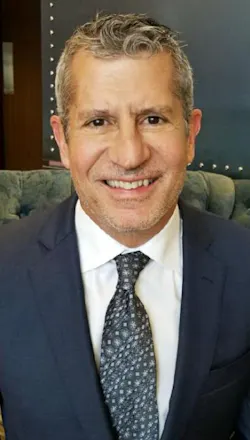
Mark Deflin is the chief sales officer of North America at Emovis, a global expert in toll-based mobility solutions with more than 40 years of experience in the tolling industry. Deflin brings a deep expertise in engineering, project management, business development, roadside and back office tolling systems and customer service operations. He leads the company's business development efforts across the U.S. and Canada, helping transportation agencies and infrastructure partners implement innovative tolling, road user charging and mobility solutions that improve the driving experience while supporting sustainable transportation funding.
Here is a transcript for the episode:
JP: And welcome to the Infrastructure Technology Podcast. This is Jessica Parks with Roads and Bridges. Today, you'll be listening to my interview with Mark Deflin on automated road pricing. Mark Deflin is the chief sales officer of North America at Emovis, a global expert in toll-based mobility solutions with more than 40 years of experience in the tolling industry. Mark brings a deep expertise in engineering, project management, business development, roadside and back office tolling systems and customer service operations. He leads the company's business development efforts across the U.S. and Canada, helping transportation agencies and infrastructure partners implement innovative tolling, road user charging and mobility solutions that improve the driving experience while supporting sustainable transportation funding. Now, here comes my interview. I hope you all enjoy. Thank you for listening.
JP: Today I have Mark Deflin, VP of Immovis North America with me. We're going to be discussing the future of road pricing in an era of autonomous vehicles. Thank you so much for joining me today, Mark.
MD: Glad to be here, Jessica. Thank you.
JP: So why don't we get started with, so transportation experts are increasingly concerned that autonomous vehicles could actually increase congestion rather than reduce it. Why is that?
MD: There's a belief, it's probably more than a theory because some good research has been done in this area, and there's an effect called the rebound effect, and that's an impact where if driving becomes easier, people will do more of it. So it's one thing to sit in traffic, and you can't get on your phone, you can't get on computer, you can't take a nap or watch a movie, but if the car's driving itself, you can do all of those things and the trip becomes, you might even move farther away because you don't care about your commute, you're actually being productive. Your day starts when you get in the car, and if it takes an hour, an hour and a half, you don't care, so you might even get a bigger plot of land and a bigger house and move farther away from the city and that increases how long your trip is and then you might even drive more because it's pleasurable. And then maybe disabled people or elderly, they're able to drive without a license, or I shouldn't say drive, but travel without a license, so that's kind of what's behind the theory, and there's even some empirical evidence to that effect where just the fact that you have cruise control or lane departure warning, they say that is increased. People that own that drive up to 18% more a year because they have those features, and it makes driving a little easier, so they drive more.
JP: It's kind of interesting how you're saying it's driving in a vehicle into public transit in a way. What I loved about public transit was being able to read my book and so I haven't though of it that way.
MD: I love public transit. I lived in Europe for a couple years in between my bicycle, and I'm in the car business kind of, but I didn't own a car, and I loved it, I got to tell you. But yes, exactly, but you still have your space and a lot of people, especially in the states, aren't quite ready to give up their car. That's their kingdom sometimes. That's a tough sell. You mentioned public transit, so I have a different take on what maybe the majority research says, and I say it could very likely reduce vehicle miles traveled. With increased intelligence and the smarter the vehicle is, the more flexible it can become and the more adaptable it can become, so the idea of carpooling becomes a lot more natural where I don't have to check in with you and say, ‘Hey, Jessica, you still on for the trip’? That's all done behind the scenes, and I don't even have to know you, and we might pick you up, but it's right on our way because all that intelligence is available, and it's built in, so it's kind of like dynamic real-time ride-sharing versus traditional carpooling. And then they're almost like it could become mini buses, but very personalized and very customized, and I would love to see something like that. I see so many large buses, and there's four people on them, and I look at it all the time again, that seems like a waste of pavement space and an accident waiting to happen, so I think you can look at it both ways, but the majority of research seems to suggest that an autonomous vehicle could increase miles traveled. We can talk further into this podcast, and there might be other ways the agencies, the planners can really impact that so that we don't have to go that route.
JP: Definitely. And with the increase in vehicle miles traveled, recent research points to road pricing as a potential solution, so what makes that pricing such a powerful tool for managing traffic demand?
MD: Yeah, road pricing. Well, we know the corollary to that is the gas tax, which is the way... I mean, it's amazing, maybe not amazing, but a lot of people do not know how our roads and bridges are funded and paid for, and they feel like every time the price of gas goes up at the pump, they're getting taxed more, and it's not the case. The fuel tax is a flat amount per gallon, so as price of fuel goes up, the percentage actually goes down that you're being taxed. With the increase in more fuel efficient vehicles, and of course electric vehicles, a lot of damage to the pavement through these vehicles isn't being recouped because obviously these cars aren't pulling into a gas station filling up and paying their tax. So the gas tax is a non, that gap continues to grow, so there has to be another mechanism, another avenue to fund our infrastructure, and that's where the advent of road pricing has come in, sometimes called vehicle miles traveled, sometimes called mileage based user fee. In the end, it is a bit of a tax, but it's different. Whereas the gas tax, and this is, as you started this, why does it have some popularity and potentially some legs, is because it's not a flat tax, it's a user fee, it's a user pays type tax, so it becomes a little more transparent. All right, the more I drive, the more I pay, that makes sense. If I'm not driving, I'm not paying. That makes sense. It also is not a regressive tax. I mean, the gas taxes we have it now, if you have a less efficient vehicle, you're paying more for driving the same amount, and you're paying more taxes and a lot of lower income people have less efficient vehicles. They might be older vehicles and maybe aren't maintained as well because of social economic factors. So the gas tax itself is regressive in that sense where a road pricing tax wouldn't be.
JP: So you did explain it a little bit, but for listeners who may not be familiar with the concept, how does the road pricing work? I know you said the more you drive, the more you pay, but how is that calculated?
MD: Yeah, that's the challenge now. It's figuring out how to do that and to do it cost-effectively and to do it in a society where our privacy, we feel through a lot of ways continues to be invaded, whether it's cookies or whatever other techniques can follow around what we're doing. So the key, I guess, to do it, the technology is there. You can do it by putting an app on your phone and your app has global positioning coordinates so it knows when you move from A to B and how long that is, and that could be a recording. There's devices in the vehicles now that already track mileage, and to tap into that is not that big a deal. Insurance companies use it now. It's called a dongle. You can plug it into a bus in your vehicle, and it will track your mileage, and it'll track your braking. And so insurance companies use it now to do that. That's another technique that agencies could use to follow your miles. Another technique is just take a picture of your odometer periodically and send it in. That's the least intrusive method because you're not being tracked every mile. All you're seeing is what you drove in January versus what you drove in June. Subtract the two, that's your miles driven. Here's how much you owe on a per mile basis. What we just talked about is a key, I think, to success of road pricing is that the driver has choice. You want to give them choices so that you can get past some of the resistance, whether it's privacy or whether it's, ‘I don't want more technology in my car. I don't want to mess with it. I don't want to have my phone on while I'm driving’, whatever it is to give people choice.
JP: I mean, I'll tell you personally though too, is that I got that option from the insurance agency to have that app running on my phone that tracked my driving and my braking and everything. And in theory, you get savings if you drive safer. There's also the other side where you don't get savings, so I was like, ‘I'm not doing that. There's no way’, so I agree with you. It's good to have options. Maybe you get an incentive for getting the app on your phone as opposed to taking the photo of the odometer, which is probably a little riskier in regards to with people probably being able to dock your photos or AI now, so it's good to give people the option to do that and maybe have some incentives to do that more intrusive program, I guess more intrusive method, I guess.
MD: Jessica, there are techniques to detect if the photo's been doctored, there's fingerprinting techniques that show this isn't even the same vehicle, even if it looks the same to the user, there's tiny variations in there that machines can pick up. And so there is fraud detection built into that solution as well. We like to, as Ronald Reagan said, ‘Trust but verify’, right?
JP: Yeah. Hey, I'm a journalist. That's one of our pillars.
MD: Check your sources.
JP: Yeah, exactly. Okay. So Imovis has been involved with Virginia's Mileage Choice program. Can you explain how that program works and what its adoption has looked like so far?
MD: Sure. It's been a great program for both us and for Virginia. It's moved well past its pilot phase, and it's performing really well in the real world. There's over almost 25,000 participants now. It grows every year, and we just renewed our contract with them through 2028, so they like the program, they like what it's doing. So it's the largest of its kind in the country and shows that these sort of approaches can work. It shows that you can get good buy-in from the traveling public, and it shows also that the agencies need to put some thought into how these programs are going to run. Virginia did a really good job because what they have is a financial guardrail built into the program. They call it a no loser guardrail, meaning you are guaranteed to never pay more than you would have under an annual fee type program. So many states, and even I just read today that the U.S. federal government is considering just an annual fee for electric vehicles, kind of the easy way out, so to speak. So a lot of states have that annual fee for electric vehicles, 100 bucks a year or 200 bucks a year. So the Virginia guarantee is you won't pay more than what your annual fee would be. So there's a motivation, an incentive for people to join and not feel like, ‘What if I drive more and then I'm going to pay more than I would've otherwise’?
JP: So there's a cap. That's great.
MD: Yeah. So the cap works. It took the financial risk away from the public, get their buy-in. And the key lesson there as we talked before, and it's even in the name of the program, Mileage Choice, is it does give people a choice. So no one wants something, especially when it comes to what's being perceived as a tax, to be then mandated that you have to do it this way. There's technology we talked about, on-board diagnostic plugin devices like we talked about for the insurance companies or the odometer readings, and we're actually going to be talking soon about an upgrade to that, a much less intrusive, much less costly way to measure miles and reduce the cost of the program. And so that's something we'll be meeting with Virginia in a little while, so I don't want to say too much about that, but that's a big development for us. We would like to get away from the plugin devices because they are costly, and it can be a little confusing sometimes to people to put in and they might become disabled and the people don't know it. So there's other techniques to do that, so we're working on that all the time to make it a more acceptable way to go.
JP: Definitely, definitely. That's really interesting. That'll be great. I'm excited to see what the development is. And so on that topic, what lessons from Virginia's experience could be applied by other states or metropolitan areas that are beginning to explore mileage-based user fees?
MD: For one thing, like they did, remove the financial risk. So if you already have an annual fee, you want to make sure that the user fee is not going to exceed what they would've already been paying. I think that's a good policy, and certainly the lesson learned is, yeah, that works. It definitely reduces the anxiety and increases the public's trust into what you're trying to do, so you get some buy-in there. Make it convenient. Payment plans, do they pay once a month, every six months, once a year? Give people some choice there. If they'd rather just pay their monthly bill and have a recurring thing, fine, we can do that. If they want to just pay at the end of the year, fine, we can do that as well. So build in some of that payment flexibility for people so it doesn't become a burden, however, that's defined by that individual. Prioritize privacy for sure. So by giving them a choice with or without GPS capabilities, by just giving a license, not a license plate, an odometer reading, then that takes away some of that angst about the privacy concern.
JP: Definitely. Yeah, choice Is really helpful for sure.
MD: And also manage expectations I think is good. Start with a glide path. Try not to expect perfection out of the gate, but build in some time for recheck and cycle of improvement to say, ‘Alright, we learned this, let's do a little tweak here and solve this problem because this particular business rule isn't working’, or something like that. So be flexible and manage expectations. I think those would be the key takeaways for Virginia.
JP: Definitely. So I guess while working with Virginia as well, what misconceptions have you seen that people have about mileage-based user fees?
MD: One misconception is that the government has all the data. That's not how it works. It's third parties like us that have the data, it's anonymized, we give the results to the agencies, the public agencies, but they never get the data, the full data, and we don't keep it, so we scrub it and delete it. So I think where the data goes is a concern of some people, and that relates into the privacy issue, but by giving options and choices, we can get around the privacy issue. A big misconception, I think, is that people are just viewed as another tax and not really understanding that it costs money to build roads and bridges and tunnels.
JP: Yes, exactly.
MD: Well, understanding that, but not linking them as a user and as someone who is benefiting from this service. Driving is a privilege, not a right, I guess is a way to put it, so people feel like, ‘I already pay my taxes, that covers all pay whatever sales tax and state tax and federal tax and now I got another tax’, but none of the taxes we pay out of our income are going to the roads, it's the fuel tax, and it's these other taxes, so I think that misconception of where the money comes from and where it goes is not well understood.
JP: I mean, I'll tell you, I cover transportation and roads and bridges. I mean, I understood the gas tax and everything, but I didn't understand how little money goes towards roads and bridges federally, and it's crazy, and I mean, these bridges are impossible to maintain. They're all reaching their service life at the same time pretty much, so if you want to be able to travel around the country, you got to pay your share, so I think education on that's so important. Just educating the public on that.
MD: It's a tough one.
JP: Yeah, no one likes paying. I don't think anyone loves paying their taxes or having money taken out of their pocket, but hey, it's part of being a part of a society.
MD: But we all appreciate safe roads and nice pavement.
JP: Exactly. Fresh paint.
MDl And the striping.
JP: Exactly. It's funny because you get potholes, and everyone's mad about the potholes, but then they're mad about paying for the potholes, so it's a sticky situation.
MD: Well, other countries have it worse, and I think you asked about misconceptions. If you want to go global, I lived in the Netherlands and the gas tax there is, it's almost half of what you're paying at the pump.
JP: Oh, really?
MD: Yeah.
JP: Wow.
MD: But it's a whole different mindset there. They understand it, and they see the value of it, and they get it. And a lot of that money goes into the bike lanes, so the gas tax itself helps pay for mobility in general, so the public really gets it, and they see the value of it, so it's just a different mindset.
JP: I wonder what lessons we could learn from that. That's something I should look into as with the roads and bridges. That's an interesting idea. My next question is, what role could AI and connected vehicle data play in future pricing systems? Do you see any future in that?
MD: Yeah. Oh boy, it's a huge topic because it has so much potential to really get the most out of the infrastructure we have. There's a lot of capacity out there. We don't use it. I lived in Southern California, and there was always a problem getting the goods from the docks, whether it was Long Beach or LA, inland because of the congestion and one of the congressmen said, ‘They talk about the congestion, but I was out there the other day, there's nothing on the roads’. Well, he was out there at 2:00 in the morning. So the way we work is 9-5, strong trucking unions. So everything happens within that eight hours, and then the docks shut down and the receiving warehouse is inland, shut down, so there's nothing happening in the off hours. So his point was, ‘We've got 24 hours a day. Why aren't we using it more effectively’? So certainly if you have connected vehicles, autonomous vehicles, then the driver comes out of the equation, and you can get a lot more out of those vehicles. They don't really ever have to sit. They can just keep going and going. You don't have driver limits. With respect to AI, there's a lot of data that we get out of the roads, a lot of data, and if we could analyze that data in real time and be smarter about how we plan, there could be a lot of predictive data. So that when I look, I have to get to the airport today, and I just looked and just wanted to see what traffic looked like, but we can get a lot better for telling me what it's going to look like at three in the afternoon today, given the weather, given the events in town, given how many people are traveling today. All that data's out there in the world, bring it together. And then I never want to miss a flight, so I'd have a much better idea of when I have to leave for the airport and not be late without, like I do, getting there an hour and a half early and then sitting around, but that's just a small example in my personal life, but I'm sure we all have experiences and can think about if the weather plays a factor, whether there's a football game, Taylor Swift concert, whatever's going on, road closures that Google hasn't picked up on yet. So Waze does a really good job with that app because it's kind of a crowdsourcing app, so it is bringing that data in. So to some extent, those AI tools are already in there, and Waze will give you some predictive timeframes, but they could get better. They could get a lot better. Same with ambulances and emergency vehicles having to get to where they need to get to. They have their given route and they go, but it could come down to saving lives if they can save a little bit of time on the journey by fixing green lights in their favor, by routing other vehicles away from the scene in real time. All these systems work together and create a path for the emergency vehicles to come in and also a barrier almost to sending more vehicles into whatever emergency is happening, so there's a lot of really good examples of where it could, rather than just Mark's journey to the airport.
JP: And I'm going to ask you my last question. I think we're running out of time. So looking ahead 10 years, what do you think transportation agencies should be doing today to prepare for the future that includes both autonomous vehicles and new road pricing strategies?
MD: Yeah. And I'm going to assume that autonomous vehicles are coming, and that AI is here and all these things. So if you look out five to 10 years, there's a risk hanging out there unchecked where if what we talked about at the beginning of our talk was the vehicle miles traveled could increase by over 50%, that's a mess. Imagine looking out the window, what the freeways would look like. It'd be terrible. And not to mention the pollution and all that stuff, but again, people aren't minding because they're not having to actually drive. There's also a possibility of empty cars waiting for their next ride and just driving around. So one thing they can do is disincentivize those empty miles of vehicles driving around without passengers. And also to take the opportunity really and look at this as anytime you have a risk or a challenge, you can turn it into an opportunity, and this is an opportunity to improve, to look at the transportation network as a system and think about driving as mobility. And mobility as a service where all of the legs of your journey are linked, both in payment and in seamlessness to get from your vehicle to the train, to the car, to the rideshare maybe, to the bike that you might take for the last two blocks of your journey or whatever. It's all invisibly linked in the back end and those systems exist. What doesn't exist is anybody who's thinking about bringing those together, and agencies do think about it, but they're not acting boldly enough, I would say, because it crosses over travel mean modes of travel. Our transit agencies and our tolling agencies are two distinct silos. They don't talk a lot to each other. They're almost in competition, so there's not a lot of cooperation between getting from the toll road network onto the transit network or having a single wallet to pay for that journey and maybe getting credits for using more transit and less driving. All those techniques exist, so if our agencies can step up and say, let's take this on, let's look at this as an opportunity, let's instill what people have been talking about, which is mobility as a service, and let's create the platform to enable that. And then all of these individual modes of travel will come in, tap into that platform and the user will benefit, and I think that's something I know I would like to see. I know it's possible. I know other European cities have done it. I think their bar is a little lower than ours because of the nature of where we are and the public acceptance that's going to have to go with that, but I do think it's an opportunity that technology, connected vehicles, all of the AI capabilities which we're just scratching the surface on could enable, so I'm excited about it. I like being a part of it. I love talking about it, and I'm glad that there's folks like you out there trying to spread the word, so this is great.
JP: Definitely. And we love talking to you about it. Thank you so much for coming on. I think you shared a lot of great insights with agencies, and we have a lot to store in our future in the realm of autonomous vehicles, connected systems, and road pricing. It's exciting. We’re in an ever-changing world. It is very exciting. So thank you so much for sharing your input. It was such a pleasure having you on the show today.
MD: Thank you, Jessica. And above all else, be safe.
GJ: All right. ITP gang, we are back. And that was Jessica's interview with Mark Deflin from Emovis. Road pricing, automation, automative road pricing. We got a little bit of everything in that interview. Brandon, what was your takeaway?
BL: We did. And sort of at the beginning of the interview, he talked about autonomous vehicles, which I found interesting, and he talked a lot about how autonomous vehicles could be sort of like a mini bus, about how when people that don't have cars, if they don't have access or the ability to get to public transit, they could start using more of these vehicles. And the first thing I thought of is obviously on this podcast a lot, we've talked about Waymos before, and it really did strike me that he's like, ‘A lot of people that don't have driver's license are going to use more of these autonomous vehicles’, and I thought about myself, and I was like, ‘I have no idea how to operate a vehicle, but do I really trust myself to go inside a vehicle that is completely autonomous, no attendant in the vehicle whatsoever, and be on my phone and not even paying attention to the road. That would scare me. I would not have the mental capacity to do that. So I'm very interested to see how this autonomous technology impacts public transit. Again, we're not going to see it now, but down the line.
GJ: Yeah, absolutely. We got Waymos in Pittsburgh now, and seeing them is really fascinating. I think I'm with you, Brandon. I wouldn't be too comfortable in that situation. And of course, I think if you can drive, you should learn how to drive. Maybe that's the being raised by a boomer in me.
BL: Well, it's either learn how to drive or use, I guess what we would call traditional public transit, whether your bus or your rail.
GJ: Right. Yeah. Okay. Jess, that went long. That was a long interview. So tell us a little bit about everything that he said, what jumped out to you? What was your takeaway from the interview?
JP: I mean, I think it was really interesting his discussion on creating public trust and how that is such a key factor of automated road pricing working. He discussed how it's by creating options. You could have something installed in your car that could just be counting miles. That would probably be one of the most intrusive ways to implement this program, but then you could also take a photo with timestamps of when you started driving. A certain period of time, let's say the program, they do it quarterly, so January to March or something like that. You would take a photo at the beginning of January of your mileage and then take a photo in March of your mileage and that difference would be what's charged to you. So I think that's really self-aware is the importance of public trust, having them involved in the process, giving them options of how they can implement this program for themselves. I thought that's what really struck me.
GJ: Options struck me, too. Options. Americans love having options. And one of the problems with today's just overall marketplace, regardless of industry, is we don't have as many choices and options as we used to, and we need options. We need options. All right. Any final thoughts before we wrap it up here?
BL: Yeah, I think sometimes though we give people too many choices, right?
GJ: True.
BL: And so the balance is how many choices do you want to give people? Do you want to give people two or three or do you want to give people 10? I know me, I'm a very black and white person. I want to make something as simple as possible. You give me A, you give me B. You give me A, B, C, D, E. I don't know what to do.
GJ: No, I'm the complete opposite. I hate Black or white decisions because I think we live in a very gray world. Society is very gray, and there's a lot of nuance to just about every aspect of our society, transportation, infrastructure especially. And you're right, but the thing is, you're right, we do have too many options. Case in point, we have too many options of television. What do you watch, Brandon? What do you want to watch? There's 800 million TV shows out there. You keep picking wrestling instead of watching Breaking Bad.
BL: Not only that, but there's the 800 streaming options. I mean, even in public transit, there's five different ways to get to somewhere. You want to find the safest and the most reliable aspect. I don't know. Our world is very gray right now.
GJ: A gray world. A gray, gray world. Okay. All right. That is it. That was a lovely interview with Mark Deflin. We want to thank Mark Deflin for joining us and talking to Jess today. We also want to thank you, the listener, the watcher on YouTube. Please watch us on YouTube and follow us, listen to us on Spotify, wherever else you get your podcast. Thank you for joining us. And we also want to thank Endeavor B2B for giving us this podcast, this platform, our parent company for gathering us together. And that is all. So for Roads and Bridges and for the ITP, I am Gavin Jenkins.
BL: I'm Brandon Lewis.
JP: And I'm Jessica Parks. Thanks for listening.
GJ: All right. We'll see you next week. Goodbye.
About the Author
 Brandon Lewis
Brandon Lewis
Associate Editor
Brandon Lewis is a recent graduate of Kent State University with a bachelor’s degree in journalism. Lewis is a former freelance editorial assistant at Vehicle Service Pros in Endeavor Business Media’s Vehicle Repair Group. Lewis brings his knowledge of web managing, copyediting and SEO practices to Mass Transit magazine as an associate editor. He is also a co-host of the Infrastructure Technology Podcast.