Infrastructure Technology Podcast: Concrete's importance to infrastructure
Key Highlights
- Concrete is more complex than most people realize: Roads and Bridges Staff Writer Jessica Parks interviews Dr. Tyler Ley, a professor at Oklahoma State University who emphasizes that concrete may look simple, but tiny mix adjustments determine whether infrastructure lasts 10 years or 100 years.
- Weather-specific concrete design could revolutionize durability: Ley explains that current freeze-thaw concrete standards are often generalized nationwide despite vastly different climates.
- 3D-printed concrete could transform construction: Ley predicts 3D concrete printing will eventually become a dominant construction method because of labor shortages and cost pressures.
- American Public Transportation Association (APTA) releases artificial intelligence (AI) guidelines: After the interview, Parks is joined by Roads and Bridges Head of Content Gavin Jenkins and Mass Transit magazine Associate Editor Brandon Lewis discuss some recent news that APTA has released guidelines for public transit agencies to use AI, as well as a new app Moovit developed that uses AI to help riders plan their public transit trips.
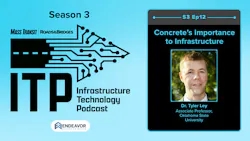




Episode 12 of the Infrastructure Technology features Roads and Bridges Staff Writer Jessica Parks interviewing Dr. Tyler Ley, a structural engineering professor at Oklahoma State University. A self-described “concrete freak”, Ley discusses why concrete matters so deeply to infrastructure, how better concrete design can create structures that last generations and how innovation is transforming the field.
After the interview, Mass Transit magazine Associate Editor Brandon Lewis leads a discussion around new artificial intelligence (AI) guidances released by the American Public Transportation Association for transit agencies in the U.S. The hosts discuss AI’s growing role in customer service, operations, policy, staffing and route optimization. They also analyze Moovit’s new AI-powered transit assistant and debate how AI will continue reshaping infrastructure and transportation industries.
About the guest
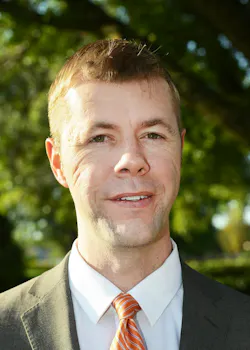
Dr. Tyler Ley is a structural engineering professor at Oklahoma State University. A self-described concrete freak, in between teaching concrete instructional engineering at Oklahoma State University and conducting innovate research, Ley is the creator behind his YouTube channel, where he breaks down the world of concrete in a way that's engaging, relatable and fun for thousands of viewers.
Here is a transcript for the episode:
GJ: And welcome to the Infrastructure Technology Podcast. I'm Gavin Jenkins, head of Content of Roads and Bridges, and with me, as always, we have Brandon Lewis, the associate editor of Mass Transit magazine, and Jessica Parks, the staff writer at Roads and Bridges. Jessica, Brandon, how are you doing?
BL: You guys are listening to my voice, which means it's a Tuesday, which also means a podcast day.
GJ: Jess, how you doing?
JP: I'm doing good. I'm excited for you guys to listen to my interview.
GJ: Yes. Today we have an exciting interview with a professor, a professor of concrete.
JP: Dr. Ley is a professor at Oklahoma State as we discuss, he is a structural engineering professor and self-described concrete freak in between teaching concrete and structural engineering at OSU and conducting innovate research. Dr. Tyler Ley is a creator behind his eponymous YouTube channel, where he breaks down the world of concrete in a way that's engaging, relatable and surprisingly fun for thousands of viewers, so I'm really excited for you guys to take a listen. He was very fun to speak with.
GJ: Yes. And every January, Roads and Bridges has a concrete issue, and we're leaning on this guy for January's issue in 2027 for sure. We want the concrete freak front and center for Roads and Bridges, but until then, please enjoy Jessica Park's interview with Dr. Ley.
JP: Today we have a special episode with Dr. Tyler Ley, a structural engineering professor at Oklahoma State University, a self-described concrete freak. In between teaching concrete instructional engineering at OSU and conducting innovate research, Dr. Taylor Ley is the creator behind his eponymous YouTube channel, where he breaks down the world of concrete in a way that's engaging, relatable and surprisingly fun for thousands of viewers. Dr. Ley, thank you so much for joining us today.
TL: Jess, thank you so much for having me. I am so pumped to be here.
JP: We are so excited to have you. Concrete is the second most used material on earth after water, and when we get it right, infrastructure can last for generations. When we get it wrong, we inherit constant repairs, as you know. I wanted to ask you, for listeners who don't think about concrete every day, why should they care? What changes when we get concrete right on roads and bridges?
TL: Well, it's such an opportunity to get this stuff right, to make something that's going to last longer than you could be alive. Isn't that crazy? Just to think about, to make something that future generations that your friends and your neighbors and your kids are going to be using. It's just crazy. It's insane. So I think that's a big deal. That is a big responsibility that we all have to get, and we do that with our specifications, with our making sure construction methods are right and making sure our materials are right.
JP: Definitely. I think that's crazy, too, is projects that'll outlast all of us. It's crazy. Okay, so you're teaching, you're researching, you're making videos. What's the thread that connects all of those parts of your career?
TL: Well, it's concrete, baby. It's concrete, and it's making it easy, and it's helping people because concrete is such a great way to serve people, you know what I mean? It's such a great way to help people get better whatever they're after, but I really love people deeply in my core. I love people, and I think concrete helps take care of people. I think my videos help educate people. I think my research helps solve people's problems, and that's just a great way to give for me, and I'm super excited about it.
JP: I think your videos are so fun, and I'm sure so many people learn so much from your videos. It's so exciting. So we kind of touched upon the three parts of your career, but tell me, let's get into one part of it. Tell me a little bit about your recent projects you've been working on.
TL: Yeah, I've got some great really exciting projects we're doing and some of them are for many different state DOT’s that we're working with them to try to help different things that are going on. One that's really crazy is that like weather. We all know that weather, it's not the same all around the United States, all around the world. It's different, different places. But when it comes to designing your concrete for freezing and thawing resistance, we pretty much use the same thing everywhere. We put something called air and treatment in the concrete. Did you know that it's like these bubbles? Do you know we put bubbles in concrete? We put it in with soap. It's called an errand training admixture, but it's a soap that we put inside concrete as we mix it, mix these bubbles, but here's the thing that's crazy is that we've never really tied how much bubbles we need to the weather. Isn't that nuts? We've never done that. So for example, we made these blocks concrete, of course, that were instrumented and we could measure the water that's inside of them, and we could see ice forming when it got too cold, and we put these all over the United States, so we actually could measure how different weather impacted the concrete, and we did so much stuff. I could go into a whole podcast episode just about this, but I won't just for you in the end as we get maps of the entire United States and states are super pumped because they're like, ‘Oh my gosh’. Some of them have been like, ‘I've been under designing my concrete’, and some of them have been like, ‘Oh my gosh, I've been over designing my concrete’, and so it's helping everyone dial in to get just what they need in their different environments. And so keep an eye out for a video about that coming out and reports coming out about that. We just finished that work, super excited, and that was for, I think it was 16 different states that all put in money to work on that. Isn't that cool?
JP: That's really cool. Like an interstate project like that. And definitely we could do a whole podcast episode about that. So let's stay tuned and at least expect to see me write something about it on roadsandbridges.com.
TL: Love it, but we've got a lot of other stuff we're doing. We have a new project, another interstate project that's on fiber reinforced concrete, so putting little fibers inside concrete, and they can reduce your cracks by 50 to 80% in size.
JP: Wow.
TL: Isn't that crazy?
JP: Yeah.
TL: So it's super useful for bridged decks if you want to make them last a lot longer, but we've also been doing things for Ohio. We've been helping them with their slip form barrier rails, so the kind of concrete rails on the side of the road that make sure that you don't go flying off of it, so we've been designing better mixes for that, so it cracks less, and we've been helping South Dakota, they've been changing their specifications for freezing and thawing those air bubbles that I told you about before. And we've been working on things called harvested fly ash, and you've probably heard of fly ash. Fly ash is a waste product from the coal industry, but coal plants have been going away because we were not burning as much coal. But here's the thing that no one ever talks about is that we've had leftover fly ash that they made every year extra, but they couldn't use it, so they put it in the ground, so we figured out all these reserves of fly ash all around the United States, and we calculate there's 130 years of supply of fly ash for concrete in the ground now that we've validated as being good. And so we're helping companies refine this, bring it to market. People are already doing it in New York, in North Carolina, South Carolina and now in Texas. And so it's exciting because this is helping our concrete, it's making longer lasting concrete, and it's cleaning up this environmental issue, and it's making great concrete out of it, so I'm super excited about it. There's other stuff I could talk about, but those are some of the high points.
JP: You are a problem solver, saving money for DOT’s, not having to repair their concrete as much. You're used, finding these reserves to make you just solve a lot of problems. I think that's really awesome. Concrete could really save the day.
TL: Thank you so much.
JP: Yeah. Okay. So you've been recognized repeatedly for teaching and outreach. What's your core philosophy for making concrete click with students?
TL: What a good question. I think you got to be excited especially about something that people don't expect you to be excited about because concrete seems kind of boring, and it's kind of simple. It's like rock, sand, cement and water, but if you change how you mix those up, you can make something that's going to last 100 years, or you could get one ingredient off, and you'll get something that won't even last 10, so you really got to get it right. And then balancing act is so important for them to explain, and I just think it's cool. For me, what was really cool when I was learning about it is it's such a simple material, but it's so complicated, and it does so many things for so many people. And so that just kind of tunes into the MacGyver spirit in me, so the guy that could take some duct tape and bailing wire and he makes a super vehicle or something that saves the day. I don't think I ever get to that level, but I think it's really fun to try to do that stuff.
JP: Definitely. No, I agree with you. I think that people, you see it, you see it everywhere around you, but people don't understand the deep technical work that goes into just getting everything just right. It makes such a big difference, and your enthusiasm is definitely contagious about it because I'm feeling it in this interview. So what's a lab demo or field activity that you see that constantly lights students up, gets them excited about concrete and why do you think that works? Why does it work?
TL: Just the first time they really make concrete, and they really see, because you can tell people all you want something, but when they start to put their hands on it, and I don't know how you teach somebody concrete without them getting their hands on it.
JP: Exactly.
TL: Every student of mine makes concrete at Oklahoma State, and I hope this is kind of wild. We're unique at Oklahoma State. Every engineer, whether they're a mechanical, electrical, chemical, all of them, every one of them makes concrete at Oklahoma State University.
JP: Interesting.
TL: Isn't that crazy?
JP: That is awesome, and what benefits do you think that brings?
TL: Well, I think everyone, first of all, whether you're an engineer or not, it helps to know something about concrete, so around you. But all these people out there, all these engineers are going to be end up working in concrete with one way or another, whether they're building a chemical plant, and they have to have the concrete to support their pipes and their infrastructure, whether they're, I don't know, making a pipeline, and they have to have the concrete to support whatever's going on. There's all of these things are important so to have them be able to touch it, make it see it and they can't taste it, I don't let them do that, right? But to have them just get a hands-on experience with it, I think it's something that's really unique about Oklahoma State and something that we want to keep putting out in the world. We think it's that important for people.
JP: I agree. I think it's really important to have a hands-on relationship with the products you're working with. I think that's really interesting that I did not know. Okay, this is my next question. I think it segues into what we just said. Where do you see the biggest skill gaps for entry level engineers and how should universities and employers respond to that?
TL: That's a great question. I think communication is so essential in everything we do, whether it's written, whether it's spoken, and I think interpersonal skills are super important and a lot of times as engineers, we're pretty good at math and science, but then when it comes to people, that's not necessarily our strong point. So one thing that I do to try to help out with that is I try to give them as many opportunities to communicate and speak, but when we have team exercises, I have them, we actually take personality tests. Everyone on the team takes a personality test and then as they work together, they have to reflect in their lab, not only on the technical stuff, but on the teamwork aspect on what was it like to work with this person and what is this person's personality type and how can I think about how to best work with them in the future because truly the world is built by teams. Individuals have cool ideas, individuals can do amazing things. The teams make things happen. And so I just want to instill upon them how important that is and how you need to include everybody. You need to get ideas from every single person all bringing different perspectives and ideas together to make the world a better place and so I think just that appreciation for people and that appreciation for communication with other people is something that I don't think we get enough in university, but what we try to go to extra links or at least I try to go to extra links to give them as much as I can, and I just try to tell them that my experience is, I'll be honest with you, after I graduated, and I went out in the workforce, school sometimes teaches you to kind of be a lone wolf. It kind of teaches you to try to get the best grade no matter what, but that's not real life at all.
JP: No, definitely.
TL: You want to raise your teammates up. You want to build the best for your situation. And so I just try to tell them those stories, give them those experiences and try to teach them how to work on teams.
JP: Exactly. I think that really the best ideas come from collaboration, and I think that people don't enough try to maximize people's strong areas, and I think being willing to be like, ‘This isn't my strong area. I'm going to take a step back here, and we're going to use the star in that area’. I think that makes a project just run so much smoother, and it maximizes output in a way instead of having someone struggling, trying to figure out a part that they don't just admit you don't understand and let someone else step in there. I think that's so important.
TL: I think it's amazing with what you just said, I think that's dead on, and there's so many times when you see people that are, I don't know what the best way to label them as well, you could call them leaders, or you could call them a little bit more aggressive than others, depending on the day or what you're going to say. They start to get nervous and they just try to take charge and then it's best to let go sometimes.
JP: Exactly.
TL: It’s best to realize your place, you know what I mean? And that takes a lot of humility. It takes a lot of self-reflection to be able to do that, but you know what? It's amazing. I mean, I think I've got the greatest job in the world. I think I love to be able to work with young people. I think our future is going to be amazing. I really, really do. I think we're in great hands. I think the future is going to look different than what we have before. Definitely. I think there's going to be things that people are like, ‘Well, we never used to do it that way’, and I get that, and I think sometimes those things served us, and I don't know if they'll always serve us in the future, but I think there's going to be amazing things in the future. I really do.
JP: I agree with you. We're definitely at a pivotal moment of history right now with the changes in AI and just a workforce shortage, and it's how are we going to use technology and everything at our disposal to make our jobs easier, and I think it's really interesting.
TL: And just to add to that, I think in concrete, I think 3D printing is going to be really important now. It's going to look different, I think, than what we see on YouTube now, but I think versions, we're working hard on 3D printing right now. Other people are, too, and I think 3D printing concrete is going to be essential in our future. It's going to be just the common way to build things and the reason why is that we don't have the time or the people, and it's going to save us a lot of cost as well to build this way, and there's probably people out there right now that are like, ‘I don't know’, and I get that. It's good. It's healthy to be skeptical. Its very important to be skeptical, but I can see it coming. It's going to come, it's going to be in the future. It might be 10 years away or whatever, but it is going to be dominant in how we build.
JP: Why don't you tell me a little bit more about 3D printing in concrete, if you don't mind, I'd love to hear more about that.
TL: So the way most people 3D print now is they have either a big old robot arm, imagine your arm only, it's 30 times larger, and then they have a pump hooked up to it. It kind of traces around and does stuff. That's one way. Another way is the use of something like a gantry. Gantry is like, it's almost like if you've seen a desktop 3D printer, that thing that just kind of moves around left and right, or like a CNC machine that might cut something out. It kind of goes, and it deposits layers. That's what the most common one's out there, but what we're working on is we're working on 3D printers that hook up to existing equipment, so you could take the front off a bulldozer, or you could take the front off a skidsteer, and you could hook up this 3D printer and then print a building. We actually printed a building in 14 hours.
JP: Really?
TL: With four people.
JP: Okay. That's so interesting.
TL: Yeah, two of them were high school students and two of them were college students, and they just use a skidsteer, like a normal skid steer. They're like a baby bulldozer. You can rent them all over the place, and you see them all over the place. And so they use this to build this machine, and it's all out of ready mix concrete that you ordered normal concrete that you order, and we're working on a new printer, and it's going to be my newest video coming out, and I bet by this time this podcast comes out, it'll be out, so maybe people can find it, but it's called the Rocket, and it prints columns, and it can print a 10-foot high column in seven minutes.
JP: That's insane.
TL: It’s crazy, and it prints around the rebar, so you pretend to tie the rebar and then it just goes and you got a concrete call. It's pretty sweet.
JP: That's amazing, especially in an era marked by inflation. Just to be able to really simplify these processes and speed them up and everything. It's going to have a revolutionary effect. I'm really excited to see it.
TL: Me, too.
JP: Yeah. Okay. Let's see, as such as analytics have become more mainstream, what data skills do you think should students leave with?
TL: Man, what a great question. Our analytic skills that we teach people in engineering, I think is really, really, really solid, but I'll tell you, there's some, and I think, and I work with young people today, and they're already by and large doing a good job with this, but using AI is going to be essential in things because anything we can do, I mean eventually there's going to be the people that, I mean the people, everyone's just going to embrace AI, almost like if they're using Microsoft Word, or if they're using something else, it's just going to be a normal tool. Now, what you have to be careful though is that they realize that sometimes AI is not right, and we've been fighting this in engineering all the time. We used to say all the time, garbage in, garbage out, and the idea is that if you put bad things in, you're going to get bad things out, but the AI could be even more tricky because you can think you're giving a good stuff, and it can still give you garbage, so you've got to know how to evaluate that stuff. You got to know how to see what that is and so what I try to tell my students is that if you ever calculate anything, calculate anything, you should think about what does that mean and does that make sense? You know what I mean? You need to always be running your internal spidey sense. You know what I mean? Does it make sense or not?
JP: Yes, definitely.
TL: And then if you can't do it, every thing you calculate, maybe just every now and then, you just take a breath and just say, huh, is this making sense or not? And so I think just that ability to pause and have a feel for what you're doing, definitely have a feel, does that size of that beam make sense? Does that concrete mix makes sense? Does the amount of rebar I just calculated? Does that make sense? So just keep asking yourself again and again and again, get that feel for things.
JP: Definitely. And just exactly, does this make sense in the real world and not the AI world? Because we're the ones that have to bring it into reality, so I agree. Totally true. It's a good point. So now let's move to your YouTube channel. I'm excited to get to this part. So tell me, Dr. Ley, what was the spark to launch the channel?
TL: I started a long time ago, and I wanted to teach kids about engineering. I wanted to teach fourth and fifth grade kids about engineering, and I didn't even start with YouTube. I just started teaching, doing an afterschool program. I would go to their school, and I would teach them, and that was cool. And I said, there's only one of me, and there's a lot of kids. So then I started making DVDs. It was a lot long ago. I made DVDs and of me teaching these lessons, and I gave them to teachers and gave them some hands-on equipment, and that went pretty well. And then a person I was working with, Nicole, she said, ‘Let's take this DVD, these videos, let's put them on YouTube’, and I'm like, ‘What? YouTube? That's for fixing your car or something else. You don't put stuff like this on YouTube’. This was a long time ago. This was like 12 years ago or something like that and so she put it up, and in just a few weeks I had 60,000 views, and I was like, ‘This is insane. I've reached 60,000 people’, and the comments I got were so they were like, I wasn't sure if I was going to stay in engineering, but after hearing this, I did, so I made it for fifth graders, but people that are in engineering school were getting good things out of it.
JP: That's amazing.
TL: It was cool. So then I said, ‘How can I leverage this? How can I usually do this even more’? So when I would go to a conference, and I would make a talk. Who's going to see that? The 30 to 50 people in the audience, I say, ‘Let's make a YouTube video about it’ and then I said ‘You know what? When I teach my class, why don't I turn that into a YouTube video’? So several of my classes are YouTube playlists online.
JP: Oh, that's amazing.
TL: So I still teach in-person, and I tell them, if you miss something, or if you want to watch it again, or if you want to see me telling jokes, more jokes than I tell in the actual classroom, then go on YouTube, and you can watch it on YouTube. However somebody wants to learn, it doesn't matter to me. We just want people to learn. You know what I mean?
JP: Exactly.
TL: And so it's just been growing and growing and growing and some of my classes I teach with YouTube, I have them watch YouTube videos and then they come to class, and we have deep detailed discussions about interesting ethics, about how to apply the things, how to a bunch of what if scenarios, a bunch of troubleshooting issues. And so we can go so much deeper. They've already watched two hours of YouTube, and they kind of got the basics. Does that make sense?
JP: It does, and I love that you're meeting people where they're at. It's not this far out of reach for people to find this topic that they're interested in or learn about it, and it's a nontraditional way of teaching students, but it's making it more engaging and more just accessible to them. I think that's so special.
TL: Thank you so much, but what's been just even more great is that people all over the world watch it and send me emails all the time, and they leave the nicest comments. Now, not all the comments are nice, but that's okay. You know what I mean?
JP: I'm sure they are.
TL: 99% of all the comments are super, super nice, and they're just, thank you, and this is great, and this has helped me, and sometimes it's people that are working on their house. Sometimes it's someone that has something wrong with their driveway, or sometimes it's a bridge engineer in another state who doesn't understand something, and they watched a seven-minute YouTube video and now they feel confident going into a meeting. I meet people all the time who said, ‘I've learned concrete from you’, and it's just like, I've never met them before. You know what I mean? It's just really cool.
JP: You're helping amateur pavers to bridge engineers in these YouTube videos. That is incredible.
TL: Thank you.
JP: No problem. I was going to ask what kind of feedback you see from your channel, but I think we touched on that. I'll ask you this. What kind of video topics have people seen most interested in and is there any that surprised you?
TL: Oftentimes there's trends on social media that catch people's eye, and they want me to talk about them, so there's several topics that people have talked about. One is, it's something called Air Crete, so they make a big bunch of bubbles, like a foam, almost like shaving cream, and then they mix it into concrete, but they don't use any rocks or aggregate. They just put a lot of it in. Okay, so I don't know about you, but air is not very strong. Most people know that you can just be like, woo, air. It doesn't block you and so if I put a bunch of air bubbles inside of this stuff, it looks like concrete. You know what I mean? But then when you go to push on it, it's not concrete. You know what I mean? So it's super weak. And so people have done this before for runways, for if someone's going off a runway, a plane's going off a runway, and you don't want them to keep going into the airport or something like that, they'll make this runway, that concrete, the plane actually sinks in and so it stops them. It's pretty cool, right? But what people are trying to do is they're trying to make their patios out of them, so it doesn't last very lon. It falls apart and so people are like, ‘Oh, please make a video about Air Crete’. It's like the greatest thing on the planet, and I'm like, ‘I don't think it's the greatest thing on the planet’, you know what I mean? So I made a video, but then I didn't release it, but I probably should someday, but there's other things I've made, there's other trends that people email me about all the time they want me to talk about, and it's usually either something failed, and I have to be really careful about that. You don't really have the whole story sometimes. And so I really try to be really careful about putting things out on that I don't have the whole story on, and sometimes I may have to wait a year to put a video out on it and then it's probably too late to capitalize on the trend, but I'd much rather do that than put something out there that's not right. Does that make sense?
JP: Exactly. Well, and you're a trusted source, it seems like. So it's like if you wait to get the right story, I think the people will always come and want your opinion on it, so I'm sure it doesn't have too much of an effect, and I was going to say about the Air Crete, I guess it's nice for your patio if you want to build a new one every couple of years.
TL: I guess if you want to take it out every couple of years, but I mean there's things you can do with it, but you probably or not want it to last or not want it to be able to hold up very much.
JP: Exactly. Alright, I'm going to ask you one more question. After everything you've researched, taught and created, what keeps you excited about concrete today?
TL: There's just so much more to learn, and there's so much more ways to help people. You know what I mean? I think there's so much more to unpack with concrete. There's so many mysteries of concrete. I know mysteries of concrete, this thing that's been around since Roman times. How can there still be mysteries of concrete? There are huge mysteries that we don't understand and things on the nanoscale level that we are still studying and trying to understand what's going on, and I think it's just always fun. There's always something to look into and learn about and make better, and I think people might think that concrete is some old technology, but I see it as we're just getting started. I think there's so many insane things that we can do with it.
JP: I agree with you, and I think that's a future segment of the mysteries of concrete right there.
TL: Oh my God, I would love to do this again with you.
JP: That would be so fun. Well, this has been such an incredible experience. I'm sure our listeners are going to love it. I want to say thank you so much for joining us and for sharing your passion for concrete education and innovation. Your work shows that when we make technical topics engaging and accessible, we don't just build better infrastructure, we build a stronger, more curious future workforce. So everybody, thank you so much for tuning in. Thank you Dr. Ley for coming.
GJ: And we are back. That was Jessica Parks interviewing, the one and only concrete freak, Dr. Tyler Ley of Oklahoma State. Oh my goodness. What a great interview. What a character. Jess, tell us about just interviewing such a fascinating guy.
JP: I mean, I was really excited about this interview. I came across his videos really very quickly after starting as a staff writer at Roads and Bridges, and I was like, we need to find some way to work with him and then it kind of just happened that I invited him on the podcast, and he was so fun to speak with. I learned so much about concrete. We discussed everything under the sun, from engagement as engineers, the young people in the workforce and concrete itself and just all the different ways that it impacts every part of our lives. I mean, his enthusiasm oozed through the call, so it was really fun. I really enjoyed speaking with him.
GJ: And bring it full circle. I mean, the way he uses technology, the way he uses the internet is really engaging. Brandon, what did you think of that aspect?
BL: Yeah, so I didn't think it was possible, but I think we found someone with more energy than me. I mean, this guy, if you want someone to hype you up about something that seems as simple as concrete, talk to Professor Ley because his passion about it is just beaming through the screen and the most interesting thing that I've found about this interview was that everybody at Oklahoma State who is an engineer, no matter what field they're in, gets to make concrete, which I found fascinating.
GJ: Yeah, absolutely. Alright, well, moving on. We have some news and notes to talk about from Mass Transit. Brandon, take it away.
BL: We do. So today we're going to be talking about our favorite topic here on the ITP, artificial Intelligence, AI. APTA has released its AI and machine learning and public transit primer, along with four companion AI guidance briefs, offering trade agencies a resource for evaluating and deploying AI and machine learning tools across their operations. So this primer and guidance briefs, they utilize survey data of transit needs and staff interviews to paint a picture on the current state and plan implementations of AI applications across eight functional domains, and these four AI guidance briefs, they seek to address the challenges agencies face when implementing AI, and it includes tools and infrastructure needs, governance needs, agency readiness and staff capacity and implementation guide. And I find this really interesting, and as we talked about the way that transit agencies are starting to implement AI in their systems, that the American Public Transportation Association is actually now coming out with guidelines for agencies to use.
GJ: Yeah, and it's not just the MTA, right?
BL: It’s all agencies.
GJ: Texas. California.
JP: South Dakota.
GJ: South Dakota, too. The Prairie Hills Transit, which I had never heard of before.
BL: So those are just examples of agencies that have used AI, but this guideline is for all agencies across the U.S.
GJ: Well, what is the most important aspect of these guides? What really pops out to you, Brandon?
BL: For me, it is the tools and guidance of just data integration challenges, real time data access requirements and computing infrastructure. And then also the policy behind it, right? It covers AI policy frameworks, compliance risk, data ownership, and it says the evolving state and federal legislative landscape.
GJ: Jess, what did you think? There's some key findings there about customer support. What did you think?
JP: Yeah, so I thought that was interesting because I mean, we've discussed how AI has really impacted workforces in many different sectors, and I didn't really, when you think of public transit, you don't necessarily think of the customer service jobs, the front desk jobs and everything like that, and it is having a real impact there it seems like, and not only is in the MTA’s example, it's saving money by reducing maintenance needs and everything like that, so it's a cost saving, has a cost saving aspect to it. But then in other areas it's driving revenue by increasing enforcement, so it has just this double-edged benefit in some ways where it's saving agencies money, but also driving revenue. You can't really see a downside to that, especially where all these agencies are struggling with finances always.
GJ: And so there's four guidance briefs, correct?
BL: Correct, yes.
GJ: Okay. And so the first one is about tool and infrastructure needs and so this one addresses integration challenges, real-time data access requirements and computing infrastructure. The next one is policy and government needs and that covers the AI policy frameworks, which 100% is needed in all industries across the board. There needs to be guardrails to AI and this guide also goes into compliance risks, data ownership and the evolving state and federal legislative landscape. Then there's a brief on agency readiness and staff capacity. This outlines the skills and organizational capacity needed to evaluate, procure and manage AI tools. And then finally, you have the implementation guide, and this walks agencies through a needs-based approach to scoping procurement, piloting and monitoring AI deployments.
JP: I think that's interesting, the staff capacity guideline, because you don't really hear about that a lot where I know that there are roles changing as people need to man these AI systems and really fact check them and make sure that what they're outputting is correct. However, I do think that's kind of interesting to see that as an organizational guideline that they're suggesting is a staff capacity for operating these AI systems.
GJ: The data ownership part for me in the policy and government needs guide brief is fascinating to me because who owns the data? Who owns your data? Do you own your data? And how often have you signed away your data? Every day? Every day, right? It's fascinating stuff. Alright, final thoughts, Brandon?
BL: Yeah, so I did also want to touch on this news item, too. Moovit is launching an AI-powered experience designed to remove the effort and unnecessary from public transit. The AI learns rider’s preferences, recommends the best route, explains why it's the right choice and continuously manages the journey in real time, and I find it fascinating that the AI does learn the rider's preferences and recommends the best route, so no matter where you are, no matter what transportation you're using, you can use this AI that is connected to certain public agencies that Moovit is working with and say, ‘Hey, I am here. What is the best public transit route’? Or what is the best way to get from point A to point B?
GJ: I was surprised when you sent this to me. I was surprised that this is, do you consider this novel? Because I used an app like this in Singapore three years ago where it even had, even when you got off of the train and had to switch to a bus station, it had a dot. I was the dot. It showed me where to walk to get to the bus station. It was this, it was Moovit exactly.
JP: I was thinking the same thing, too, because I used to use this app when I lived in New York City that it was called Transit, and it would give me every route to get there, map the best one, what would make the most sense. I mean, that was the days before AI, so in that sense, I wonder how AI is improving this tool in itself when you always did access to these maps and everything. How does AI innovate that?
GJ: Well, I'll tell you one thing that is different from some of the apps I've used in cities in this. One is the weather part. Oh my God. That changes it, where Moovit will optimize your route for real-time weather conditions to reduce exposure to rain, snow, extreme heat or cold, which thank you. I can't tell you, just last week I looked at my weather app here in Pittsburgh, and it said, even the radar, it was like, it is clear, and I left and my dog and I went for a walk, and it just started pouring down rain on us, and I had no umbrella. I was a mile away from the apartment and so that kind of aspect in the app is really relevant.
JP: Yep.
GJ: Okay. Brandon, is there anything else you want to talk about with Moovit? I mean, this is also crucial for people who need more accessibility.
BL: I just find it fascinating, that real time aspect to where it's like, and I think Jess's point, the AI, what it does, I think it incorporates more data, I guess more accurately, so they would take data in that real-time, and I like that it learns your preferences, so if I put something in, I say, ‘Oh, I don't want this, or I don't want this’, it theoretically will save it, so it'll save me less time, the more and more that I enter the app.
JP: Interesting.
GJ: Yeah. So this is the kind of app, it's just another step forward in the evolution of transit apps that have helped riders map out their commutes, and it's very helpful. More AI. What are we going to do, Brandon?
BL: I don't know. We'll see if it's going to take our jobs or not.
GJ: Clankers are taking over. Okay. Alright, well I think that's another episode. I think we did it. So we need to thank some people. I mean, first and foremost, we've got to thank you, the listener, and please shoot us an email [email protected]. If you have hate mail, that would be sent to [email protected]. If you have any college football trivia, that should go to [email protected]. I would also like to thank EndeavorB2B for giving us this lovely platform in which to speak about things like college football, Knight Rider and AI. We want to thank Karina Mazhukina, the Maz, who is editing and producing this episode. I'm Gavin Jenkins, head of content for Roads and Bridges.
JP: I'm Jessica Park, staff writer for Roads and Bridges.
BL: I'm Brandon Lewis, associate editor of Mass Transit magazine.
GJ: And until next time, goodbye.
About the Author
 Brandon Lewis
Brandon Lewis
Associate Editor
Brandon Lewis is a recent graduate of Kent State University with a bachelor’s degree in journalism. Lewis is a former freelance editorial assistant at Vehicle Service Pros in Endeavor Business Media’s Vehicle Repair Group. Lewis brings his knowledge of web managing, copyediting and SEO practices to Mass Transit magazine as an associate editor. He is also a co-host of the Infrastructure Technology Podcast.