Infrastructure Technology Podcast: Modernizing public transit through technology and policy
Key takeaways
- Bentley Systems achieves key U.S. government security milestone to help modernize U.S. infrastructure: Episode 11 kicks off with Gavin, Brandon and Jessica discussing a recent news item that Bentley Systems has achieved FedRAMP authorization to help the U.S. Department of Transportation modernize infrastructure.
- Artificial intelligence in transit will be gradual, not a sudden takeover: Brandon interviews Kate Lowe, a professor at the University of Illinois Chicago, and two of her graduate students, Noah Arroyo and Maisie Westerfield, on how AI is being used in rural transportation throughout Chicago.
- Transit and housing are becoming more connected: The interview explored how transportation, housing and land use are increasingly linked with transit-oriented development projects.
- Transit agencies still lag technologically: Arroyo points out that many public agencies still operate with older technology and limited budgets.
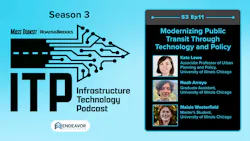




Episode 11 of the Infrastructure Technology Podcast focuses on the future of urban transportation, the next generation of transit professionals and the growing role of artificial intelligence (AI) in public transportation systems. University of Illinois Chicago Professor Kate Lowe joined graduate students Noah Arroyo and Maisie Westerfield to discuss transportation policy, transit equity, mobility justice and emerging technology. The episode explores how younger professionals view AI differently from previous generations, especially in transit planning, customer service, geospatial analysis and safety systems. Gavin, Brandon and Jessica also discuss Bentley Systems receiving FedRAMP authorization for its federal infrastructure software platforms, highlighting cybersecurity and cloud modernization in transportation infrastructure.
Episode length
38:44
About the guests
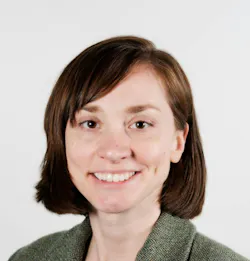
Kate Lowe studies transportation at the intersection of policy, funding, and mobility justice. Her work examines how varied stakeholders and transportation policies interact across different levels of government and how this impacts transportation investments and racial inequities. She also conducts qualitative research on lived experiences of mobility and accessibility for low-income populations and Black and Brown communities.
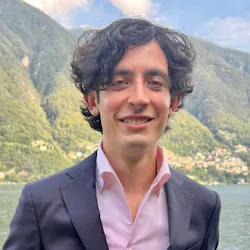
Noah Arroyo is a current Graduate Assistant, where he manages administrative functions for the UIC Urban Planning and Policy department within the college. He is also an intern with the Chicago Transit Authority, where he maintains partnerships with transportation officials, elected officials, Federal Transit Authority representatives, 13 block clubs, neighborhood stakeholders, businesses, and four chambers of commerce for the Red Purple Modernization Government & Community Relations group.
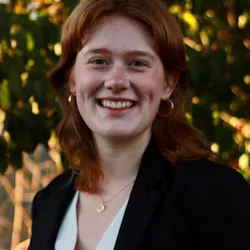
Maisie Westerfield is a masters' student at the University of Illinois at Chicago studying urban planning and policy with a concentration in urban transportation. She has a bachelors degree in environmental management from Indiana University. She is interested in climate resilient transportation, climate activism in young generations, and environmental justice.
Here is a transcript from the episode:
GJ: And welcome to the Infrastructure Technology Podcast. I'm Gavin Jenkins, head of content for Roads and Bridges, and with me, as always, we have Brandon Lewis. He is the associate editor of Mass Transit, and we have Jessica Parks, the staff writer from Roads and Bridges. How are you two doing today?
BL: Good morning everybody. It's a Tuesday, which means it is also podcast day.
GJ: It is Tuesday. That is right. How are you, Jess?
JP: I'm doing great, thanks for asking.
GJ: Alright, well Brandon, we have an interview coming up that you did. Tell us a little bit about that interview. Who are we talking to?
BL: We do. So I sat down with three amazing people at the same time. I sat down with Kate Lowe, who is a professor at the University of Illinois Chicago, along with students Noah Arroyo and Maisie Westerfield, and we talked about the program that they're in that Kate teaches, which is about urban transportation. And we also talked about Noah and Maisie and their studies and the roles that they have in terms of how they are using AI in their studies right now.
GJ: Interviewing three people at the same time is no joke. You have to be a trained and skilled journalist to be able to control three people at the same time.
BL: I think this is probably my third or fourth three-person interview on the ITP, including second this season, so I'm getting better and better at it.
GJ: Okay. Alright, that's good. So before we get into that though, let's talk a little bit of news. Let's talk some news. I'll figure out how to talk properly in a second here, but one of our favorite companies is Bentley and Bentley Systems on April 29th, a couple of weeks ago, they announced that Bentley Systems has achieved a key U.S. government security milestone to help modernize the nation's infrastructure. That's the headline of the press release, but it deals with the FedRAMP authorization, so the project wise, which is a connected data environment for infrastructure, project delivery and open ground, which is geotechnical information management and reporting software. Both are done by Bentley, and they achieve FedRAMP authorization at the moderate impact level. So for those of you who aren't up to date or in the know about that, FedRAMP authorization is a mandatory security assessment and certification program for cloud service providers to prove their services meet rigorous security standards required for US federal government use. So what we have here is a huge step for the state DOT’s and for the USDOT to use project-wise and open ground. And so by providing secure, interoperable and scalable digital workflows, federal owners, it's FedRAMP. So it's basically, it's just the federal level, so I misspoke about the state DOT’s, excuse me, pardon me. But the federal owners can further modernize their infrastructure, digital delivery strategies, improve cross-agency collaboration and adopt emergency practices such as AI, digital twins, connected construction and real-time geotechnical intelligence. So your reactions to this. What do you think, Jess?
JP: I think that the federal government obviously has so much sensitive information, and there's always a risk of using cloud-based software on connected programs, and I think that it's really great. I do love Bentley. I've worked with them a lot, and I think that anything that will help modernize federal processes that are known to take forever is great. However, there is an added duty of care that's necessary. There's just so much room for error.
GJ: Yeah, I mean it is important to have the security standards up to date, absolutely, but also from the tech side of it, it gives our USDOT programs just the advantage of using some really great products by Bentley. No free advertising on this podcast, but Bentley's products are amazing, and they really help build infrastructure around the world, and how Bentley is utilized, and we get to see that, or at least I get to see it every year at the Bentley Year in infrastructure and going to the digital awards, which it happens every October. This year it's in Singapore, so it's one of the great honors to get to go to that conference and see how technology is being utilized on road and bridge projects around the world. Brandon, what do you think?
BL: Yeah, I mean anytime that we can use the technology to, like you said, sort of speed up those federal processes. I think as we've talked about before, the infrastructure and the technology is only going to get better. It's only going to get faster. But as Jessica said, when it gets faster and it gets better, you have to be more aware of the risk that comes with that.
GJ: Right, absolutely, and what you just said there, Brandon reminded me of something I heard recently. Today we are working with the worst version of AI we're ever going to work with. It is just going to continue to get better. Now obviously, as we've said many times on this show, we'd like to see some regulations put in place, so we're not all killed by robots, and I personally don't want to be framed for a murder and then have to go on the run in some sort of minority report fugitive situation, but we're excited to work with the AI as long as the clankers don't come for us. And a quote from Bentley on this, this comes from Julian Moot, chief technology officer from Bentley Systems, who I've met several times and eaten dinner with at the conference. He's an excellent gentlemen. The FedRAMP authorization singles Bentley's longstanding commitment to trust compliance and safeguarding critical infrastructure information while improving how agencies securely share and manage project data in the cloud project wise and open ground provide a trusted digital foundation for federal infrastructure programs, connecting surface and subsurface intelligence in secure cloud environments to accelerate project delivery and improve infrastructure resilience all while meeting the highest U.S. government security standards, so this is huge. This is really great. It's great for Bentley, it's great for USDOT, and there's a lot of hackers out there. There's a lot of things can happen when you're dealing with the cloud, and this gives us the projects a little bit more security.
JP: For sure.
GJ: Alright, so that's our news update. We usually do that at the end. We wanted to get it here at the beginning, and before we dive into this interview, is there anything else we want to say?
BL: Yeah, so let me quickly read you the bios of the people that I am interviewing today. So Kate Lowe, she studied transportation at the intersection of policy funding and mobility justice. Her work examines how varied stakeholders and transformation policies interact across different levels of government and how this impacts transportation, investments and racial inequalities. She also conducts quality of research on lived experience, mobility and accessibility for low-income populations and black and brown communities. She's an associate professor in urban planning and policy at the University of Illinois Chicago. Noah Arroyo is a current graduate assistant, where he manages administrative functions for the UIC Urban Planning and Policy Department within the college. He's also an intern with the Chicago Transit Authority. He maintains partnerships with transportation officials, elected officials, federal transit authority reps, neighborhood stakeholders, businesses and more. And then Maisie Westerfield is a master's student at the University of Illinois at Chicago, studying urban planning and policy with a concentration in urban transportation. She has a bachelor's degree in environmental management from Indiana University. She's interested in climate resilient transportation, climate activization in young generations and environmental justice.
GJ: Okay. I can't wait to listen. We'll see you on the other side. Karina Mazhukina, take us away.
BL: And welcome back to the Infrastructure Technology Podcast. I have three wonderful guests with me today. We're going to have you guys introduce yourselves one at a time. First, we're going to start with Kate Lowe.
KL: Hi, my name is Kate Lowe. I am an associate professor in urban planning and policy at the University of Illinois Chicago. I use she/her pronouns.
BL: Okay. And then next on my screen, I see Noah, so Noah, I'm going to let you introduce yourself.
NA: Perfect. My name is Noah Arroyo. I am the government and community relations intern at the Chicago Transit Authority. I'm also a second year MUP student here at UIC, and for those of you who don't know what MUP stands for, that is the Master of Urban Planning and Policy.
BL: And then we have Maisie.
MW: Yeah. Hi, I am Maisie Westerfield. I'm also a second year MUP student at UIC and a foresight research intern at the American Planning Association, and I use she/her pronouns.
BL: Thank you guys. So all you guys are either students or professors at the University of Illinois, Chicago, and this season on the ITP, we have been focusing on the next generation in the transit space, and we're going to be doing the same thing today. Kate, I'm going to start with you, and we're going to talk about the urban transportation specialization, as well as the MUP degree, which is that urban transportation specialization. So let's start by telling us a little bit about how the program works, how long the program is and what the students actually learn.
KL: Thanks for asking. So we have a two-year graduate program called the Master's in Urban Planning and Policy with the Urban transportation specialization, and the two-year program is really broad reaching. We're trying to give students the content knowledge about city systems and people that they need to think about urban transportation programs holistically, but we also want to give them professional practice experience, as well as technical skills like looking at transportation through spatial analysts and GIS programs. So students really combine that content knowledge with those technical skills and professional practice, and I love teaching in an urban planning program because we think not just about transit in isolation, but how public transit connects to everything from the environment to housing and economic development.
BL: We know of course being in the Mass Transit space, you mentioned about the economic impact with obviously, this zero-emission transit, which is not only happening on the West Coast, but for the entire country, Canada as well. And then just as you mentioned, connecting to everything in terms of housing. There's a lot of transit-oriented development projects out there and a lot of housing programs are working with transit agencies, and it's really something that I did not learn when I first entered the industry. So just to give you all a bit of background about myself, I come from a sports background, so I went to school to be in radio. I wanted to be a sports host, but I had ridden public transit my whole life. So I went to school for journalism. I have a background in journalism and so when this position opened up at Mass Transit, I did feel like I had a sort of a personal connection. I was always interested in transit, which leads me to my next question for our students on the call, Maisie, Noah. Let's start with you, Noah, because I see you again first on my screen. Tell me about your journey with public transit. What fascinated you and why did you want to get into this ever evolving industry?
NA: Oh my gosh, what a great question. So actually, I started riding public transportation when I was a kid. I'm a Chicago native, and I grew up on the west side, so in my community, there wasn't very many opportunities in general, but it was abundant with transportation. So because there was always an abundance of bus services, and there was a train that literally was directly behind my house, I was able to use those networks to go explore different parts of the city and that helped me to get more experiences and really build up my career and that helped me to keep moving forward in life, so I just from a young age kind of grew passionate about it. And then also after high school, I completely left Chicago, and I moved abroad, so I did my undergraduate degree in London. And then after I finished there, I worked in Spain for three years. So the whole time I was abroad, I never needed a car. I exclusively relied on public transportation. And then when I moved back to Chicago, I really wanted to get involved with it because I knew it was such an instrumental part of my life, and I just tried to find different opportunities within it and naturally that drove me to enter this Urban Planning and Policy degree at UIC. And right from the beginning, I was able to get an internship with CTA, and I've been with them for almost two years now, so that's a little bit about my background with public transportation and why I feel so passionate about it.
BL: What about you, Maisie?
MW: Yeah, so a little bit of a different background. I grew up in the suburbs of Chicago, but on the Indiana side, so my experience at public transit has been the commuter rail that goes from Indiana to Chicago. I grew up using that all my life, but that was really my only experience with public transit. I was very car centric. And then when I went to my undergrad at Indiana University, there was a sort of semi functioning bus system in the city, and I just saw how cars and the car-centric lifestyle were so debilitating for people, so isolating, and I saw so much potential for smaller communities to see some more multimodal transit options, and as an environmental management undergrad major, I see a really deep connection between climate resilience and public transit and the potential there for removing cars from the roads and getting people on public transit to sort of save our environment. So coming to UICI really wanted to make that connection between climate resilience and public transit. I've really just gotten into this space in my last two years, but now working at the American Planning Association and doing research, I've been really focusing on how artificial intelligence is changing the space, and that has been another really interesting lens to sort of bring to my perspective.
BL: Oh, believe me. We're going to get to that in a little bit. Before we do, Noah, I want to pivot back to something you had said, which was about your experience abroad, and I had a student earlier this season of the ITP who went to Penn State, but he grew up abroad. And so what I'm wondering from your perspective is obviously public transit's different in the U.S. versus abroad, but were there things that you saw abroad that you go, ‘Wow, here in Chicago we could really use this, we could really need this’, or what were some of the key differences that you saw?
NA: Yeah, I definitely think right off of the bat frequency is a big thing. I remember riding the Victoria Line and having it come every minute, so that's in London, and I thought that was just immaculate. It was such an incredible experience to have just to see how frequently their public transportation is serviced, and I think that really is the biggest difference I've noticed between the overall European attitude to public transportation and the American one would definitely have to be just the perspective on how it is. I think that when I was in London, when I was in Madrid, everybody really sees it as being an integral part of society, whereas I feel like in the United States, there's different attitudes towards it. I feel like we have individuals who are very urbanist, I would say, and they're very for public transportation. And yes, it is important transit equity. And then alternatively, we have folks who really don't see the value in it as much and maybe have a negative perception of it. Even within my family, for example, there are many individuals who see it as being maybe a low-class thing, when in reality it's completely not the case, and it's very helpful to many people from all different socioeconomic backgrounds.
BL: For sure. And I mean, of course you're going to see that, right? I mean, there's no denying that you go to any part of the country, you go to a station, you use public transit, you're going to see some, let's just say, not pleasant things sometimes, and I think to your point, there's this stigma around public transit, maybe it's in the U.S., of safety, and these agencies, in my opinion, at least covering the industry now for the past few years, that has been really an emphasis, especially in 2025, some of our biggest stories were on safety, is that some of the things that maybe, I'll sort of pivot this to the group, is that in your research, have you seen anything different of in terms of making public transit safer?
KL: I can speak to that, but I also want to give space to our amazing young professionals.
BL: Yes, absolutely.
MW: I can start. So like I said, I'm doing research at the American Planning Association right now, and a lot of the things I'm working on are sort of taking an inventory of how the planning field is changing with technology and artificial intelligence, and I think that we're seeing a really big shift in using artificial intelligence as a surveillance tool on public transit and in the name of safety, and while I see the idea behind that as something that's supposed to be helping all, I am still skeptical as to the validity of that from an equity standpoint, from a racial profiling standpoint. I think that the companies that are working in this space are not fully regulated and haven't had the time to develop their algorithms in a way that equitably is catching crime as it happens. I think there are much better ways to be doing that.
BL: Yeah, for sure. Go ahead, Kate.
KL: Oh, I just wanted to lift up something that's happened recently in the Chicago land area, which is, well, I guess it was in Springfield, where our state legislature is, but a really significant public transit bill passed is going to change the structure of our transit agencies and importantly fund our transit, but one element in that is something called transit ambassadors. That's something that's been used in LA and that's folks who help enhance the customer experience more of a customer service than policing role. But one thing I heard the leader of Dallas' transit agency talk about is even having visible cleaning staff made people feel safer, so having folks in the system, both staff and riders, is a kind of bottom up strategy to enhance safety. I'm thinking about what Noah said about trains that come every minute. That's actually a safety strategy because we get into a virtual cycle of more frequency, more riders, more feeling safe and also less wait time when folks might feel vulnerable, and I think one thing that gets left out of the conversation when we think about safety is how normalized the risk from being in vehicles is, so there are different kinds of safety, and I have heard from many folks when I've done research on the south and west sides, which are predominantly people of color communities, there are safety concerns that get in the way of using transit. But a research partner, equ, has some powerful ideas of community-based responses to make communities and hence transit safety.
BL: So speaking of safety, we all know that today everybody's coming out with these new AI inventions. I mean, we are recording this podcast on the Thursday post Super Bowl 60, and I felt like the entire Super Bowl was nothing but AI commercials.
KL: And weight loss ads.
BL: Yes, that too, so I've been saying this on the podcast, and so the listeners are going to be like, oh my gosh, he's saying it again at nauseum, but I have compared AI, and I said, it's sort of like 22nd century technology that's already here now, and I do feel like 2025 was sort of the, it's here now. Oh my gosh. And 2026 is going to be the, okay, now how do we properly use this technology? I don't think it's going to be, oh, AI is going to be used on every project moving forward and all these things being made with AI. It's just not going to happen, and I do think that transit agencies this year are going to sort of look at how can we start implementing this into, as you guys said, our daily systems ridership, safety, security, ect., but I don't think it's going to be this massive upheaval takeover at once. What are you guys seeing, if anything in the AI space that maybe is beneficial or maybe something that you wish you could use some of these interactive tools to learn something more about?
MW: Yeah, I can speak to that if that's okay. I think that what you said was correct is that people are sort of throwing a lot of ideas at the wall right now and maybe not all of them will stick, and I do think that it's not going to be a huge AI takeover, but it will be sort of integrated into some smaller projects at first and seeing how things are going. I know I probably can speak to more to those, but I know CTA has a chatbot powered by AI right now, the Chicago Transit Authority. For people who aren't Chicagoans, that seems to be pretty effective so far. I've also seen a lot of use cases where people are using AI to do service planning and rerouting on the minute real time, and I think that is going to be a really useful application.
BL: I think it's going to be useful for apps, right? I mean, I know here in Cleveland, our GCRTA, sometimes you're sitting there going, is this train or bus going to come? There's no updates and then randomly it comes, so I think pushing out the notifications, the server updates, I feel like that could be a big time saver.
MW: Yeah, absolutely.
BL: Noah or Kate, did you guys have anything else that you wanted to add on that front?
NA: Well, I guess I could take it from here. I guess I suppose coming from my point of view within a transit agency at the Chicago Transit Authority, I feel like in general with public sectors, they tend to be maybe a little bit behind the curve technologically, and I could speak on that front, just seeing how things operate internally and just from my experience also and having other peers who work at other agencies, again, it does seem like there's sort of a slower integration of newer technologies to the point where I could even talk about my computer at CTA, it's probably decades, at least a decade old, you know what I mean? And it's like we don't necessarily have the same sort of funds to integrate things as much as the private sector may necessarily, so I do feel as though there is that sort of speed bump, perhaps in the usage and the integration of AI or just any sort of technology just for the simple fact that public agencies maybe have less funds in general, and therefore they have less lence, almost maybe to embrace these sort of new technologies.
BL: Yeah, it is weird, right, because AI was always here. So as a kid, I'm a gamer, so I'm playing against the computer or whatever that is technically artificial intelligence. It is AI, it is the CPU, but I feel like over the last couple years that ChatGPT and Claude and Co-pilot and all these other tools have come about, it's like, oh, now we're almost forced to use this or have a name for it, and in my opinion, we should just not be forced to have a robot do everything for us.
MW: Yeah, I agree. From a planning perspective, Esri, who is the main provider for GIS services for planners, they're integrating AI into their services in the backend sort of silently, and I think that's going to really change the way we do geospatial analysis, and I agree with you that I'm not really convinced that we need to be offloading all of our mental power and capabilities onto a computer.
BL: Alright, so Kate, now I want to dive into you a little bit, and I want to talk about your favorite part about helping students become active in the transportation field.
KL: Well, it is really a privilege to work with the amazing students that come through our program, so it's hard to say one thing is the best because there's so many amazing things about working with these future leaders. Well, they're leaders now, but leaders on their way to even more prominent roles in the field, but I like working with students who come from a whole range of motivations and letting them know there's a place for them in public transit. Some people may really want to model bus stop consolidation. Some people may want to work in public engagement in transit. Some people may be more quantitative or technological while other people may be more interested in policy and building coalitions, so I'm really excited to let them know that there's a really broad range of roles they can take in public transit and be part of the community, and I am also really excited to help diversify the field and let people know that they're welcome to be part of the public transit world.
BL: We're speaking of diversifying the field, Noah, Maisie, you guys are, as I've been telling all of our young guests in the ITP this season, along with me writing about the industry, we are sort of the next generation of public transit, so you guys can tell me, Noah, I'll let you go first. What are you looking forward to studying more, learning more about or diving into as your career here progresses?
NA: Oh my goodness. So I definitely am interested in the more policy political side of things. So again, being in government community relations, I definitely look to expand my network, of course, with our constituency, and not just the constituency, but also looking at our stakeholders that are prominent in helping to move policy forward that's going to create more resilient transportation for everybody, so I think right now I work on a project called the Red Purple Modernization, and it's one of the biggest in Chicago transit Authority’s history. And right now what we're working through is actually creating requests for proposals and then releasing them to the public for our TOD sites, which we had used for construction over the course of this project, so with new legislation having been passed recently, that allows transit agencies to have a little bit more authority over different types of infrastructure that aren't necessarily just transit naturally. I'm curious to learn all about it from the backend and continue to expand my knowledge about how the spatial arena really ties into the transportation side and how housing could be also tied into transportation and how we could potentially find new avenues to fund our transportation network to ensure that it's more not only equitable, but more resilient. So that's kind of what I'm hoping to continue to build off of in future years in my career.
BL: You don't have to expand on this a lot if you don't want to, but I do think that funding is going to be sort of the word in transit in 2026 because of the service reauthorization and what's going to happen with the Infrastructure Investment and Jobs Act that ends in September. We've talked about this a little bit at the start of the ITP this season. I think those two big legislation pieces are going to dictate positively or negatively, and who knows, it could impact some of the projects in the CTA currently and in the future, but it is going to dictate what transit looks like in 2030, 2040 moving forward. Alright, Maisie, how about you?
MW: Yeah, I think speaking to one of Noah’s final points about transit sort of being integrated into lots of other planning fields, I think that's a theme that I'm seeing in my peers and something that I feel deeply that we need to do more is integrate transit into the rest of our systems more effectively, and I think that will, like Noah said, sort of increase how we can get funding, but I've also been really inspired during my time at UIC by Kate's work with Mobility Justice. I took a very formative studio with her my very first semester looking at transit equity in the North Lawndale neighborhood, and I find that work of sort of community, deep community engagement and surveying and auditing and those sorts of things about people's lived experience on transit and the connections they form to be really engaging and something that we need to understand better if we're going to make service better.
BL: Can you explain a little more about that? So are you actually going out and interviewing residents in that community?
MW: So for the studio that I took a part in, we didn't do surveying directly, but I know that's been a big part of Dr. Lowe's work and something that I have experienced in outside of that studio is surveying, especially younger generations, and the other thing that our team did was go and bus stop, audit, stop by, stop and assess the conditions of the stop and how safe they felt, both from a public safety place, but also an environmental safety place, and I find that work to be really unique and something that I would really like to continue doing.
BL: Alright. Well, hey, Noah, Maisie, Kate, I appreciate all of you today for joining me on this episode of the Infrastructure Technology Podcast, another three for one interview for me. You guys all did fantastic. Thank you so much.
KL: Thank you for having us.
GJ: And we are back. That was an excellent interview by our one and only Brandon Lewis, and he was talking to Kate Lowe, Noah, how do you pronounce his last name?
BL: Arroyo
GJ: Arroyo. And Maisie Westerfeld from the University of Illinois, Chicago. Jess, what did you think of the interview?
JP: I thought it was really interesting. They each had three very unique perspectives. AI and surveillance is a really interesting topic, as we kind of said on the other side of the episode, that when you're dealing with, when companies are dealing with the federal government, there's an added duty of care. When AI is being used to surveil you and U.S. citizens or the public, there's an added duty of care when they're in transit systems, so it's just really interesting to hear how technology and AI are working, are being used in these settings and what they're doing to try to protect us or not protect us.
GJ: Brandon, great job. And you've done, in the past, you had complete and total control of three people who all wanted to talk, and you did a great job interviewing them. What are some of your thoughts coming out of the interview?
BL: Yeah, so I think for me, on the transportation and technology side, and they talk about the program a lot about how it's an urban transportation program. We sort talk about the difference between the urban and rural transportation, which I found fascinating. I also found fascinating that Noah talked about his work at Chicago Transit Authority, in fact that CTA is starting to use chat boxes, which is again another way of using AI. It's not necessarily at the transit station itself, but it's accessibility. It's on websites, it's on apps, being able to connect with somebody in real time. I think those are some of the ways that transit agencies more so are going to use AI. We've already talked about that. There's these smart bus shelters out there. We've done interviews on that. We've talked about obviously autonomous vehicles and things like, which is a whole other subject, but I think when it comes to AI, and this is the thing that I have been saying, and I've sort of reiterated here in interviews on this season, is that AI in the transit space, well, it's coming. It's sort of a slow use of it, and I think people are using it in ways to affect the back end of the agency to make operations better. It's not necessarily at the front of the agency to where it's affecting day-to-day bus and rail operations at this point right now.
GJ: So the chat box, so is that if, tell me a little bit more about that. I hate going into chats where it's AI on the other end. If I have to do some kind of customer service situation, and there's no human being to talk to, and I have to go to a message situation on my phone or on my laptop and it's like, here, ask for help, talk to AI and get help from the clanker, I am frustrated already.
BL: See Gavin, I actually completely disagree with you. I have the opposite experience with customer service. If I have to talk to a person, I lose my mind because these people, even when they work at these companies, I swear they have no idea what they're talking about, and I can't get a fix for anything. It's a lot quicker for me to get it fixed from an AI chat box than it is to talk to a real human.
GJ: But have you actually helped?
BL: Yes, I have been helped.
GJ: You have?
BL: Yes.
GJ: All that in my experience, all the clanker does is either points me to a different clanker or a website where I have to read, and I don't want to read. I read for a living, or I have to schedule a time or a way to talk to a human being, and I cannot stand. I want to know the answer right then and there, and I just think that the chat box delays it, so I don't know, but great interview Brandon, and thank you for listening. Please email us if you have any comments, questions at [email protected], and we'd also like to thank our parent company, EndeavorB2B, for giving us this platform and the podcast. We'd like to thank you, the listener, who's made it this far and has not turned us off once you've realized that Brandon and I are jerks who've lost our cool at customer service reps, but I think that is a pretty common thing up there with being taxed. Everyone has lost their cool at customer service.
BL: Death, taxes and yelling at customer service.
GJ: Alright. Well, I'm Gavin Jenkins, head of content for Roads and Bridges.
JP: I'm Jessica Parks, staff writer for Roads and Bridges.
BL: And I'm Brandon Lewis, associate editor for Mass Transit magazine.
GJ: This episode was edited by our producer Karina Mazhukina, and we will stay tuned. We'll see you next time. We'll be back next Tuesday. But until then, goodbye.
About the Author
 Brandon Lewis
Brandon Lewis
Associate Editor
Brandon Lewis is a recent graduate of Kent State University with a bachelor’s degree in journalism. Lewis is a former freelance editorial assistant at Vehicle Service Pros in Endeavor Business Media’s Vehicle Repair Group. Lewis brings his knowledge of web managing, copyediting and SEO practices to Mass Transit magazine as an associate editor. He is also a co-host of the Infrastructure Technology Podcast.