Infrastructure Technology Podcast: Building Phase 1 of NYC’s Second Avenue Subway
Key takeaways
- New York City's (NYC) Second Avenue Subway a massive undertaking: Mass Transit Associate Editor Brandon Lewis interviews the authors and editor of New York City's Future Second Avenue Subway: Building New York City's Most Famous Thing Never Built. They discussed what delayed the completion of the project for nearly a century.
- Building a subway in the world's densest urban environment: Co-author of the book Bill Goodrich reveals what made Phase 1 so uniquely difficult to build.
- The domino effect: The guests explain how the Second Avenue Subway unlocked East Side Access, Grand Central Madison and the Hudson Tunnel Project.
- NYC’s infrastructure: Co-author of the book Dan McNichol reveals what surprised him the most about NYC’s infrastructure while working on the project.
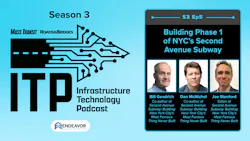



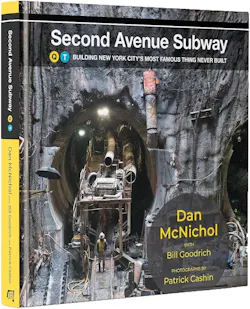
On this episode of the ITP, Mass Transit magazine Associate Editor Brandon Lewis sits down with Dan McNichol (bestselling author and award-winning journalist), Bill Goodrich (transportation infrastructure executive and licensed PE who served as program executive for Phase 1 of New York City’s Second Avenue Subway project) and Joe Stanford (editor and former federal transportation and energy analyst) to discuss their new book, New York City's Future Second Avenue Subway: Building New York City's Most Famous Thing Never Built — a 350-page hardcover featuring over 256 mostly unpublished photographs on Phase 1 of the project.
Episode length: 39:31.
About the guests
Dan McNichol is a best-selling author, award-winning journalist and public speaker known for chronicling America’s most significant infrastructure projects. A contributor to National Public Radio and a former White House appointee focused on transportation policy, he has also served as chief spokesman for major projects, including Boston's Big Dig, California's High-Speed Rail and the reconstruction of the San Francisco-Oakland Bay Bridge.
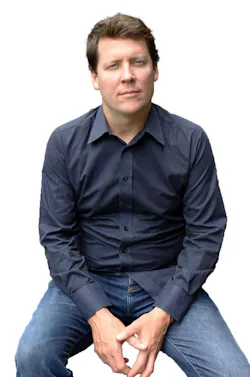
Bill Goodrich is a transportation infrastructure executive and licensed professional engineer with more than 40 years of experience in engineering and construction management. Most recently, he served as executive vice president and senior program executive at the Metropolitan Transportation Authority, overseeing Phase 1 of the Second Avenue Subway and East Side Access, including the opening of Grand Central Madison. He previously contributed to the Fulton Transit Center and Boston’s Big Dig and is a graduate of United States Military Academy with an MS in civil engineering from Massachusetts Institute of Technology.
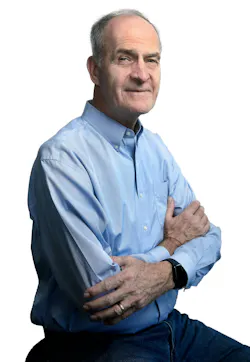
Joe Stanford is a strategic communicator and editor with decades of experience in America's infrastructure, including work with the U.S. Departments of Energy and Transportation. He has worked as transportation systems analyst, energy technology specialist, writer and editor, with a constant focus on communicating difficult and important concepts to key stakeholders. He has a master's degree from MIT in System Design and Management, focusing on complex socio-technical systems, with a specialization in transportation and urban planning.
About the book
A hundred years of planning. A decade of construction. New York City's Future. Second Avenue Subway: Building New York City's Most Famous Thing Never Built is the story of the past, present and future of New York's newest subway line. This 350-page hardcover book, featuring 256 mostly unpublished photographs, tells the story of the multi-faceted challenges faced by critical infrastructure projects, and how Phase 1 of the project was finally completed through the grit and determination of everyone involved.
Here is a transcript from the episode:
BL: Welcome to the Infrastructure Technology Podcast. I am Brandon Lewis, the associate editor of Mass Transit magazine, here for this episode. Today, we're going to be doing a little bit of a different format, as Gavin Jenkins, head of content for Roads and Bridges, as well as Jessica Parks, the staff writer for Roads and Bridges, they are not here in this intro. They're going to join me in the outro today to break down an interview that I did with the authors of this book, known as New York City's Future Second Avenue Subway: Building New York City's Most Famous Thing Never Built. And this book is a 350-page hardcover that features 256 stunning and mostly unpublished photographs, and it tells the story of the multifaceted challenges faced by critical infrastructure projects and Phase 1 of the New York City’s Second Avenue Subway. The authors of the book, Dan McNichol, who is a bestselling author, award-winning journalist and public speaker, who also wrote a column in the past for Roads and Bridges, as well as Bill Goodrich, who is a transportation infrastructure executive and licensed professional engineer, they joined me along with Joe Stanford, who helped edit this book, and Joe has also worked before with the U.S. Departments of Energy and Transportation. He has worked as a transportation system, analyst engineer, technology specialist, writer and editor in the past. So Gavin and Jessica are going to join me to react to my interview. But first, before we get to the interview itself, if you have an inquiring question that you want to email us about transit, about roads, about bridges, about what movies I've never seen, email us at [email protected]. Also, make sure you follow us on all the socials. Mass Transit and Roads and Bridges are available on X, LinkedIn, Facebook and Instagram. Without further ado, the great Maz, take us away to my interview with Bill, Dan and Joe.
BL: And welcome back to the Infrastructure Technology Podcast. And I am here today with three wonderful people to talk about a book known as New York City's Future Second Avenue Subway: Building New York City's Most Famous Thing Never Built, and I am here with the authors of that book, Dan McNichol and Bill Goodrich, as well as Joe Stanford, who helped edit this 350-page massive book on the Second Avenue subway. Bill, let's go to you first. Welcome to the Infrastructure Technology Podcast.
BG: Well, thank you, Brandon. I'm excited to be here. My name is Bill Goodrich. I was the program executive for Phase 1 of the Second Avenue Subway, and I'm also a co-author with my partner here, Dan McNichol.
BL: Alright, Dan, let's go to you. Welcome to the ITP.
DM: Brandon, thank you. It's really exciting to be here, and with you as well, Bill and Joe. Yeah, I have to say, I wrote for Roads and Bridges magazine. I did several pieces, a front page, front-story piece about the I-35 W Bridge collapse and talked a lot about the positives of bridges and roads along the way with the column. So thanks for bringing me back into the fold, now as a transit advocate. I worked at the White House on transportation policy. I joined the big dig up in Boston when it was a massive project. That's where I met Bill Goodrich, and I worked on the big dig at the same time. And lastly, I've traveled around the country looking for a story, and this is the story that I landed on after probably a 10-year journey into what would be the next book I would write.
BL: And then let's go to Joe Stanford, who, Joe, you helped edit this book.
JS: I did and thanks for inviting me and including me, Brandon. My background is in, I've worked for the federal government for most of the last 20 years in the Department of Transportation and the Department of Energy. So a lot of exposure to infrastructure, but a lot to sort of advance technologies, driving the cutting edge of infrastructure. And as you can imagine, it's kind of a dream job to work with this crew of Bill and Dan. We've got Bill with a deep technical background and experience, and Dan as a great visionary and sort of a thought leader in the field of infrastructure.
BL: So in the description of this book, you guys say that this 350-page hardcover book, which by the way, I have right here in front of me. You guys, I know this is an audio only podcast, but we are here on video. This book is a very thick, hardcover book, but it's got really fascinating, over 250 unpublished before photos and tells the story of the multifaceted challenges faced by critical infrastructure projects and how Phase 1 of the Second Avenue Subway was finally completed. Again, that is the description of this book, the Second Avenue Subway: Building New York City's Most Famous Thing Never Built,. I think when you talk about writing a book, obviously any book anybody writes in any industry, it takes planning, it takes time, it's a long process. So what was sort of the initial inspiration to work on this project and to write this book?
DM: Brandon, when I was driving around the country, I was in a 1949 Hudson saying all of America's infrastructure is old, rusty and energy defunct as this original Detroit LEDs lead. And it became a rolling metaphor for the broken infrastructure and the lack of investment in it. But what I was really doing was looking for my next book, looking for the best possible story to write about. I'm fascinated by infrastructure. Infrastructure is critical and vital, and I think it's important to breathe a lot of life into the stories behind infrastructure, so we understand how they are built, these projects. When I was doing that, the New York Times picked up on this. President-elect Trump in 2016 was on his way to the White House, and the New York Times invited me to write a top 10 story about infrastructure to try to entice President Trump. It was a front page story.
It said, ‘Trump size idea for a new president build stuff’. Bill Goodrich saw that article. We reconnected after about 20 years. He invited me to New York to a project he was then leading, which was East Side Access, now known as Grand Central Madison, and I was talking with Bill for over a week about possibilities and ideas. It was a real exciting connection with Bill. He invited me in to speak to his team at an all hands meeting, about 600 people in total, 500 people, consultants and MTA employees. Because of those conversations with Bill, I was able to really grasp the idea that Second Avenue Subway is emblematic of all of our infrastructure successes and challenges and failures. Bill convinced me that not the project he was leading, that he invited me into speak about the East Side Access Project. I thought that was a much more intense and detailed project, but he really convinced me that the Second Avenue Subway was the real story. And then we began working back in 2016, if you can believe it, 10 years ago on creating this book, and through grants of vow of poverty, we plowed through 10 years of research and then Joe appeared at the miraculously right time to help bring all this into a readable, exciting, beautiful book that I am certain is one of a kind.
BL: Bill or Joe, did you guys want to elaborate on any of that?
BG: Well, I mean, yeah, I guess when Dan and I were talking back, and it seems hard to believe it was 10 years ago, but it was that long, but I realized that I was getting ready to retire from the MTA, and I had been a consultant to public agencies on public infrastructure projects for my entire career. I got a chance to go to work for the MTA late in my career on Second Avenue Subway and East Side Access as well, but I realized that the projects really aren't complete without winning the hearts and minds of the riding public. We do a great job of building projects when you're working for an agency, consultants, contractors, everybody that's involved in the transit industry, but we don't do such a great job at communicating our successes, and I thought this was a great way to talk about a project that was unique in New York, had a very long storied history and why not through a book with amazing photographs that our photographer Patrick Cashin. Combining that with telling the story, the history of Second Avenue Subway and interviewing some of the people that worked on the first phase and sharing their story, sharing our success. There's a mindset that mega projects cost too much, they take too long and that seems to be what the public generally believes about mega projects, and we're trying to change the narrative of building big, and this book is one step in that process.
BL: So Joe, then how did you come onto the scene?
JS: Well, so Dan invited me. He was looking for an editor and actually I think I have an interesting perspective to provide on this because I came to it after it was mostly baked, probably 90% of the manuscript was written when I arrived, and we hadn't written chapter one yet. But so I started looking at chapter two, and I was sort of just dipping my toes into it, and I thought like most people, I didn't know anything much about Second Avenue Subway except it was incredibly expensive, and the stations are beautiful and a different kind of station for New York. That was really all I had in my head, and I thought, ‘Well, this will be interesting. It'll be a neat book about construction’. But I started reading chapter two, and I fell into this amazing story, this incredible history, and it's almost like you can't make this stuff up. There's drama and heartbreak and tragedy and ups and downs throughout the whole story, and I got halfway through the first chapter, and I was like,’ I'm in. Okay, I am 100%, I want this book to succeed’ because I just kept thinking America needs to read this book.
BL: And on that topic, guys, again, I don't want to do a full deep dive in because I want people to actually buy this book and read it, but let's talk about what made, and obviously the project is now in Phase 2, so we're going to stick to what you guys wrote about in Phase 1. What made that phase such a specific challenge to complete?
BG: Well, I mean, I would say there were many challenges, but I think one of the biggest challenges is we're trying to build a new subway line in the most dense urban environment in the United States. It is pretty incredible. I mean, if you go back to the census at the time there's 200, over 200, I think it's 211 census tracks in New York City with a population density of 100,000 residents per square mile, and there's only six other census tracks in the country that have that kind of density. There's one in San Francisco, there's one in LA, one in Boston, and the other three are prisons, so it's kind of interesting. We have three federal prisons that are part of that density, but that was the biggest challenge. I mean, we're trying to build, doing heavy civil construction, tunnel boring mining, caverns and building these stations. We're right in the middle of Second Avenue. Second Avenue pre-construction is six lanes wide with 20 foot wide sidewalks, and we've got to maintain pedestrian traffic, we've got to maintain vehicular traffic during construction. You're obviously not going to shut down the Upper East side during construction so to build this kind of a project in that kind of a densely populated area, I think was the most challenging part of the project.
BL: Dan, what about for you?
DM: What was the most challenging part of the project for me?
BL: Yes.
DM: Then you're talking about creating the book, right? Or are you talking about the actual subway?
BL: No, just the actual project itself. What made that project so challenging?
DM: I think Bill was hitting on this, that the engineering, the work is challenging anywhere, but when you look at it as in Manhattan on Second Avenue, where 200 feet exists between building faces and building faces on either side of the avenue, you've got nothing but solid, manmade, concrete, asphalt, utilities, road life and everything in there got disrupted. Everything had to be accounted for. Lots of fragile buildings that had to be supported and built up at the expense of the owner of the subway. The MTA had to pay for and provide what it needed to make sure these buildings didn't collapse. They needed to provide all sorts of access during the ripping up of utilities, and we're talking gas lines and water lines and electrical lines and phone lines, abandoned lines, all that morass had to be gotten through, pushed aside, allowed to keep running while they built an even bigger temporary structure called the launch box, so they could launch this 450-foot long tunnel boring machine down Second Avenue twice to build the east and the west tunnels going from north to south and then again north to south, and I think that's what really struck me was all the humanity and all the history of manmade structures that had to be pushed aside, held up, accounted for and provided.
JS: Actually, if I could just jump in, and what these guys talked about is specifically the challenges of building Phase 1, but in case you were looking at the historical, why did it take 88 years? You go back to the twenties when the plan was laid down, then you had the Great Depression, then you had World War ii, then you had the diversion of all the federal funding for highway projects, and then you had the city's financial crisis. So there's this whole macrocosm, all these macro issues that surround it. And then when you finally overcome all those challenges, then you actually have to build this thing, which is incredibly difficult as these guys described.
BL: Yeah. So you guys, what was one thing that as you were writing this book, and for Joe as you were editing it, that you learned along the way? Maybe was there something that you didn't know that surprised you?
JS: Bill?
BG: You want me to start? Okay. I guess the one thing that I learned, and it really came about through an interview we did with Tom Wright. He's the executive director for the Regional Plan Association in the metro New York area. And during the interview, he talked about, and we talked about it in the book as a result of the interview, but he talked about the domino effect of Phase 1 of Second Avenue, and it was something I didn't realize at the time because I was so focused on the project, but the interesting domino effect of Phase 1 is that we have what's perceived as a very large transportation system in New York, and we don't realize, don't appreciate how interconnected the transportation system is and Second Avenue subway phase one and the RPA was always advocating that it was critical to any of the other transportation projects or many of the other transportation projects that needed to be done in the metropolitan area and the Lexington Avenue line. Everyone was aware that was going to be the immediate benefit, a reduction of the congestion on the Lexington Avenue subway line, taking ridership off of that and transferring at least some of the ridership to this new Second Avenue Subway. The domino is that it enabled East Side Access to be built and to go into revenue service. East Side Access is going to provide or has provided railroad access to Grand Central Station, and as we know prior to that, all of the Long Island Rail Road traffic that came into Manhattan only came into Penn Station. So now for the first time, they could transfer some of their ridership from Long Island to Grand Central, but the people arriving at Grand Central have still got a transfer to go somewhere within the system and where are they going to transfer to on the subway? They're going to transfer to the Lexington Avenue Line. So there needed to be capacity on the Lexington Avenue Line so that enabled East Side Access to go into Grand Central Terminal. In turn, that reduced the amount of traffic, the amount of platform capacity being used at Penn Station, and that enables Gateway. Gateway of course is the current project building two new tunnels under the Hudson River, which Amtrak is building in conjunction with the railroads there, and that's going to double the under river capacity and provide some redundancy for what was perceived as a bottleneck in the system where you only had two tunnels over 100 years old, which were also damaged by Superstorm Sandy, and with that project, they're going to be coming into Penn Station, and they needed some relief in Penn Station in order for Gateway to proceed, so it was interesting to me to learn how Second Avenue Subway was linked to the success, not only of the full line, but to East side Access and Gateway.
BL: Dan, what about you?
DM: There's so many things that I came across, but really the core of it, to build on what Bill was just saying, I didn't realize that Second Avenue was the first line transit line elevated to run up and down the island. Second and third Avenue lines were the first to go from lower Manhattan to up to the Heartland River to the north. And that every, in the 35 years that they were building the New York subway system, because the whole thing was built until recently, the whole subway system was built between 1905 and 1940 and then it stopped. That was a mind blowing fact to me that it had not been expanded. New lines had not been added to the subway system until Bill and his team completed these first three lines on Second Avenue, so this is the first expansion, and it's almost a 100 years late. That was mind blowing to me that these are deep rock and that is new to New York. That's exciting. The tunnel boring machine, Brandon, the tunnel boring machine, the very first tunnel boring machine in New York City was to build a 63rd street connector tunnel. That connector tunnel connected to the trunk line that was going to be Second Avenue Subway. The subway on Second Avenue has always been needed. It has never been built. It’s this ghost line that really does not exist, but it needs to exist in New York City, so that life can come about every time something happens on Second Avenue with the subway, it's transformative. Like Bill said, you build Second Avenue Subway, those first three stations, you unburden the Lexington Avenue Line, one of the busiest transit lines in the world. You also create this very positive benefit of now we can build Grand Central Madison. Grand Central Madison allows Penn Station to go forward. That's that domino effect. But really one of the most mind numbing parts, because I've studied the mega projects and worked on them and worked for them and believe in them, is that it's almost impossible to bring these things to an end just like it's almost impossible in this country to begin one landing. The plane, finishing the project, wrapping it up is as challenging as anything else along the way on the project, and Bill was able to witness that I think for the first time in his life, seeing a governor come into the subway systems, counting hardhats, getting involved in pushing and pushing and pushing to close this business down, so he could have a ribbon cutting on time. And regardless of the motives, the project was finished on time, on budget, underneath this timeline that Bill managed.
BL: Alright guys, we'll wrap it all up on this. Obviously transit enthusiasts are going to, I think, be fascinated by this book, but if you were to all give one reason to go out and buy this book, what do you think maybe someone who's not familiar with transit, but maybe is interested in say, infrastructure or just New York City, what would they find maybe an interesting fact or something, Joe?
JS: Well, actually I first I'd like to answer your question, but also I think the train enthusiasts and the transit enthusiast really should, there's a big motivation for them to read this. I know it's in their wheelhouse, it's in their world already, but I think that's the very reason why they should be reading it is because when you read it, and I am a transit enthusiast. I worked for the Department of Transportation, and when you read it, you realize how it pulls together all of these themes and all of these challenges, and it does it in such a good way, and I think it addresses, I think this book could have a very important role in addressing what I like to think of as the enthusiasm gap, and that is we talk about all these mega projects, and there's all the trouble and the difficulty in building them, and they get delayed, and they cost too much, but there's not enough enthusiasm behind what we're going to get out of them. There's not enough vision, there's not enough passion for, ‘My God, when this thing gets built, life is going to be amazing’, and I think your transit readers and listeners, they get it. They'll be able to read this book and see what this massive potential is and kind of use this book as a tool to help get the word out that there is this amazing potential, and it links to this better billion proposal that's being floated around that there's this amazing potential for expanding subways in New York and it all branches off Second Avenue subway. So that's my answer for the transit enthusiast, and maybe I'll let the others talk about the messages for the rest of the people.
BL: Bill, Dan, go ahead.
BG: Well, I would say, I think the transit enthusiast would really get an appreciation for the history because we do go back, and we talk about when the second and third avenue elevated lines were taken down, and there was a promise to build Second Avenue Subway as their replacement, and I think they'll find it fascinating. We even include the photographs from the 1970s when the construction was being done, and we got those out of the archives from some people that were willing to share that with us, and I think seeing the pictures from that time hearing the interviews, we had one engineer that was working for a contractor at that time, unfortunately, a contractor that actually went bankrupt on their portion of the tunnels. But there were three key sections of the tunnels that are being utilized in phases one and two that were constructed in the 1970s, and I think learning about that and hearing about that, seeing how the first tunnel is incorporated as the tail tracks for phase one just north of the 96th Street Station. And then in Phase 2, which we do talk about in the book, in one of the final chapters, we spend one whole chapter on what Phase 2 is all about, and anyone that has an interest in Phase 2 will be able to take a deep dive into that chapter, but there's two tunnel sections in the Phase 2 area that are being incorporated into two of the stations that are part of Phase 2, so I think to me, that would be what transit enthusiasts would take away.
BL: Dan, go ahead.
DM: Yeah, thanks. I want transit enthusiasts to read our book because there's nothing like it because someone like Bill learned while writing it. So no one knows anything really about this yet. And that's what's so exciting about this moment. But this book will, I think, ignite the interest and the excitement. That's our hope, anyway, around the need to think bigger. ‘My God, why aren't transit enthusiasts demanding that the Second Avenue Subway be built in its entirety right now instead of piecemeal, instead of phases, instead of hoping and wishing’, demanding that it be built, demanding that this tunnel that was supposed to be built a long time ago be completed because it'll bring life to Midtown, which is going through its own commercial real estate crisis right now. It'll bring life to lower Manhattan. It'll bring life to the alphabet city. It'll bring life to lower Manhattan, as well as upper Manhattan along the entire line of between Eastern West up in Harlem. There is so much transformation that will take place when this line is completed. It's insane that it's not being built, that it hasn't already been built.
BL: Alright, well, thank you guys so much. And before I let you go, Joe, maybe you'll be the expert on this. Where can our listeners find this book and go get it?
JS: Well, we are on Amazon, so if you go to Amazon, look up Second Avenue Subway book, and there's another book, but ours should come up in the top two listings, and I also meant to tell everybody they should check out our Instagram feed because there's a beautiful video in there that explains this very complicated domino effect that Dan and Bill talked about, so if your listeners are on Instagram, go to Second Avenue Subway book is our handle. But yeah, so it's on Amazon, but you can also buy it directly from us at bigdigproductions.com.
DM: And Brandon, could we just say this Upper East Side where the Second Avenue Subway lives, the Barnes and Noble store there has been so fantastic and so supportive. We're doing an event there April 22nd, but really what's important is that it's available for them to touch and look at. It's also available at the Transit Museum Bookstore at Grand Central Station at Grand Central Terminal.
BL: And I do also want to shout out Patrick Cashin because the photos in this book are, as you guys have already said, absolutely stunning, tremendous. Some of these, the description of the book says they've never been published before this book, so if you want to get some never seen before photos of Second Avenue Subway, this is the book for you.
JS: And we just found out yesterday or two days ago that the book has won a national award for Patrick's photography, so they’ll be news about that.
BL: Congratulations to you guys. Again, thank you Bill Goodrich, Dan McNichol, Joe Stanford for joining me today on the Infrastructure Technology Podcast.
DM: Thank you, Brandon.
JS: Thank you.
BG: Thank you.
BL: Okay, and welcome back. That was my interview with Bill Goodrich, Dan McNichol and Joe Stanford. And I am here now with Gavin Jenkins, head of content of Roads and Bridges, Jessica Parks, the staff writer from Roads and Bridges. Guys, we mixed up the format a little bit today for the ITP. Welcome in. What did you think of my interview? Gavin, we'll start with you.
GJ: I just want to commend you because interviewing three people is not easy. A little inside baseball for the non journalists out there, usually it's a one-on-one interview, two at the most, three is really hard because you want to mix it up. You want to give everyone a question, but you want to also keep it conversational, and I think kudos to you that it seemed like a really good conversation, and you did a great job with the interview. Having said that, I was kind of disappointed. I didn't hear anyone talk about the oozes. Anyone who's seen Ghostbusters part two knows that there is ooze in the subway tunnels underneath New York City, and it's where all the anger and hatred comes from, all the attitude. The New York attitude, it filters up through the ooze that is in the city. There's rivers of it. I saw Dan Aykroyd fall into it as a child watching Ghostbusters part two, and you guys didn't mention it. In your research, is there anything about the ooze in the book?
BL: Not that I can remember.
GJ: Unbelievable. But no, I thought the history of New York City subway and in Second Avenue especially is fascinating, and it seems like something I definitely want to read, too. Jessica, what did you think?
JP: Yeah, I mean, this project's been ongoing forever, and it's just such an endeavor to build such an intensive project in the middle of Manhattan Second Avenue. I thought that was so interesting. Second Avenue already is so heavily trafficked and such a populated area that it must just take so much moving parts to be able to complete a project of that scale.
BL: So the authors of this book, Bill and Dan, were just going to be on the podcast, but Joe Stanford, who helped edit this book and helped set up this interview, actually messaged me the day of and said, ‘Hey, can I hop on this podcast with you because I feel like I have a really good perspective on what the transit enthusiasts may get out of this book’. And that's one of the last things that we spent and talked about on is for somebody in the transit industry that covers this, they know all about the Second Avenue project because it has literally been planned since the 1920s, and it's gone through the Great Depression. It's gone through World War II, it's gone through all these different phases of planning and then to finally get it implemented and now the fact that here we are today in 2026, and while Phase 1 has been completed for about, a little bit less than a decade now, Phase 2 is still ongoing and so this is a project that literally by the time Phase 2 is done, when you look at from the idea of implementation to the completion of the entire project as it is, it would be about a century long.
GJ: That's incredible. Insane. It's such a massive undertaking, and there's also so much work that still needs to be done on other parts of the New York City subway beyond Second Avenue, and if you go to other cities around the world, their subway systems are, I don't want to say better than New York City’s, but they're better, but what's interesting is that New York City subway has a history that is rich, and they continue to work on it, and there's a lot of work that still needs to be done.
BL: Well, and we talked about this too, right, the impact of this project and how it impacted East Side Access, now also known as Grand Central, and Penn Station and the Hudson Tunnel Project and everything that's going on right now, and these massive projects, and we say it all the time, whether it's in writing, or whether we're reporting on it here on the podcast, these are massive undertakings that take decades and decades to complete. But yeah, if done right, the infrastructure of these projects are going to make mobility in these cities, not just in New York, but everywhere for decades and decades to come.
GJ: Yeah. Alright, well thank you so much for that wonderful interview, Brandon. We're doing a different format today, so we're going to wrap it up there, And if you want to email us, be sure to remember to email us at [email protected]. and why don't you take us out, Brandon?
BL: Yeah, so thank you Gavin. Thank you Jessica for joining me. As Gavin said, if you guys have anything interesting to say about this interview, or if you want to email us about any movies that I haven't seen before, make sure to send in those emails, as well as follow us on social.
GJ: You've seen Ghostbusters, right?
BL: I haven't.
JP: I have not seen Ghostbusters.
GJ: Neither of you have seen Ghostbusters? And so you have no idea about Ghostbusters part two, where there's ze in the subways of New York?
BL: Nope.
GJ: Oh my goodness. Well, before we go, we have to thank Endeavor B2B, our parent company for providing us the podcast, and also Maz, our editor. We've got to thank Maz, who is Karina Mazhukina, the digital content specialist for Roads and Bridges, who edits this. And with that, Brandon, I'm Gavin Jenkins, Jessica Parks, Brandon Lewis. And until next time, goodbye.
About the Author
 Brandon Lewis
Brandon Lewis
Associate Editor
Brandon Lewis is a recent graduate of Kent State University with a bachelor’s degree in journalism. Lewis is a former freelance editorial assistant at Vehicle Service Pros in Endeavor Business Media’s Vehicle Repair Group. Lewis brings his knowledge of web managing, copyediting and SEO practices to Mass Transit magazine as an associate editor. He is also a co-host of the Infrastructure Technology Podcast.