Infrastructure Technology Podcast: AI, ethics and the future of infrastructure
Key takeaways
- Is artificial intelligence (AI) being pushed too quickly: To open the show, Gavin Jenkins, head of content for Roads and Bridges, Jessica Parks, staff writer for Roads and Bridges, and Brandon Lewis, associate editor for Mass Transit, answer a listener email about whether or not the recent push of AI commercials has become too overbearing too quickly.
- Digital Twins, Building Information Modeling and AI are reshaping construction technology: Gavin interviews two students from the American Society of Civil Engineers UC Berkeley Student Chapter, who discuss the future of construction technology.
- Ethics in construction: Michael Yamaguchi and Sarah Saadeh discuss with Gavin how access to more data with the help of AI could become an ethics issue in the future.
- History of transit systems and bridges: To end the show, Brandon quizzes Gavin and Jessica on the history of some of the oldest transit systems and bridges in the U.S.
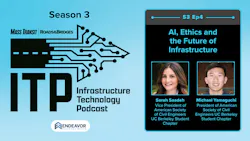




In this episode, Gavin Jenkins, head of content for Roads and Bridges interviews Michael Yamaguchi and Sarah Saadeh, two students from the American Society of Civil Engineers UC Berkeley Student Chapter, who discuss the future of construction technology. Brandon Lewis, associate editor for Mass Transit magazine, and Jessica Parks, staff writer for Roads and Bridges, joins Gavin in the intro and outro, as the group reads some listener emails, and they play a over/under game on the history of some of the oldest transportation systems and bridges.
Episode length: 1:12:53
About the guests
Michael Yamaguchi is the president of the American Society of Civil Engineers (ASCE) UC Berkeley Student Chapter.
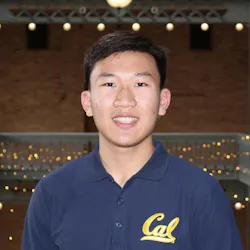
Sarah Saadeh is the vice president of the ASCE UC Berkeley Student Chapter.

GJ: Welcome to the Infrastructure Technology Podcast. I'm Gavin Jenkins, head of content for Roads and Bridges, and with me, we got JP, Jessica Parks.
JP: Hello.
GJ: She is the staff writer for Roads and Bridges. And then we got the man, the myth. He is a legend. Brandon Lewis and associate editor at Mass Transit magazine. How are you two doing?
BL: Happy Tuesday, guys. It's podcast day, and Gavin, after you missed last week's episode, glad to have you back.
GJ: Oh, well, thank you very much. My dog is doing quite well, but first, let's talk about the mask that I'm wearing right now. I hope it's not muffling my sound too much. But look, we are a tech podcast and all of the leaders of the technology industry are biohacking and so I have fully embraced the biohacking. I got the red light mask on my face. And also, look, we're about to go to an interview where I interviewed two college kids and seeing their young faces made me feel like the crypt keeper, and if you could see the video of me talking to these young adults, they're both like 20, 21, something like that. I looked like President Truman compared to their youthful faces, their youthful energy. I'm 45 going on 80. I go to bed every night at like 9:30. I wake up, it's still dark outside. I'm going to be drinking prune juice pretty soon, Brandon, and so I need the red light therapy to attack the wrinkles to stave off old age, so I'm into the biohacking. Are you into the biohacking, Jess?
JP: I definitely have a pretty wild skincare routine that I keep up with because once I was getting close to 30, I definitely had a bit of a crisis, and I got very into skincare and doing anything I could to just try to maintain my youth.
GJ: Maintain your youth. That is funny. That is a joke. 30. Oh no, I turned 30. I got skin cream. That’s a joke.
JP: But hey, it's good to start early, right?
GJ: Yeah, I guess. Sunscreen is huge. You don't want to get skin cancer. I had the basal cell on my face, which was not fun, last year. Brandon, are you into anything to try to stay young? How old are you again? You're like 25, 26?
BL: No, it's funny. I say this all the time. I have to rethink what age I'm going to be. So I am currently 27, going to be 28 here the next, actually, I'm about to turn 27 and a half here in the next couple days, technically.
GJ: Do you celebrate the half birthday?
BL: Some people do. I think it's nonsense personally, but if that's your thing, good for you.
GJ: Okay, so what year were you born?
BL: I was born in 1998.
GJ: In 1998. I was a junior in high school and then started my senior year later on in 1998. Graduated from high school in 1999. What year were you born, Jess?
JP: 1994.
GJ: When you were born, I was in junior high, and 94 was a great year because that was the year that Pulp Fiction and Shawshank Redemption and Boris Gump all came out. Shawshank Redemption, by the way, the favorite movie of one Karina Mazhukhina, who is also known as Maz, who is the… oh no, I need to recharge. Hold on. The light just went out. Oh my goodness. I guess I have to recharge my face mask.
JP: It's gotten its use then.
GJ: Well, I use it. Trust me. I use it. And right now I'm afraid to go outside. The sun will hit the snow and bounce up and take away my youth. Shawshank Redemption is the favorite movie of one Karina. I learned that while walking around the Las Vegas Convention Center with the Maz during CONEXPO. So yeah, you guys are all, and she also was born in 94, I believe, right, Jess?
JP: Yeah, I think we're the same age. She's a couple months older than me.
GJ: Oh, you got her beat.
JP: You know what? Yep. I am younger. She actually could be 93. Isn't her birthday in December, I think? I don't know. Or is it… I can’t remember. Yeah, so she could be 93.
GJ: It's possible. Well, she's editing this podcast, so she'll be able, if you hear someone chime in with the correct answer, and it sounds like it was edited perfectly into the thing then it was Karina. But yeah, you guys are all young, and I need to keep up, so that's why I'm biohacking. I'm taking pills, I'm taking the vitamins. I got the red light therapy. I got face masks, I got things under my eyes. I'll tell you what, there were microneedle things that I put patches that I put under my eyes and those things worked. It's just I'm not going to spend the money for that on a regular basis. That's a treat, Brandon.
JP: So you could be our longevity expert.
GJ: I am a longevity expert. You guys were, when I was born, it was 1980. I was born November 7th, 1982, days after Ronald Reagan defeated Jimmy Carter in the 1980 election, and so whenever I was born, Iran had hostages, American hostages from the embassy and now we're bombing Iran, so I don't know why I mentioned that, but yeah, Jimmy Carter was president when I was born, but these youngins were about to get to, they're from UC Berkeley. We'll get to them in a minute, but Brandon, over the holidays we got an avalanche of emails, so why don't you read some of the best ones.
BL: We do. And before we start, I just wanted to make a quick note to all you listeners out there that this is episode four, and you guys may think I have aged like 20 years between episodes because my voice probably sounds different on every single episode this season. I have been battling multiple illnesses, allergies now that spring has hit. I hope my voice sounds better today than it has over the past three episodes, but thank you for staying patient with me. With that being said, though, like you said, Gavin, we had a bunch of great emails, so I picked out two really good ones. This is from Ava, who is hailing from Indianapolis, Indiana. She says, Gavin, she hopes Bob is doing much better, and she says that we talk so much about shows that we are into on the podcast. She said it really creates a personal touch. She was wondering our thoughts on the overwhelming AI commercials that are seemingly out there right now, and that in her opinion, it's becoming overbearing.
GJ: Oh my goodness. Alright, first of all, thank you for the email, and Bob is doing great. His cough, like Brandon's voice after he was sick and how the scratchy voice lingered for a while with Brandon Lewis, Bob had kennel cough. I don't know how he got kennel cough. He's eight years old, and he never goes to a kennel, but he was diagnosed with kennel cough, and there was that one day where I couldn't be here because I had to rush him to the vet because he was sounding like a goose just honking and he vomited a little. I, of course, became terrified and so I rushed him to a vet, and they gave him a shot, gave him some medicine, and he was okay within a day, but what it did is the one medicine that they gave him made him have to pee constantly, so it was constantly rushing him outside and then his cough lingered for a couple of weeks after that like Brandon's cough, but now he is back to normal. He's back to being the lovable dog that he is, and even though he is eight, he still has the energy of a two-year-old, which keeps me moving, too. He keeps me young, Brandon, and what was the second part of the question? Shows? Favorite? What was this? The AI commercials?
BL: So the question was about the AI commercials, yeah.
GJ: Oh, they're trying to stuff it down our throats, so that we're okay with it, but this AI, what the one company recently was like, ‘We don't want to work with the Department of Defense or War or whatever it's called’ because they want us to do autonomous killing machines, and it's just like, we'll stop the, autonomous killing machine. I don't want autonomous killing machines either. I don't want AI used for that. They're just trying to sell a product. That's what commercials are. I think it's awful, too, but I'd rather have the AI commercials personally because then we could have a discussion about how there's no regulation for AI than then all of the pharmaceutical commercials. Those drive me more insane than the AI commercials. What about you, Jess?
JP: I agree with you. The pharmaceutical commercials, it's just the loopholes and regulations around those drive me absolutely nuts. It's like taking as much time as possible. Then it's like, actually, you are going to possibly lose your hands if you take this medication, or your skin can all fall off.
GJ: Well, side effects include diarrhea every time.
JP: It's like if you take anything, you're going to have diarrhea.
GJ: Yeah, diarrhea or thoughts of suicide every time. It's just like, why would I roll the dice on your drug?
BL: I'll say that I am the type of person who generally tries to not watch any commercial of any kind. Even if I'm watching something live, I will flip to something else purposely just so that I don't have to watch commercials. They've bothered me for some odd reason that I can't explain why. Maybe it's just the overselling of things.
GJ: Before you go, let's put a pin in that for a second. I love commercials, and I want to welcome any future advertiser to the ITP family and just say that I, Gavin Jenkins, love commercials. No, I love reading commercials.
BL: Yes, I have reading ads on a podcast. I don't like watching commercials. It's the weirdest thing, but I will say I have noticed more and more there's more of these AI commercials, whether it's the AI companies themselves producing them and half of them are like, ‘Oh, okay, this was from ChatGPT’ or ‘Oh, this was for Claude’. I don't even get the point of them.
GJ: Yeah, we get both. Go ahead, Jess. You go.
JP: Oh, yeah. I don't really understand why they think that they need commercials because I do think that people are just using them. I understand that they're trying to differentiate between trying to get you to use Claude over ChatGPT. However, I don't think commercials are the way to necessarily do that, So I am pretty surprised that they're even spending their money in that area.
GJ: Personally, I think that these AI commercials, they're doing what you're saying, Jess. They're competing with each other for the product, but they're trying to normalize something that isn't regulated and can disrupt society in a way that we haven't thought through, and you have all these people leaving the companies and warning us and saying, ‘Oh, if we don't get a handle on this, it's going to be real dangerous to humanity’, and our politicians on both sides of the aisle are asleep at the wheel because Silicon Valley gives them contributions, and we do not have the regulations in place to manage what can happen. Have you seen the meme lately? Brandon, this is going to go over your head. It involves movies, but there's a meme out there that has three circles. Interconnecting the top circle says the matrix, the bottom circle says the Terminator, and then the other bottom circle says Idiocracy.
BL: Yeah, I've seen it.
GJ: And where all three connect they go, this is where we are, and that's where we are with AI. We have idiots, absolute morons running the country from both sides of the aisle. They're all idiots. They're idiots who take money. Then we have the government, the war machine government, the Pentagon they're trying to make, they're admitting to us that they're trying to make autonomous killing machines with AI and then you have people like Peter Thiel and Elon Musk at the top just wanting to sit in Zuckerberg with his meta products, trying to simulate everything, and Elon wants chips in our brains. Zuckerberg wants us to wear goggles all the time to be in the metaverse, and it is what it is, so we are in the middle of just morons killing machines and evil Silicon Valley people, and coming full circle, the one proper use for AI is to help improve infrastructure. That is a good tool. Now, if we had a working living government, we could regulate it, the evil, and have it enhance the good, which is building infrastructure, designing infrastructure, making sure that our public transportation is the best in the world. And fortunately, we have the next generation of engineers who are on top of it. And with that, I'd like to now switch to our interview that we did with Michael Yamaguchi and Sarah Saadeh, who are engineers at UC Berkeley, one of the best schools in the country. These two young adults are insanely intelligent. They're into technology, they're into engineering, and Michael is really into trains and so let's just jump to my interview with them right now.
GJ: Michael and Sarah, welcome to the ITP. How are you doing today?
MY: Good, how are you?
GJ: I'm doing good, Sarah. What's going on?
SS: Doing great. Thank you so much for having us.
GJ: Well, thank you for joining us, and we have you here because we're really interested in where technology meets our industry, and we're really interested in how your generation, the next generation of engineers, is approaching the technology in the construction industry and your thoughts on it. But before we get into that, tell us a little bit about yourself. Sarah, why don't you start?
SS: Sure. So I'm currently a civil engineering student at UC Berkeley, minoring in data science. I'm from Southern California but moved to the Bay for college. And really, I'm interested in seeing how the construction industry can evolve with the impact of AI and technology. So obviously now we're in a world where AI is taking on a lot of our different day-to-day lives, and one of those things is the construction industry, so I'm interested to see the application of that as I move forward in my career and expand on it and hopefully help make the lives of construction workers and the industry in general easier and more efficient.
GJ: Okay, excellent. And Sarah Saadeh, you're the vice president of the ASCE Chapter at UC Berkeley?
SS: Correct, yes.
GJ: And Michael Yamaguchi, you are the president of that chapter. Tell us a little bit about yourself.
MY: Sure. So as you mentioned, I'm the ASCE president for the UC Berkeley Chapter, and I'm a senior studying civil engineering, and I'm also from SoCal from the LA Metropolitan Area, and I originally got interested in civil engineering through a transportation internship with my local city and sort of got looped into construction within college and so that's where my main passion lies. So transportation systems within construction and different heavy civil systems such as light rail and heavy rail.
GJ: Both of those interests are exactly what we talk about here on the podcast, and that is why you two are here. What city? Tell me a little bit about that high school internship.
MY: Sure. So I worked for the city of La Habra with pretty flexible hours. It's kind of a funny story. I was talking to my history teacher like, ‘Oh, I would love an internship. it'd be kind of cool to get more exposure to the engineering industry’. And she goes, ‘Oh, I think I might know someone’, and she makes a random call to the city to someone I've never met before and three months later I'm there with a job. And so I got exposure to AutoCAD there for a bit of city planning and kind of the different elements of public works. And so I thought that might've been what I did. And then I got my first construction internship and then I left that public sector behind.
GJ: Okay. Alright, well first off, let's talk about your time at UC Berkeley. So it's one of the best schools in the country, obviously one of the best engineering schools. What have been some of the most eye opening lessons or projects you've encountered in your civil engineering coursework? Sarah, let's start with you.
SS: Yeah, sounds good. So like you mentioned, UC Berkeley, I mean, is pronounced in so many different subjects and especially I think they're known for their research. So during my time as an undergrad here, I've had the opportunity to research at the TSRC, which is the Transportation Sustainability Research Center, and that's been a really cool experience because it really was the best of both worlds for me. It collided data and my data science interests, but also with the impact I want to have on mobility systems and transportation networks. So during my research time, I had the opportunity to work on two different projects. One of them looked at the use of integrating AI in senior living homes to automate shuttles. So obviously a lot of people in senior living homes, they don't have the ability to drive themselves from certain places to go to doctor appointments, grocery stores, even socializing. A lot of them are scared to drive or just don't feel comfortable driving at certain hours of the night, so what a lot of senior living homes do to accommodate them is they'll hire a driver, but what we've noticed over time is that the cost is becoming really expensive to pay for the driver, and B, the shuttle itself is expensive to maintain. So I looked at two different cities that tried to do an autonomous vehicle, an integrated AI, and honestly seeing the impact that having, it's not just about the technology, it's also about the impact you're having on these seniors. Now they have this vehicle that's available to them whenever they want, and they're able to go to these appointments without paying a really expensive fee or having to feel like they're troubling somebody to get from point A to point B, so I think that was really cool. And then my second project was focused in the Columbus, Ohio, region and we looked at the ability of AI to impact bus delays. So normally when a bus is delayed, you're waiting at the stop, maybe it's raining on you, and you're frustrated, and you're annoyed. But really how it's delayed is there's literally a human that calls in and is like, ‘Hey, this bus is being delayed right now’. What this project looked at is what if we used AI to detect these delays? Will people be notified sooner that the delays are happening and will that make people's lives more seamless? So we conducted an analysis to see the impact of AI in that sense, and I think in both cases it was really just seeing not just AI at work, but also the tangible impact it had on communities and the lives of people affected, and it resonated really deeply with me, and it also showed me the power of research and the opportunity that a school like Berkeley gave me to see that firsthand as an undergraduate student.
GJ: Wow. That is fascinating. I never even thought of that with the shuttles for the elderly. It never even occurred to me, and I have a mom who's 82 years old and would love for her to not drive anymore. Michael, what about you? What coursework or research has really opened you up to what you want to do with your career?
MY: Sure. So I haven't had as much experience with research and because I'm studying civil and environmental engineering, but I'm going to construction management, it's a little tricky for me to find a lot of overlap, but that being said, I think UC Berkeley, and a lot of other colleges are really good at giving you a broad base, so I've really enjoyed geotechnical and geo environmental engineering. I think that's a solid staple for civil engineers. One interesting class I'm in right now is human context and ethics of data and so I'm also getting a data science minor similar to Sarah and just understanding ethics under different frameworks, whether that be engineering or data science. I think it's pretty important, especially in the 21st century, and it's not something that we've always had a chance to consider.
GJ: What is the ethics of data science? Tell me more.
MY: Sure. So I think that the ethics of data science stuff is how data is being used, how it's being generated and how we can protect data. So an example might be how should data be accessible to the public and is making that data accessible even a good thing? How can it create vulnerable communities or how can it develop communities? Or maybe in the context of transportation, what data are we going to use to help people? What modes of transportation do we want to design based off of the data we have and how can we best collect that data?
GJ: Alright, I got a question for both of you. I'm just throwing it out there. So this podcast we've had, we've talked a lot about data, and we've also talked a lot about AI and cameras, so I’m going to throw this out there to you. One thing that's going on is cameras and intersections, right? They're very advanced, and they're so advanced that they want them to be good enough that they can have clear images at the intersections but how much of that is collecting data to identify cars who's in them and going through each intersection every time? Another thing we talked about is an app that municipalities can use in cities where if you go on a wrong turn to a wrong way street that your phone or your car gets a message and says you're on a wrong way street, and you're going down the wrong way on a wrong way street or the wrong way on a ramp or something like that, so that means that your data has been collected so much that it knows that you've made a wrong turn. Is that ethical? What would you say are the ethics and those types of things?
MY: I mean, devoid of the ethics class. I think in my perspective, it's a pretty obvious, no, I don't want my phone buzzing every turn I make.
GJ: Right, but what if it’s a wrong turn that might save your life.
MY: And it's funny, that's definitely something we've explored before, and one of the readings I've done for my data science class talks about this kind of AI model who's kind of like a senior caretaker for these other people. And so the robot makes a decision not to report a health risk to an insurance company for the sake of giving this adult a sense of privacy, and so in the story, the adult ends up having a heart attack. And so it's a question of what should have been done and who's at fault, and in that example, I think there's no obvious answer. I would like to know that I've made a wrong turn, but I also don't want to be tracked at every step, and so in my personal opinion, I draw the line at not being tracked at my wrong turns, but I don't know about Sarah.
GJ: Yeah, What about you, Sarah? You study data ethics as well?
SS: Yeah, so I mean, it's a mandatory requirement for all of us to take an engineering ethics class before we graduate. Mine was actually New Media 151 AC, so it was a little less about engineering and more about data science in general, but we definitely did touch on the whole concept of using data between a user and a platform. And in terms of social media, in terms of even your search history on the web, at what point do you'd really draw the line? Similar to Michael, I think if I was tracked at every turn, I would be a little creeped out, maybe, but at the same time, I do understand the ability for data and AI to also save a life. I read an article about a girl who was driving, and she was falling asleep. She had been driving for way too long, she was falling asleep behind the wheel, and the car had an ability to detect her eyes, and it froze the car for her and saved her life, so in that sense, am I a little weirded out that the car can watch my eyes? Yes, but am I happy that the girl's life was saved, also? Yes. So I think it doesn't come down to the ability of data. I think it comes more down to what is that data being used for? And obviously when you download these apps and when you subscribe to these platforms, most people don't really read the fine print. They click, I agree, and they subscribe, and you move on, but when you come to ask yourself, ‘Okay, so yeah, it saved my life in this instant but maybe that happens 0.01% of the times, but the other 99.9% of the times, what is that data now being used? Is it being used to know that when I'm driving, where I'm driving to how fast I'm going, and it's all these analytics that sometimes we don't realize we're involuntarily giving up’. And sometimes it's used for the greater good, but a lot of times it's not, so I think for me personally, I'm not against using data in these cases. I just would really want to read the fine print and know what else is this data being used towards and how else am I contributing towards this big data movement that's revolutionizing the world.
GJ: Excellent. Thank you so much for that answer, so let's talk a little bit about your courses in terms of real world infrastructure challenges. When you're in a classroom, how do your professors integrate those challenges that you'll face on the job site into your everyday learning?
MY: Sure. At UC Berkeley, we have a heavy focus on research, and a lot of other top universities will be more research oriented compared to maybe state schools, and so at least in the California school system, the UC’s are more so focused on research, whereas the Cal States give you more professional experience and exposure and so I've been pretty grateful to have exposure to both the technical research aspects. Like I mentioned, the geotech class I took, and I've also had the ability to take a class of hosted and funded by the Beavers Organization and so that's a heavy civil professional organization.
GJ: What is the Beavers Organization?
MY: Sure. I could be wrong, but they’re a professional construction management organization for heavy civil construction.
GJ: Really?
MY: And so yeah, leaders from every heavy civil construction organization will group together, host these site visits and help with professional development of students, as well as maintaining the young engineers.
GJ: Oh, wow. I'd never even heard of this. I feel like I'm bad at my job for not knowing this. The heavy engineering construction association, the Beavers.
MY: Right.
GJ: Oh my God. Okay. Thank you for educating me on the podcast. Yeah, a group of people I should have known about.
MY: And they practically pay for the professor, and so in a sense, they're paying for my education. And so it's funny because the professor of that class hired one of my old bosses, and so I just feel like there's this very tangible connection to the workforce. All the learnings from that class, I felt exactly in my internships beforehand just because of how closely knit the construction community is, and so after that first construction class, I took another one, a graduate class right now, and lo and behold, another one of my bosses has been hired by this professor, so it really just shows how tight the world is.
GJ: Yeah, no, it's something that I've noticed and learned over the years in my job running this magazine is that the construction industry is very tight knit and the connections you make really help you out. It's all about networking. So Sarah, same question to you. What have you learned from the integration of real world challenges into the classroom?
SS: Yeah, definitely. I mean, I think as Michael mentioned, Berkeley definitely prioritizes research, but that's not to say that we don't get industry experience in, for example, the class I'm in right now, CE 167, which is engineering project management. We actually last week had a guest speaker come from DPR construction, and he kind of walked us through a lot of case studies, showed us the use of BIM in the industry and really introduced us to what it would be like a day in the life as a project manager in DPR, for example. So that was really cool because I got to see the stuff I'm listening to in lecture and reading about in my textbooks come to life with this industry professional who's telling me, ‘Yeah, the things you learned you will actually use, and you will put them into effect and work, and here's how’. Similarly, in a class I took last spring, CE 166, which was construction engineering, we had the opportunity to go to UCSF and tour an active construction site, and it's a developing medical center. It's a research and medical center. I think it's like BABR, but I could be wrong, and during there, I think it was Hensel Phelps was the general contractor on that project, and they walked us through the vision. We literally, I toured it in the spring, so I'm sure they've made more progress on it now, but at the time it was just, they had just excavated, they finished demoing, began excavation, things like that, so it was really hard for us to see the vision, but they had VR glasses that we were able to try on and see what that project was going to be like, and again, we had learned about that in 166, but I had never actually seen, okay, what is this like in the industry, so I think professors do a really good job with actually giving you those hands-on experiences. It's kind of up to you to reap the benefits of them and to make that connection, but I think in terms of balancing both industry and academics, Berkeley does a really good job and our professors work tirelessly to make that effort happen. Obviously some classes more than others. Both 166 and 167 had the ability and the opportunity for us to experience that, but some classes are very, you need to get the baseline and fundamentals down, so it depends on the classes you take, but the opportunity is definitely there.
GJ: Okay. So you mentioned a lot of fascinating things there that I want to talk about next. You mentioned BIM and you mentioned VR, so let's start with BIM, Building Information Modeling Digital Twins. Tell me how you've been taught about this, and what your experiences with it are.
SS: Yeah, definitely, So I would say I've gained hands-on familiarity with BIM through both my coursework and my internships. I interned at Amazon last summer, so I was using BIM a lot to just look at plans for fulfillment centers and sort centers that Amazon was building nationwide, But I also gained experience through the same class, CE 167, where we explored 3D modeling and clash detection and sequencing and looking at the ability of BIM also to serve as a coordinator between architects, engineers and contractors, So I use BIM to visualize spatial conflicts, optimize construction schedules and also to communicate across different disciplines and different departments, and those digital principles were definitely extended into a system level analysis where we quantified costs and environmental performances, so I think these experiences really introduced me to the concept of digital twins, which I personally find really exciting. And essentially a digital twin is a living data connected replica of a physical asset, and it really helps to bridge the gap between design and construction operations because it links the BIM model with real-time data, and it uses sensors and IoT devices, I think, and monitoring systems that really allows engineers to track performance and predict maintenance needs. And from that, they can really simulate future scenarios that they might experience. So say digital twin of a bridge, it could continuously update based on the strain data, for example, or temperature fluctuations or traffic loads, which really helps agencies make smarter and more proactive decisions, and I think learning about BIM and Digital Twins side by side has really shown me the future civil engineering, and it's not just about building the infrastructure, it's about creating an intelligent system that really learns, adapts and evolves, and these tools ultimately turn into this feedback loop that helps us design not only for today's conditions, but for tomorrow and for the long-term sustainability and resilience of the environment as a whole.
GJ: Okay. So Michael, you and Sarah are on two different trajectories in your career path. Tell us a little bit about your relationship to software like BIM, Digital Twins, in terms of your career path.
MY: Sure. So I have not had much exposure to BIM. The heavy civil industry does use it, but I think more so for very large projects, these super projects that require more coordination and digital twins is pretty unheard of. From the people I've talked to in prepping for this podcast, I was like, ‘what is Digital Twins?’ I've never heard of this before.
GJ: I think this is a good point where we should probably talk about what you guys want to do with your careers. I feel like Sarah's more in line with Roads and Bridges, and Michael, you're more in line with Mass Transit, which is good for our podcast because these are the two magazines that are hosting this podcast, but let's start with you, Michael, and tell us about where you see yourself in five years after you graduate. What do you want to be doing?
MY: Sure. So I've been thinking about this a lot. I accepted a job offer for July of 2026.
GJ: Wow, congratulations.
MY: Thank you, and so I don't know where I will be working location wise. All I know is the scope will probably be related to rail, and some of the projects that I'm considering include the Brightline, so the first true high-speed rail and then the California high-speed rail is another project I'm considering.
GJ: Who hired you, can you say?
MY: Yeah, I think I can. I haven't announced it before, so I'm pretty excited to work for Stacy Whitbeck. They're a heavy civil general contractor.
GJ: Congratulations.
MY: Thank you. I've done an estimating internship with them last semester, and I will be returning to intern with them again next semester.
GJ: And they already offered you a full-time position for when you graduate? They must love you. That's awesome. Way to go. Alright. And so you want to work with rail?
MY: Correct.
GJ: And so what about rail fascinates you, and what's driving you to get into that sector?
MY: Growing up, I wanted to make kind of a tangible impact on the community around me, so I always liked Legos growing up. I thought it was pretty cool to put things together and what better way to see a tangible effect on society than to build it yourself. I think design work is cool, the technology to get to work with is amazing, but I want to be able to see the project getting finished with my own two eyes. That's how I ended up in construction.
GJ: Okay. Awesome. Alright. So Sarah, where do you see yourself in five years?
SS: The million dollar question. I feel like everyone's been asking me, but I mean to me, I think a successful career that I would define for myself is one that not only just advances this technology, but also one that elevates the standards and the responsibility and integrity behind it, so I mean, I think I view technology in the construction industry as something inevitable. I think digital innovation is going to ultimately transform how we design and construct infrastructure, whether we like it or not, but I want to be in a role that shapes those frameworks, both technical and legal. I've definitely had some exposure to the intersection of legal and construction in my internship. Two summers ago, I interned at Secretariat Advisors, where we analyzed construction delays and looked at the impact of why a delay occurred on a construction project. So obviously things like mitigating that delay, but at the same time, looking to see what technology tools could help avoid. The delay altogether would guide a career and a vision that I choose for myself, and I think I want to really be at the intersection of engineering technology and law and ensure that things like AI automation and Digital Twins is grounded in accountability and fairness but also gained the trust of the public because sometimes you tell people these revolutionary ideas, especially with autonomous vehicles, and they're like, ‘Oh, if I don't see a driver, I'm not getting in that car’. So I recognize the fear with technology, especially in things like construction and how you can't just tell someone, ‘Here's an idea, and we trust that it's going to work’. You really need to back it up with data, with trials, and you need to gain the trust of the public, so I want to redefine what ethical innovation looks like in construction and really focus on data-driven efficiency and how it can co-exist with human-centered values where technology empowers workers and doesn't replace them. So for me, I would view a career where it's not just defined by the number of projects I complete, but more by the lasting systems. I help create systems that are smarter, safer and governed by the principles that protect both the people they serve, but also our planet and the environment, so ultimately I hope to work at the intersection of all those fields together.
GJ: So are you going to go to law school?
SS: To be decided. It's definitely something I've considered, and it's an avenue that I'm looking into right now. I am in the process of applying to grad school for construction systems and engineering management masters. It varies from school to school, but I am also looking into working. I had two internship experiences, and I'm looking into returning full-time, So I would say a clear path is not yet set in stone. I'm definitely weighing out my options, but law school is definitely something I've considered just because I think it's a very niche field, but a very needed field where you look at the impact of AI and technology on our environment, but you also look at these massive projects that are experiencing these delays, and you stop and ask yourself like, ‘okay, is the delay happening from something voluntary? Like say weather, say the pandemic, or is it something that you could actually change or mitigate using AI and technology?’ So I think it's a very powerful field and a very evolving field, So law school is definitely a thought for me, but it's not yet solidified, But generally that's where I see myself in five years is working at the intersection of those fields.
GJ: Let's talk a little bit about your roles. Let's take a break from the career stuff, and let's talk about the Chapter ASCE. What do you guys do for the ASCE Chapter? How did you get involved in it and would you say it's a good thing? Let’s start with the president.
MY: So I guess, let me back up. I joined ASCE as an intern my freshman year, and so I had the chance to kind of explore the different subdivisions we have within our chapter. Our chapters are broken down into a financial officer group. We call that the joint fundraising committee, as well as the internal side of a SE, which Sarah and I more so focus on, and that includes hosting events for our students and creating this social atmosphere where we can professionally and socially develop the civil engineers here. And I then became the external vice president, so I helped raise, I want to say $60,000, plus another 60,000 from the department. And then we hosted mid pack. Sarah and I both help with mid pack, which is our student symposium, and so there's a few hundred students that come together and compete for civil engineering events at our campus.
GJ: Whoa. That symposium must have been pretty cool.
MY: Yes. It was pretty amazing.
GJ: What kind of projects are done in the symposium?
MY: Sure. So ASCE, the American Society of Civil Engineers, hosts national competitions, as well as kind of smaller regional competitions, and we have the freedom to choose which competitions we want to host, some of which include concrete canoe, transportation, wastewater treatment, steel bridge, sustainable solutions, and I'm sure I'm missing a few or geo wall, but we try to have a competition for every kind of subdivision of civil engineering, and we think it's a great way to connect students to each other and meet other universities.
GJ: Okay. Sarah, what has your journey been like through the chapter?
SS: Yeah, so I would say a SC has played an integral role of my time here at Berkeley freshman year. I remember the first event that, and we still have this every year, it's the ASE Welcome Back Barbecue. So as a freshman in civil engineering, you hear ‘welcome barbecue’, and you're like, ‘Okay, I'll go get a little free food, meet some people’, and I ended up staying for so many hours just talking to all the different people and ASCE, learning about what they do. From there, I went to the welcome meeting, and I remained involved through different philanthropy and social events that they had throughout my freshman year. And so at the end of my freshman year, I was like, ‘You know what? This is a really cool organization’. I recognize the impact of engineering as not just being like, ‘It's not a sole job, it's a community’. You really need the people around you to make a tangible impact, so I decided to apply to be chief of staff. So my sophomore year I was fortunate to serve as the chief of staff on ASCE, and I worked more internally. So Michael explained we have our JFC, which is more of our external funding. I was mainly focused on internal logistics, so I was managing the website. I managed our intern group. I was responding to emails, updating the newsletter, things like that, and kind of serving as a liaison and obviously helping our executive vice president and president at the time. And then from there I was lucky enough to also now serve as our current vice president, still more on the internal side of things. I help around with finances. I help plan our board retreat, which is a lot of fun, and also just mentoring our current members, but also making sure that our outreach goes out to our different competition teams that Michael mentioned. I think at Berkeley we're really lucky to have all those competition teams because a lot of schools, so to see people in all the different fields of civil engineering get to participate under this one umbrella organization and to help serve as their chapter vice president has been such a formative experience, and I've gained a lot. I gained a lot of friends. A lot of my best friends at Berkeley have been through ASCE, so it's definitely been a very enlightening opportunity, and it taught me a lot about myself and just about management in general and how to lead with a purpose and lead with impact.
GJ: Alright, so I feel like I could talk to you guys about this kind of stuff all day, but let's transition towards the last subject we'll get to, and that is the labor market, the job force. So the construction industry has a bit of a labor crisis and a lot of our listeners see that in everyday lives. There's just a lot of people who are not that optimistic about having qualified and experienced workers on the ground, and you're entering a field, an industry that's just in change. It's changing right now. It's changing because of technology, and I'm curious what your view of the industry is as young engineers entering the labor market. Are students and your friends and your fellow members of the ASCE Chapter, optimistic, cautious, what are the conversations like about entering the job market and having a work-life balance? How do you guys see it?
MY: Sure. I guess I can answer that question first. I think in the short-term scale where a lot of students are fearful of the current job market with potential, or I guess signs of a recession, were pretty scared for what job openings there are, especially for designers whose work largely depends on the budget granted by the federal state, and the same applies to the contractor end. I remember seeing a statistic that 60% of the executives and higher level management for these construction companies are going to retire within five years. There's a lot of struggles within the construction industry, defined estimators and schedulers and sort of mid-level engineers, and then like you mentioned, there's concerns of the quality of these incoming engineers, even though there may be a lot more of these entry-level engineers and so I think there's a struggle on all fronts, and I don't think there's an easy solution to this besides furthering outreach, promoting these professional organizations such as the beavers that we mentioned earlier. I think off script and really helping connect and show why the construction or engineering industries are jobs that are advantageous and sought after.
GJ: Yeah, absolutely. Sarah, now, you are a senior, right? You're a fourth year. Michael, and you're entering the job force in 2026. Sarah, you are a third-year? You're a junior?
SS: Yes, I am graduating in spring 2026 so kind of in a similar position to Michael.
GJ: Oh, so you are, see, I am glad I asked because I thought you weren't graduating until next year. Okay. So alright, so this concerns you imminently as well. So how do you see it?
SS: I mean, I think students in general are both optimistic and cautious. I think it's a little bit of both. I think they're optimistic about the mission and their passions. Obviously things like whether you're in transportation, geotech, construction, structural design, we all are working towards improving our quality of life, improving the day-to-day life of people, systems and how we interact, so I will say they're optimistic about their impact and the role that they have within this industry, but then there's also that sense of caution and fear about kind of what Michael mentioned. There's talks about a recession, there's talks about people getting laid off. You hear on the news, you see that the cost of living keeps going up, but wages aren't going up. So that sense of fear, I think you can sense it amongst students, and I think it's making students a little more desperate to grasp onto whatever they can hold. So sometimes that means that they're not necessarily in roles that best suit their interest, which obviously isn't the most ideal case. However, it's kind of the situation that we're in in terms of opportunities, but ultimately I think that especially for students at Berkeley, a lot of us are driven by passion, and passion doesn't go away, and job markets fluctuate, the economy fluctuates, but the passion is always there, and it's a steady constant in our day-to-day life, so even if that means for a couple of years you're not working your dream job, I think ultimately our students and our chapter members have the opportunity of getting there and landing that position, whether that be immediately after graduating, maybe not, but I think it'll ultimately get there because like Michael mentioned, our field is so desirable and so needed, and no matter how much AI and technology advances at the end of the day, until there's robots building your houses, I think you're going to need civil engineers, and I don't foresee that happening regardless of at least not in our lifetime. So I mean, you never know. Technology is advancing in crazy ways. So maybe, but at least in the near future, I think our jobs are going to be in demand. I think we just need to be a little more creative with what that demand may look like. So maybe instead of having more design and structures, we have people who are more fluent with digital technology and understanding how to reap the benefits of that. So maybe it's not necessarily a lack of jobs, it's a change of what the job market looks like.
GJ: Yeah, that's absolutely correct. Because of AI, the job market is changing. What I really like about talking to the two of you is you're both so eager to change the world, Michael, you want to be involved in rail because you believe in it, and you believe that it will improve your community. And Sarah, you want to be involved where tech and law cross because you want to make sure that it's ethical and improves society and that kind of altruism is so refreshing, and I just want to thank you so much for sharing your thoughts and sharing your time, and I hope that you become listeners of the Infrastructure Technology Podcast, and I wish you the best of luck finishing up your year at UC Berkeley.
SS: Thank you. Thank you so much for having us and for asking all these insightful questions. I think sometimes you don't realize what you think until you're asked it, so it's been a wonderful opportunity.
GJ: Thank you, Michael.
MY: Yes, definitely. Thank you for having us.
GJ: That was my interview with UC Berkeley's finest, Michael Yamaguchi and Sarah Saadeh, and Brandon, we only got to one email. Do you have any other emails you want to get to?
BL: We do have one more that I wanted to get to, but it's okay. That transition was A+.
GJ: Thank you. I ramble a bit, so I'm sorry. But yeah, let's read another email real quick.
BL: Alright, so this is from Jack who is from Nashville, Tennessee. He says, I'm listening to episode one of the podcast right now and hearing Brandon talk about his trip to Washington D.C. it made me think of this question: When you guys travel for work or personal time, do you factor public transit into your travel plans?
GJ: So that's a really great question. We do travel a lot for work. Just this year in 2026, I've been to Austin for the ARRA meeting. I've been to Houston for the ATSSA Traffic Expo, and Jess and I have been to Vegas twice. Once for World of Concrete and then for CON EXPO, so that's four trips in a little over two months, and we try to take as much public transport as possible, especially during CONEXPO, so there's lots of options. In Las Vegas, they have a metro, they have buses, so they have that…
JP: Loop.
GJ: The loop. Yeah, well that's what I meant by the metro.
JP: Then they have a monorail, too.
GJ: Yeah, well that's what I mean. The monorail, which is in my heart because of the Simpson's episode that Conan and Brian wrote. Yeah, that's what I meant. I forgot to call it a monorail. But yeah, in Houston. In Austin, I didn't have to worry about it because I was in the hotel where the meeting was, but we took a bus in Houston.
BL: Okay.
GJ: Well, Brandon, when you travel, I mean, that's huge for you as well.
BL: So I've only traveled a couple times, as I talked about before on this podcast, just flying in general with a disability is hard, and there's a lot of challenges with that. So I've been to Denver because my brother moved out to Denver in September, 2023, so I've been out there. And then we just went to D.C. like that email said this past December. And so we didn't use any public transit while I was in Denver, but in D.C., literally that whole weekend, that's all we did was use the metro trains. I will say that as we've been talking about and thinking about maybe different places potentially to travel to in the future, maybe there's a conference that's close by that is accessible for me, public transit has been one of the things that we've been talking about in terms of access to different places, so it is definitely always on my mind.
GJ: Yeah, absolutely. And we really need better public transportation throughout the country. Well, thank you very much for the wonderful emails. Keep rolling 'em in. Brandon, where do we send these emails?
BL: Send them to [email protected].
GJ: Yeah, write us more guys. Alright, let's talk about that interview. We're focusing on the younger generation, the next generation with this season. We really want to see how they interact with the technology that is shaping the industries that we're covering and so that's why we had Michael and Sarah on. Jess, what did you think of the interview?
JP: So I did the initial call with Michael and Sarah with you, and I did listen to the interview as well, but when I, just from speaking with them, I was just totally blown away with just their whole demeanors. They were so brilliant. They were so knowledgeable in all these different areas. I was totally impressed by them, and that really shined throughout the interview as well.
GJ: They're ambitious as heck. They're so ambitious, and they also have plans. They're in their early 20’s, and they know exactly what they want to do. And not only that, but they know the steps that they have to take to achieve the goals that they want to achieve, and they're on that path, definitely. And that path will make this country better in terms of infrastructure, regardless of which path they take. And Brandon, what did you think of Michael? Because he was speaking your language with the trains.
BL: Yeah, it's really interesting. And Michael, he also talked about that he's going to be potentially working with Brightline in the future and some of their high-speed rail projects in July, and he just didn't talk about his passion for public transit and him talking about that he necessarily did not think that he was going to enter into the public transit industry. Very similar to me where I took a path that I wanted to go down in radio, but I never thought it would connect myself to public transit and so I very much see some of Michael in me. I would not be surprised if he is a future Mass Transit 40 Under 40 nominee. And again, I talked about this last week as well, when we had my interview with Jorge from Penn State and just the other interviewers that we have for this season, the next generation of people that are going to be working, and our industries are in good hands.
GJ: Yeah, they're not going to be able to afford homes or be able to fill up their gas tanks if we still use oil, but we're in good hands with them. Brandon, are you wearing a Philadelphia Eagles t-shirt?
BL: I am, yes.
GJ: What are you doing? Did you jump off the bandwagon? Are you no longer a Browns fan?
BL: Did you not know this? I've been an Eagles fan my whole life.
GJ: You're not a Browns fan?
BL: I mean, I roof with the Browns because my whole family's Brown fans and I'm in Cleveland, but I have been an Eagles fan my whole life.
GJ: Okay. I did not know that.
BL: I'm wearing green for St. Patrick's Day.
GJ: So Brandon, what else you got for us for this episode before we jump out? Should we play a game of some sort?
BL: We shall, so we're going to play one of our favorite games here on the ITP, known as over or under. And so what I have done is I have picked two sort of, Mass Transit, train/bus agencies, and then I have picked two bridges on the Roads and Bridges side that we have also covered here at Mass Transit, and you guys are going to pick over or under on the years of how old these services/bridges are.
GJ: Oh, okay. This is great.
BL: And so I can give you a little bit of context on each one. We're going to start with out in San Francisco, California, who as the San Francisco Municipal Transportation Agency, the SFMTA, they have a Muni system, which is basically a trolley service and SFMTA, they're also one of the only agencies in the U.S., there's a few others, but they are one of the oldest that still has trolley service running. And just a little bit of historical background on this, this service has been running for a really long time, way before you were even born, Gavin. So with that context, has this Muni service been running for over/under, I have said it at, 99.5 years, so has this been in service basically for 100 years or longer?
GJ: Oh, way longer. Yeah, way over 100 years. Way over.
BL: Jessica, what about you?
JP: I would have to agree with Gavin on that.
GJ: I would say since the early 1800s. I would put it around like 18:30.
BL: Okay, so you guys were both right, Gavin, you were way off on the time.
GJ: Oh, it's way off. How long it's been? Okay, let me take a second guess. So it's not 1830s, I would say then 1870s.
BL: So it's been running service since December 28th, 1912.
GJ: Oh really?
BL: Yeah, and it inaugurated street card service on the A and B lines on Gary Street between downtown and 33rd Avenue in San Francisco.
GJ: Okay, I thought that you always see those old videos, like the first videos ever made, and they're always in San Francisco, and I thought that maybe one of them was around 1890 something and that they already had existed. Okay. Alright. So 1912. Still, I mean, that's still a long time ago.
BL: I mean, that's a 100.
GJ: I was way off on 1830s though. Oh my God.
JP: It was running through during the war of 1812.
BL: Alright, so this next one, with our friend, Mass Transit Associate Editor Noah Kolenda, we have talked a lot about electricity, zero emission, battery- electric buses, ect. Can you guys guess, and I sen the over/under here at 5.5 years, when the first all electric zero-emission bus began operating in the United States?
JP: Over/under 100 years?
BL: Over/under 5.5. So completely different from the streetcar.
JP: Yeah, I’m going to say over on that one.
BL: Okay.
GJ: Yeah, I'm going to agree and say over. I would say that it started around 2014.
BL: So you guys are right again, but Gavin, you're a little bit off, not by much, but a little bit.
GJ: When did it start?
BL: So in the U.S., Big Blue Bus commissioned the first all electric zero-emission bus in 2019 and so the majority of these agencies are trying to transition to a 100% zero-emission fleet by 2040. Some have put a target at 2032. In Canada, the Societe De Transport De Montreal, also known as STM, they launched theirs in 2013, so that would've been very similar to your timeline, Gavin, except it started in Canada and then the U.S. first adopted it about seven years later.
GJ: Well, I'm so tuned into the global infrastructure scene that that's where I got confused.
JP: Well, to me, 2014 seems like it's 5.5 years ago, so I did not think of 2020 as 5.5 years.
GJ: I feel like 2008 was five years ago.
JP: Yeah, so I'll give you that one.
BL: So these are two recent, sort of bridge renovation projects that we've been covering here at Mass Transit. You guys at Roads and Bridges may or may not be familiar with these bridges. One of them is in Massachusetts. It's referred to by the Massachusetts Bay Transportation Authority as the Draw One Bridge. Its name is the Charles River Bridge. And the question I have for you guys, has this bridge been in existence over/under 75.5 years?
GJ: Wait, you're in Massachusetts, Jess. You should be able to know this. I'm going to say under.
JP: I think that the Charles River Bridge is pretty old. I'm going to go over, I don't know though. I'm not confident.
BL: Okay. Well, one of you is obviously right. Jessica, you are the one that's actually right. It is over. It is not though 100 years old. Not quite yet. The bridge first opened in 1931, and the reason why we cover it here at Mass Transit is because it's actually currently being renovated. The project will modernize a critical rail connection between Boston and Cambridge, Massachusetts, that serves the MBTA Commuter Rail, as well as Amtrak Downeaster service, and the renovation is expected to be complete by 2034. Alright, and then one last bridge for you guys, one more bridge on the Northeast corridor, the Sawtooth Bridge. This is a bridge that has been open for, I will tell you guys that it's been open for over 100 years. This is another bridge that has also being currently renovated, and it's located in the Meadowlands in New Jersey between Newark Penn Station and the Caucus junction. So knowing the technology, these bridges, I told you guys that it's over 100 years old, but do you guys think that it's over 150 years old?
GJ: You go first, Jess.
JP: I don't think under 150 years. I don't know. Yeah, I'm going to go under just because, I mean, I know that infrastructure is crumbling more than before. The Northeast Corridor is crumbling more than anywhere. It's just absolutely, totally needs to be redone, but I still don't think it's 150 years old, so I'm going to say under.
GJ: I'm going to say over only because I have been wrong so much. I mean, everything Jessica said makes absolute sense, but I have been wrong so much that I have to go, I have to do what we call a stanza and do the opposite of what I think is right.
BL: So this bridge opened in 1910, so it is under, it is about, let's see, 2010 would be a hundred plus an additional 16. So it's about 116 years old but think about that, and that's the reason why I put this in here. A bridge that is 116 years old is still up and being used in today's infrastructure. It's just amazing for someone who, again, as young as I am at 27 years old, to think about these long lasting infrastructure projects, and it makes me wonder, with all the technology and the new bridges and the new rail roads and everything new being built, not only, as we've talked about on this podcast, for decades, we're talking millennial,s centuries, is there a possibility that the new ones that are being built are going to last for 200 years?
JP: I don't think that the ones that were built then were supposed to last for even a 100 years, but it is crazy though. I mean, I wrote about the New Harbor Bridge, and it's supposed to have the longest lifespan of any bridge that's ever really been built in the United States, and I forget, but it was some absolutely insane timeline, and it is really interesting to see how longevity will play out.
BL: And think about the impact these bridges take, not only from transportation, but weather.
GJ: Weather and weight. It is remarkable how long they last. It really is. Well, thank you, Brandon, for the lovely game. We love playing over/under, and it's always enlightening to see how wrong I can be at over/under, but I think we're running out of time for this show, so let's wrap it up. We want to thank Endeavor Business Media, or Endeavor B2B, our parent company. We want to thank our producer, our editor, the Maz, Karina Mazhukhina, and we also, of course want to thank Michael Yamaguchi and Sarah Saadeh from UC Berkeley, and I want to thank everyone at the UC Berkeley ASCE, the American Society of Civil Engineers. That's where we found them. They are president and vice president of that local chapter and so shout out to all of their members at UC Berkeley, and Jessica, Brandon, any final thoughts before we go?
BL: I actually have a quick plug, so next week on the show, I have this book here. I don't know if you guys are going to be able to see it because my virtual background, this is a heavy book. This is a 350-page book that was written by Dan McNichol and Bill Goodrich, and I am interviewing the authors of this book next week on the ITP, and it is called Second Avenue Subway: Building New York's Most Famous Thing That Was Never Built.
GJ: Thank you for that. Stay tuned for that next week. for Brandon Lewis, Jessica Parks. I'm Gavin Jenkins, and until then, goodbye.
About the Author
 Brandon Lewis
Brandon Lewis
Associate Editor
Brandon Lewis is a recent graduate of Kent State University with a bachelor’s degree in journalism. Lewis is a former freelance editorial assistant at Vehicle Service Pros in Endeavor Business Media’s Vehicle Repair Group. Lewis brings his knowledge of web managing, copyediting and SEO practices to Mass Transit magazine as an associate editor. He is also a co-host of the Infrastructure Technology Podcast.