Denver RTD introduces new multilingual tools to make transit more accessible for non-English speaking residents
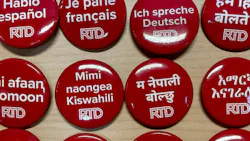
The Denver Regional Transportation District (RTD) is introducing two new tools designed to make riding transit more accessible for customers who speak languages other than English. These tools include multilingual “I Speak” pin-back buttons for frontline employees and new language help decals across its bus fleet that make it easier for customers to access transit information in their preferred language.
The agency is distributing 1,500 buttons in Spanish, Amharic, French, Arabic, Oromo, Swahili, Italian, Nepali, German, Hindi, Farsi and American Sign Language. Employees can volunteer to wear them on their shirt, hat, lanyard or other visible item.
Denver RTD notes an internal survey conducted in winter 2024 found that 30% of approximately 660 responding agency employees, including contracted staff, speak a language other than English fluently. More than half of those employees speak Spanish. Other commonly spoken languages among staff include Amharic, French, Arabic, and Oromo. Denver RTD says it selected the button languages based on this survey data and the most commonly spoken languages within its workforce.
The buttons help customers quickly identify employees who may be able to assist them in their preferred language. Employees are encouraged to wear a button if they speak the language fluently, meaning they can speak or read it easily and accurately.
Denver RTD says its service area includes approximately 3.1 million people and of those, about 200,812 residents, or roughly 7%, speak English less than very well, according to the American Community Survey.
Research conducted by Denver RTD’s Transit Equity Office as part of the agency’s Language Access Program found that communities with greater linguistic diversity also tend to rely on transit at higher rates than predominantly English-speaking communities.
“Transit works best when customers feel comfortable asking for help,” said Denver RTD Transit Equity Specialist who helped lead the “I Speak” button initiative Dani McLean. “These buttons make it easier for customers to quickly identify employees who can help them in their preferred language. It’s a simple way to help customers feel supported and welcomed while also recognizing and celebrating the many languages and cultures represented across [Denver] RTD’s workforce.”
To support both customers and operators, Denver RTD is installing clearly visible QR code decals near bus entry doors. If a customer needs help, operators can point to the decal, so customers can access translated information without delaying service or compromising safety.
When scanning with a smartphone, Denver RTD notes the QR code directs customers to a dedicated Denver RTD Language Help webpage with information customers most often ask operators about, including next ride trip planning, customer care contact information, fares and security. The webpage can be translated into multiple languages, including Spanish, Amharic, Simplified Chinese, French, Korean, Nepali, Russian, Somali and Vietnamese. When scanned from the bus decal, the webpage defaults to Spanish.
"Our priority throughout the project was keeping bus operator and customer safety at the center of the conversation," said Denver RTD Transit Safety Specialist Andrew Garcia. "At the same time, we wanted to make sure the solution would be a meaningful resource for customers. By giving operators a simple tool they can point to, customers can quickly access language assistance and transit information, improving the overall [Denver] RTD experience while allowing operators to stay focused on the safe operation of the vehicle.”
Denver RTD notes the initiatives support its 2025-2028 Language Access Plan, which outlines how the agency provides meaningful access to services for individuals with limited English proficiency under Title VI of the Civil Rights Act. From 2022 through 2025, Denver RTD expanded translation of vital documents for accessing services, improved website language functionality, enhanced telephonic interpretation services, increased multilingual public meeting materials and strengthened partnerships with community-based organizations serving immigrant and refugee communities. The “I Speak” buttons and Language Help decals build on this progress and support the goals outlined in Denver RTD’s Language Access Plan.