LAVTA selects LYT to modernize transit signal priority across Tri Valley region
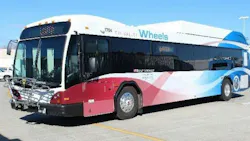
The Livermore Amador Valley Transit Authority (LAVTA), which operates Wheels bus service, has selected LYT to modernize transit signal priority across the Tri Valley region, following a multi-city evaluation conducted with an engineering consultant and staff from Livermore, Dublin and Pleasanton, Calif. The five-year agreement, authorized by LAVTA's Board of Directors, will bring LYT's cloud-based platform to 67 intersections, including 33 in Livermore, 26 in Dublin and eight in Pleasanton, with a planned expansion to support LAVTA's full fleet of 68 buses.
LAVTA notes it has used transit signal priority since 2011 when the agency first equipped its original Rapid line with infrared technology. The system was upgraded to a GPS-enabled platform in 2019, but that system is no longer supported by its manufacturer and does not provide the regular reporting the agency needs to confirm how well it is performing.
Over roughly 14 months, LAVTA worked with their consulting firm to evaluate signal priority systems alongside staff from the three cities. The review, part of the agency's broader design and engineering project, confirmed that LYT best matched the group's shared operational, technical and integration requirements. All three cities approved the improvements incorporated into the final design, and LYT submitted its proposal in May 2026.
According to LAVTA, the project is centered on Rapid routes 10R and 30R, which connect riders to Bay Area Rapid Transit, the Livermore Transit Center and ACE Station and major employment centers throughout Dublin, Pleasanton and Livermore. When a qualifying bus approaches a signal, LYT's platform can request additional green time or reduce the wait for the next green signal, helping delayed buses recover time while limiting disruption to cross traffic. LAVTA plans to expand signal priority support from its current 20 equipped buses to its full 68-bus fleet, giving the agency more flexibility in vehicle assignments while preserving the benefits riders see on the Rapid corridors.
Beyond faster, more reliable trips, LAVTA says the new system is expected to give the agency information it has not routinely had access to under its current setup, including real-time priority logic, multi-jurisdiction integration and reporting through LYT's Travel Analytics Portal.
"Moving buses faster matters, especially in suburban areas where cars naturally get a lot of priority," said LAVTA Executive Director Christy Wegener. "Having experienced first-hand what the LYT system can do, I am thrilled to see the improvements we can make to our bus system."
The system is expected to go fully live in early 2027. LYT will begin with several months of baseline data collection before activation. Field equipment at each intersection will be procured separately by LAVTA while LYT's agreement covers software licensing, implementation, testing, deployment, analytics and ongoing support.
"Bringing Livermore, Dublin and Pleasanton onto one coordinated platform will give LAVTA a clearer picture of how the system is performing across every corridor, not just the Rapid lines," said LYT CEO Tim Menard. "Our team is looking forward to supporting LAVTA through implementation and every stage that follows, so riders can count on more consistent trips and staff can rely on the data behind them."
About the Author
 Brandon Lewis
Brandon Lewis
Associate Editor
Brandon Lewis is a recent graduate of Kent State University with a bachelor’s degree in journalism. Lewis is a former freelance editorial assistant at Vehicle Service Pros in Endeavor Business Media’s Vehicle Repair Group. Lewis brings his knowledge of web managing, copyediting and SEO practices to Mass Transit magazine as an associate editor. He is also a co-host of the Infrastructure Technology Podcast.