BART to raise fares 6.2% in 2026
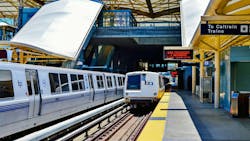
Bay Area Rapid Transit (BART) will be increasing its fares on Jan. 1, 2026, to keep pace with inflation so the agency is able to pay for continued operations and to work toward restoring financial stability. BART says its current funding model relies on passenger fares to pay for operations, and fares continue to be an important funding source to meet the needs of riders who rely on its services and to attract new riders.
Fares will increase 6.2% based upon actual inflation in 2023 and 2024. The average fare will increase $0.30, from $4.88 to $5.18. For a short trip, the regular fare will increase by $0.15, and for a longer trip, it’s a $0.55 increase. BART notes the fare increase is expected to raise $15.6 million for calendar year 2026.
Outdated funding model
According to BART, its current funding model relies on passenger fares to pay for operations and even with the fare increase, BART still faces a deficit of $376 million in fiscal year (FY) 2027. The agency notes it must modernize its funding sources to better align with other transit systems in the country that receive larger amounts of public funding.
“As we ask the region for greater investments and support for BART while also making internal cuts to reduce costs, we also must ask our riders to contribute more towards their trips,” said BART Board President Mark Foley. “We will continue our commitment to enhance efficiencies and implement strict cost controls.”
BART balanced the FY26 budget with $35 million in ongoing cuts and strict cost controls. In the FY27 budget, which begins July 1, 2026, BART will institute cost savings and deferrals of $108 million to maintain current service levels and produce a balanced budget. In addition, the agency is running shorter trains to save on energy costs, and the service schedule better matches ridership. BART has also implemented a strategic hiring freeze, targeted reductions to operating costs across departments, renegotiated with unions to reduce near-term retiree healthcare costs and locked in low energy costs through long-term contracts.
A recent review by the Federal Transit Administration (FTA) found BART is meeting standards in nearly two dozen categories, including financial management, its ability to utilize federal grants and project implementation. BART is also subject to review by the independent Office of the Inspector General (OIG), which conducts performance audits and investigates allegations of waste, fraud and abuse. BART has accepted 92% of the OIG’s recommendations and already implemented 64%. BART is the only transit agency in the Bay Area with an OIG.
BART is improving and innovating
The agency says it has seen progress in its efforts to improve the customer experience. In 2025, customer satisfaction increased to 88%; the number of riders who say they’ve witnessed fare evasion dropped by more than 50%; and crimes against persons on BART dropped by 59%. BART also installed new fare gates systemwide four months early and was the first transit agency in the Bay Area to roll out Tap and Ride, offering contactless bank card payment options.