Column: How using amenities when designing stops can enhance the transit experience and bring community value
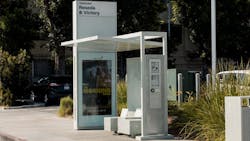
Transit experiences begin well before a rider boards a vehicle. For millions of people, that experience starts at the bus stop, too often in the heat, in low light or without access to basic amenities. As agencies work to improve ridership and local economic impact, it has become clear that investing in the rider experience begins at the bus stop and that it can have systemwide impacts.
Extreme heat is increasingly affecting transit operations and rider safety. Research by Yulia Dzyuban in the International Journal of Biometeorology shows that sun-exposed transit stops in areas with dry heat like the city of Phoenix can reach surface temperatures of 125°F to 160°F, raising the heat index by up to 15°F compared to shaded environments. This is particularly concerning for riders with long headways or health conditions exacerbated by heat exposure.
On average, shaded environments reduced the physiological equivalent temperature (PET) by about 35°F. The PET measures how hot or cold the body feels by analyzing the effects of air temperature, humidity, wind speed and solar radiation.
These surface temperatures are often a result of the Urban Heat Island (UHI) effect. Highly paved corridors with limited vegetation or shading retain heat throughout the day, often coinciding with areas of high transit dependency. Addressing heat at the stop level is therefore not only a comfort issue, but a matter of public health and safety for transit dependent riders and choice riders alike.
According to a study led by the University of Texas Health Science Center at Houston, shelter design can play a significant role in mitigating these impacts. Features such as perforated roof materials and side panels can reduce heat buildup. From measurements across 17 bus stops in Houston, the study concluded that wet bulb globe temperature levels under shaded shelters depended on the type of shelter design. Shelters with deep, acrylic walls that restricted airflow may have created a greenhouse effect, trapping radiation within the shelter and elevating the temperature compared to those with designs that promoted airflow.
In 2024, Tolar Manufacturing Company manufactured, delivered and installed 14 10-foot Sunset “Mini” bus shelters in Houston for the Greater Southeast Management District (GMSD). The shelters feature perforated metal walls and a full-sized 10-foot Sunset shelter roof over a customized “Mini” base, which provides shelter, lighting and seating on a reduced footprint. This design allows GSMD to place shelters at bus stops where a full-sized shelter is not possible, assisting in its mission to bring more shelters to more locations.
“The district is about solving problems. Protection from Houston’s temperamental weather is critical for those who travel in, through and around our area using public transportation,” said GMSD Program Manager Nikki Knight. “Tolar Manufacturing and our team at The Goodman Corporation were integral in finding a solution to provide adequate coverage for our transit riders. Keeping folks safe and protected from the elements while traveling is a win we can all be proud of.”
Also in 2024, in order to address rising heat risk, the city of Boston installed green roofs on 30 Massachusetts Bay Transportation Authority (MBTA) bus shelters. These new roofs feature drought-resistant plantings that will help provide shade, improve air quality, increase stormwater retention and add new green space along the bus route.
The city selected bus shelters along this corridor due to the high ridership and boarding rates. Neighborhoods along this corridor are also disproportionately impacted by extreme heat. The project has since been scaled to surrounding neighborhoods such as Brookline, where the green roofs have been added to custom Tolar bicycle shelters in local parks.
These green roofs provide shade over typically transparent bus shelters, keeping riders cooler on hot days. The plants also absorb rainwater, reduce runoff, capture pollutants and support birds and pollinators, enhancing urban biodiversity. The project aligns with Boston’s Heat Plan, including the Cool Commutes strategy to create cooler, more comfortable transit experiences with shaded bus stops. Research shows green roofs can lower nearby air temperatures by up to 20°F (Barriuso & Urbano, 2021), demonstrating how climate-responsive shelter design benefits both immediate comfort and long-term urban heat mitigation.
Lighting remains one of the most critical, yet under-addressed factors when considering bus stop amenities, as they contribute to comfort and safety. As a recommended practice by the American Public Transportation Association (APTA), first published in 2009 and revised in 2020, well-lit stops can improve both actual and perceived safety, leading to higher nighttime ridership and reduced crime.
However, many transit corridors, especially those with narrow rights-of-way or lacking grid access, can pose installation challenges. The 2024 study, Advancing Shade and Lighting Equity at Bus Stops, from the UCLA Lewis Center for Regional Policy Studies concluded that in the city of Los Angeles, narrow sidewalks may prevent the installation of full-sized bus shelters at up to 53% of higher-priority bus stops without shelters, often preventing access to amenities like dusk-to-dawn lighting.
Modular and solar-powered solutions are helping agencies overcome these constraints. In Fort Worth, Texas, Trinity Metro has installed Tolar Signature Eco Shades to incorporate solar-powered lighting and real-time signage options that enhance visibility without increasing energy costs. These systems are adaptable for constrained sites and contribute to sustainability goals by reducing reliance on external power sources.
The Eco Shades are equipped with various amenities, including upgraded LED lighting, seating, larger waste receptacles and digital displays with real-time bus tracking and customer information. These improvements enhance the passenger experience by providing a more comfortable and convenient environment while waiting for their bus.
These improvements and incentives are part of Trinity Metro’s recently convened task force, which strives to continually improve public transportation ridership and provide a better quality of life for the residents of Tarrant County, Texas.
More cities are beginning to formalize the connection between extreme weather, infrastructure design and public health. Along with Trinity Metro and MBTA, the city of Los Angeles’ Sidewalk and Transit Amenities Program (STAP) is an initiative that expands shade, lighting and other transit stop amenities to improve comfort, safety and accessibility for more riders. As part of the program, 250 custom Tolar Signature Series bus shelters have already been installed throughout Los Angeles.
Rather than relying solely on ridership numbers, agencies are incorporating factors such as heat index, shade coverage and security lighting into their sitting criteria. This shift reflects a broader understanding that the value of a shelter extends beyond passenger volume; it encompasses safety, accessibility and rider comfort.
To help agencies evaluate these broader impacts, Tolar Manufacturing developed the Bus Shelter & Amenities Decision Matrix—a practical framework for assessing where and how to deploy resources for the greatest overall benefit.
The matrix introduces core evaluation categories: daily boarding, headway times, service hours and rider populations. It also incorporates secondary variables such as heat index, accessibility needs, safety and security and right-of-way limitations. This structure enables planners to identify locations where shelter investments can yield the highest combined return in comfort, safety and economic efficiency. The matrix is available as a free resource for transit planners, agencies and municipalities seeking to integrate these considerations into their shelter and amenities programs.
The benefits of improved transit amenities extend beyond the rider. Investments in amenities at the stop and shelter level don’t just enhance comfort and safety; they generate measurable economic impacts. A 2021 study from the University of Washington found that improving bus stops to include RTIS, shelters and other amenities can increase boardings from 80-200%. According to APTA, investment in transit can yield 49,700 jobs per $1 billion invested and every $1 invested in public transportation generates approximately $5 in economic returns. Also, in terms of real estate, homes in communities that provide access to heavy rail, light rail, commuter rail and bus rapid transit had a higher median sale price of 4-24%.
Improving transit experiences begins at the stop. Amenities such as shading, lighting, seating and real-time information do more than improve comfort and safety. When properly designed and strategically placed, they can directly support measurable economic benefits, from increased ridership and reduced health costs to stronger local business activity and property values.
About the Author
 Patrick Merrick