Government of Canada to invest $4.7 billion in 313 new passenger rail cars for VIA Rail Canada
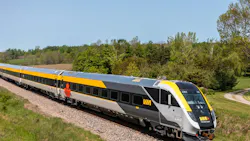
The government of Canada is investing more than C$4.7 billion (US$3.4 billion) for VIA Rail Canada (VIA Rail) to acquire and maintain 313 new passenger rail cars from Alstom Canada. The cars will be manufactured and assembled in Thunder Bay, Ontario, and La Pocatière, Québec, with design and engineering work taking place in Saint-Bruno-de-Montarville, Québec.
“In the face of strong headwinds, a confident Canada is choosing to build. For the first time in four decades, VIA’s passenger cars will be built in Canada," said Canada Prime Minister Mark Carney. "Cars once made in the United States, now made here at home. This means new contracts for Canadian suppliers, good jobs for Canadian workers and pay checks that stay in Canadian cities and towns. That’s how we build Canada strong.”
The new rail cars are being developed due to the agency's long-distance, regional and remote fleet approaching the end of its useful life, with some equipment more than 70 years old. Including this most recent funding announcement, the government of Canada has invested more than C$6.6 billion (US$4.8 billion) in the fleet. Some of the other projects include:
- C$1.6 billion (US$1.2 billion) for 45 new locomotives from Stadler, based in Bussnang, Switzerland. Stadler will complete the final assembly of up to 36 locomotives in Canada.
- C$357 (US$259 million) million for VIA Rail to build a new assembly and maintenance facility in Montréal, Québec, where the Canadian assembly of the locomotives will take place. Built by Pomerleau, the facility will also support the maintenance and operation of the new fleet at VIA Rail’s Montréal Maintenance Center over the long term.
The government of Canada says the new passenger rail cars will provide travelers with modern amenities, improved accessibility features and enhanced reliability, helping make passenger rail an even more attractive travel option for Canadians. The 313-car fleet will feature nine different types of passenger cars, including 78 sleepers, 58 coaches, 38 panorama cars, 29 baggage cars, 26 accessible sleepers, 25 dome cars, 20 dining cars, 20 prestige sleepers and 19 berth cars.
They will serve VIA Rail’s eight long-distance, regional and remote routes outside the Québec City-Windsor Corridor, providing essential transportation across eight provinces–particularly for communities where affordable alternatives are limited or unavailable. These routes connect Indigenous, rural and remote communities that rely on VIA Rail.
In 2025, more than 216,000 passengers travelled on VIA Rail’s long distance, regional and remote routes.
“Today’s announcement marks a defining step in shaping the future of VIA Rail’s pan-Canadian fleet," said VIA Rail Interim President and CEO Mathieu Paquette. "These new Canadian-built passenger rail cars will retain signature features such as dome cars, full-service dining and social areas while incorporating modern amenities, improved accessibility and greater reliability. They will help us preserve essential services to remote communities and elevate the unique onboard experience that allows passengers to discover Canada in a way that only train travel can offer. We thank the Government of Canada for this historic investment in the future of passenger rail.”
Alstom says the new Adessia rail cars are built to withstand the country’s climate extremes. According to the supplier, the new portfolio includes a wide range of high-floor multiple units and coaches, available in both single- and double-deck configurations and designed to operate at speeds of 120-200 km/h (74.6-124.3 mph) on both electrified and non-electrified networks.
“This is an emblematic project for Alstom, and we’re honored to be entrusted by VIA Rail and the federal government with delivering it,” said Alstom Americas President Michael Keroullé. “This project marks the beginning of a new chapter between Canada’s national passenger railway company and the country’s local rail manufacturer. Together, we are building a fleet for Canadians, by Canadians, and it will move the country forward for generations to come.”
The first new car should be delivered by 2031, according to CTV News Canada.
About the Author
 Brandon Lewis
Brandon Lewis
Associate Editor
Brandon Lewis is a recent graduate of Kent State University with a bachelor’s degree in journalism. Lewis is a former freelance editorial assistant at Vehicle Service Pros in Endeavor Business Media’s Vehicle Repair Group. Lewis brings his knowledge of web managing, copyediting and SEO practices to Mass Transit magazine as an associate editor. He is also a co-host of the Infrastructure Technology Podcast.