MBTA to conduct systemwide infrastructure work to enhance subway, Commuter Rail system
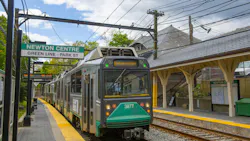
The Massachusetts Bay Transportation Authority (MBTA) has started construction to upgrade and enhance its subway and Commuter Rail system while also supporting several Massachusetts Department of Transportation (MassDOT) projects. MBTA crews are performing work in support of Blue Line infrastructure revitalization, accessibility upgrades on the Green Line, critical Green Line central tunnel signal upgrades and Commuter Rail improvements, as well as support MassDOT work on Route 24 in Taunton, Mass., as part of the West Roxbury Parkway Bridge Replacement project.
The agency will be making service changes in October on the Blue, Green, New Bedford/Fall River, Framingham/Worcester, Needham, Greenbush, Kingston and Stoughton lines to finish the work.
The work that will be done during this time includes:
- The Blue Line: During one weekend in October, the MBTA’s Maintenance of Way team will complete switch work at Wonderland, including the replacement of switch timbers, switch points and stock rails and all other maintenance needs. Following this work, the MBTA says all end track areas at Wonderland will be fully tamped, improving operations at the end of the line and ultimately improving reliability for Blue Line riders.
- The Green Line: Symphony Station is being upgraded into a safer, fully accessible station featuring four new elevators and other station enhancements. In October, work will continue as part of the Green Line C Branch Accessibility Improvements project. Several street-level C Branch stops along Beacon Street in the town of Brookline, Mass., include platforms at an inaccessible height with significant barriers for riders with disabilities or those using wheeled mobility devices. The MBTA is advancing accessibility improvements at seven above-ground stations on the C Branch, which is designed to provide a faster and more comfortable boarding experience for all riders. The MBTA will also continue work on signal upgrades within the central Green Line tunnel. At over 100 years old, the MBTA’s Green Line signal system is being replaced with upgraded technology. When the project is complete, the new signal system will provide the MBTA Operations team with improved train detection, better management of train congestion within the tunnel and more consistent train spacing.
- The Franklin/Foxboro Commuter Rail Line: The MBTA and Keolis North America will accomplish critical track revitalization improvements through the end of October, replacing hundreds of railroad crossties along the Franklin/Foxboro line, resulting in reliability improvements and fewer disruptions related to older infrastructure. Work will also take place in October to support the South Station Signal and Track Improvements Project. The MBTA is in the process of upgrading the Tower One track and signal system and the Cove track system to improve the reliability of service at South Station. This work will also support future growth of the MBTA and Amtrak.
- The New Bedford/Fall River Commuter Rail Line: MassDOT will perform work on Route 24 Taunton bridges, which crosses over the Middleborough Secondary rail line.
- The Framingham/Worcester Commuter Rail Line: The MBTA will perform critical work on the Framingham/Worcester Line as part of Worcester Line track and signal improvements.
- The Needham Commuter Rail Line: MassDOT will perform work as part of the West Roxbury Parkway Bridge Replacement project, which will replace the bridge that carries the West Roxbury Parkway over the Needham Line.
MBTA says the service outages are a critical and necessary part of maintaining the infrastructure improvements that took place as part of the 2024 Track Improvement Program while also making further system upgrades and modernizing the MBTA’s infrastructure. This work cannot be performed during the overnight hours when the MBTA does not operate.
The agency also notes that closing a section of the transit system for multiple days is the most efficient way to perform the routine maintenance, revitalization efforts, inspections and upgrade work and combines the efforts of multiple contractors and the MBTA workforce around the clock 24/7 to maximize productivity.
About the Author
 Brandon Lewis
Brandon Lewis
Associate Editor
Brandon Lewis is a recent graduate of Kent State University with a bachelor’s degree in journalism. Lewis is a former freelance editorial assistant at Vehicle Service Pros in Endeavor Business Media’s Vehicle Repair Group. Lewis brings his knowledge of web managing, copyediting and SEO practices to Mass Transit magazine as an associate editor. He is also a co-host of the Infrastructure Technology Podcast.