SEPTA to launch outreach program to assist vulnerable populations in system
The Southeastern Pennsylvania Transportation Authority (SEPTA) is introducing a new program, called Reach, to assist members of the vulnerable population who take refuge on the transportation system.
Under a one-year agreement with Citizens Acting Together Can Help, Inc., SEPTA says that social outreach specialists are being deployed at stations to assist individuals experiencing homelessness, addiction and mental illness.
Operating under the SEPTA Transit Police Department, Reach teams are connecting vulnerable individuals to housing, healthcare, mental health services, recovery support and other community resources.
“By helping connect vulnerable individuals to services and support, SEPTA is working to build a safer, more welcoming environment for everyone who relies on our system,” said SEPTA General Manager Scott Sauer. “Through our ongoing collaborative work, SEPTA has formed critical partnerships with government agencies, nonprofits, healthcare providers and the community to address these challenges compassionately while maintaining SEPTA’s core responsibility to provide safe and reliable transportation.”
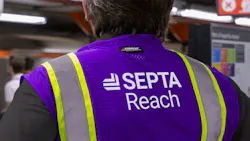
Riders can expect to see outreach specialists wearing purple vests with the SEPTA Reach name and logo. The teams are patrolling SEPTA stations and vehicles to engage vulnerable individuals and offer connection to service providers. Those who decline assistance are asked to leave the system.
SEPTA notes that Reach is a division of SEPTA Transit Police, and the specialists are working closely with police officers.
“This program will be a critical component of our enforcement approach to address issues related to the vulnerable community and reduce quality-of-life complaints,” said SEPTA Transit Police Chief Charles Lawson. “The outreach specialists will serve as a force multiplier and address hotspots based on data and reports received directly from our customers.”
Riders can report safety concerns and quality-of-life issues anonymously through the SEPTA app or by calling transit police.
About the Author
 Noah Kolenda
Associate Editor
Noah Kolenda is a recent graduate from the Craig Newmark Graduate School of Journalism with a master’s degree in health and science reporting. Kolenda also specialized in data journalism, harnessing the power of Open Data projects to cover green transportation in major U.S. cities. Currently, he is an associate editor for Mass Transit magazine, where he aims to fuse his skills in data reporting with his experience covering national policymaking and political money to deliver engaging, future-focused transit content.
Prior to his position with Mass Transit, Kolenda interned with multiple Washington, D.C.-based publications, where he delivered data-driven reporting on once-in-a-generation political moments, runaway corporate lobbying spending and unnoticed election records.