New Garden State Initiative report says NJ Transit needs performance-based review, not just more funding
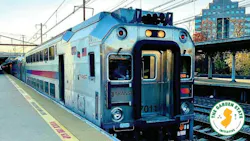
The Garden State Initiative (GSI) has unveiled a new report—NJ Transit: An Economic Analysis of Reliability, Funding and Reform—finding that while Amtrak-owned infrastructure contributes to service disruptions, New Jersey's commuter rail system also imposes internal operational and fleet management challenges that can’t be resolved through the provision of additional funding alone.
Authored by GSI Contributor and Seton Hall Associate Professor of Economics Danielle Zanzalari, the report analyzes New Jersey Transit (NJ Transit) performance data from 2020 through 2024 and concludes that the agency's declining mechanical reliability has continued despite increases in operating funding. During the study period, NJ Transit's operating budget grew by roughly 20%, and the recently adopted fiscal year 2027 budget year reaches a record $3.5 billion—46% higher than in 2020, yet, mechanical reliability declined significantly over the same period, according to the report.
"Public discussion often centers on Amtrak, and our research confirms that Amtrak-related disruptions certainly impact on-time performance, but the data also show that NJ Transit faces a separate mechanical reliability challenge that cannot be explained by Amtrak alone,” Zanzalari said. “If New Jersey wants a more reliable transit system, policymakers should pair continued infrastructure investment with stronger operational management, better asset planning and clear performance measures."
Using original empirical analysis, the report identifies major findings:
- Higher spending has not, by itself, produced more reliable service.
- Reliability depends on how transportation resources are managed, not simply how much is spent.
- New Jersey should adopt a more performance-based approach to transit investment and accountability.
Rather than recommending across-the-board spending increases, the report highlights reforms implemented by transit agencies in Boston, Virginia and New York that prioritize preventive maintenance, objective performance metrics and strategic asset management to improve reliability.
"Reliable public transportation is essential to New Jersey's economy, and commuters deserve a system they can depend on," said GSI President Audrey Lane. "This report demonstrates that improving reliability isn't simply a question of spending more money. It requires directing investments where they will have the greatest impact, measuring results and holding the system accountable for delivering dependable service to riders."
The report concludes that New Jersey should distinguish between infrastructure challenges that require continued coordination with Amtrak and operational issues that fall within NJ Transit’s control. Doing so, according to the initiative group, would allow policymakers to target investments more effectively while improving accountability for measurable improvements in reliability.
About the Author
 Noah Kolenda
Noah Kolenda
Associate Editor
Noah Kolenda is a recent graduate from the Craig Newmark Graduate School of Journalism with a master’s degree in health and science reporting. Kolenda also specialized in data journalism, harnessing the power of Open Data projects to cover green transportation in major U.S. cities. Currently, he is an associate editor for Mass Transit magazine, where he aims to fuse his skills in data reporting with his experience covering national policymaking and political money to deliver engaging, future-focused transit content.
Prior to his position with Mass Transit, Kolenda interned with multiple Washington, D.C.-based publications, where he delivered data-driven reporting on once-in-a-generation political moments, runaway corporate lobbying spending and unnoticed election records.