Canadian government trios fund transit improvements in Stratford, Hamilton
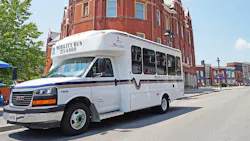
Thanks to investments from local, provincial and the Canadian federal governments, two Ontario cities are seeing improvements to their transit infrastructure and vehicles. The upgrades look to improve not only the passenger experience, but also the management of the fleet and the reliability of system information.
Government trio invests in making Stratford transit greener while fortifying infrastructure
The city of Stratford is set to soon see a greener, more efficient and user‑friendly transit system after a joint investment of more than C$9.7 million (US$6.9 million) from the federal, provincial and municipal governments.
“This investment reflects our commitment to building strong, reliable, and sustainable infrastructure in our communities,” said Member of Parliament for London West Arielle Kayabaga, “By renewing the city of Stratford’s bus fleet, upgrading key infrastructure and improving accessibility, we are investing in a modern transit system that is dependable, inclusive, and ready for the future.”
The city reports that funding will be used to replace buses to improve the reliability, efficiency and environmental performance of the transit fleet. This includes replacing two existing conventional buses with 40‑foot hybrid buses, adding two additional 40‑foot hybrid‑electric buses, replacing two eight‑meter (26-foot) mobility buses and adding a new 24‑foot mobility bus to the fleet.
The federal government is investing C$3.9 million (US$2.8 million) for 14 projects in the city of Stratford through the Public Transit Infrastructure Stream of the Investing in Canada Infrastructure Program. The government of Ontario is contributing C$3.3 million (US$2.4 million), and the town of Stratford is contributing C$2.6 million (US$1.9 million).
Funding is also set to support major upgrades to transit facilities to help the city manage its current transit needs and future growth. Work includes:
- Expanding and modernizing a transit garage.
- Expanding a bus storage facility by 10,000‑square‑feet.
- Replacing fuel tanks and a bus wash system with newer, more efficient equipment.
Additional funds will improve the customer service experience by making transit more reliable and accessible. This includes enhanced GPS systems on select buses, installing and upgrading 20 transit stops with shelters and introducing a new mobile app to help all riders travel more independently and confidently.
City of Hamilton gains increased capacity with new maintenance and storage facility
The city of Hamilton’s transit network has increased transit capacity with the completion and opening of the new Birch Transit Center, a C$390.4 million (US$278.3) Hamilton Street Railway (HSR) maintenance and storage facility.
Funding for the project was provided through investments from all three levels of government. This includes a contribution of C$142.8 million ($US101.8 million) from the government of Canada, C$92.6 million (US$66 million) from the government of Ontario and C$155 million (US$110.5 million) from the city of Hamilton.
“Public transit is at the heart of strong, connected communities,” said Canada Minister of Housing and Infrastructure Gregor Robertson. “It links people to jobs, services, schools, hospitals and the opportunities they rely on every day. The Birch Transit Centre will help ensure Hamilton’s transit system continues to grow and serve residents efficiently, sustainably and reliably for years to come.”
The city of Hamilton says the new facility is a key component of its ongoing efforts to expand and modernize its transit system through HSR Next and lays the groundwork for the transit system to accommodate Hamilton’s growing population and to improve service reliability.
About the Author
 Noah Kolenda
Noah Kolenda
Associate Editor
Noah Kolenda is a recent graduate from the Craig Newmark Graduate School of Journalism with a master’s degree in health and science reporting. Kolenda also specialized in data journalism, harnessing the power of Open Data projects to cover green transportation in major U.S. cities. Currently, he is an associate editor for Mass Transit magazine, where he aims to fuse his skills in data reporting with his experience covering national policymaking and political money to deliver engaging, future-focused transit content.
Prior to his position with Mass Transit, Kolenda interned with multiple Washington, D.C.-based publications, where he delivered data-driven reporting on once-in-a-generation political moments, runaway corporate lobbying spending and unnoticed election records.